Häftad, Engelska, 2014
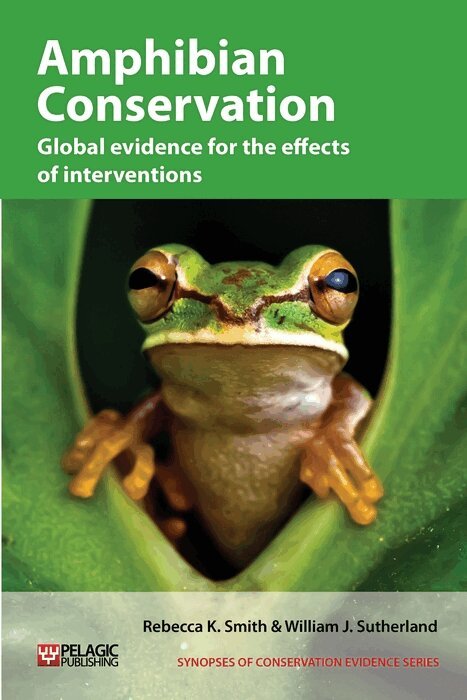
Amphibian Conservation
Global evidence for the effects of interventions
Av Rebecca K. Smith, William J. Sutherland
Del 4 i serien Synopses of Conservation Evidence
620 kr
Beställningsvara. Skickas inom 5-8 vardagar. Fri frakt över 249 kr.
Beskrivning
Produktinformation
- Utgivningsdatum: 2014-05-16
- Mått: 156 x 234 x 15 mm
- Vikt: 392 g
- Format: Häftad
- Språk: Engelska
- Serie: Synopses of Conservation Evidence
- Antal sidor: 279
- Förlag: Pelagic Publishing
- ISBN: 9781907807855
Utforska kategorier
Mer om författaren
Dr Rebecca K. Smith is a Research Associate at the University of Cambridge. She holds degrees in the ecology & conservation of European hares (PhD, University of Bristol), Applied Ecology & Conservation (MSc, University of East Anglia) and Biology (BSc with Honours, University of Bristol). Dr Smith is part of the Conservation Evidence group at the University of Cambridge, which focuses on summarising and disseminating scientific evidence about the effects of conservation interventions for habitats and species. She is an author of the Farmland Conservation synopsis and has undertaken systematic reviews on the effectiveness of conservation management for birds. Prior to this work Dr Smith undertook projects developing monitoring and management strategies for high conservation priority mammal species. Her current scientific duties include facilitating the development of further synopses including bat, reptile and forest conservation and invasive species management. She is also the Editorial Administrator of the Conservation Evidence Journal.
Recensioner i media
This comprehensive British synopsis was prepared with funding by Synchronicity Earth and Aria. It is the fourth volume in the Synopses of Conservation Evidence series and is linked to the online www.conservation evidence.com where the full text is available without charge as an alternative to paying for it in print. Its dense text summarizes and discusses selected world studies concerned with the results, positive and negative, of tampering with natural populations. These have been usually well-meaning attempts to compensate for the damage done by expanding human populations. Impacts may have been either direct by past eradication of individuals or indirect through destruction or alteration of habitats critical to the survival of one or more amphibian species.The introduction stresses that this survey is intended to influence those in a position to make decisions that could save biodiversity one case at a time. Al though recommendations are not provided, basic ecology is included. Interventions that are discussed are not ranked by importance or extent of their effects or evaluated by their quality. The multitudes of references to publications of many countries are grouped with the headings where they are appropriate.The text is broken into 14 sections each with key messages and various subheadings. Ten concentrate on threats: residential and commercial development (interventions specific to development); agriculture (engage farmers and other volunteers, terrestrial and aquatic habitat management); energy production and mining (mist habitat); transportation and service corridors (install culverts or tunnels, barrier fencing, modify drains and kerbs, signs and road closures, assistance during migration); human intrusions and disturbance (signs and access restriction); natural system modifications (prescribed fire, herbicides, mechanical removal of vegetation, regulate water levels); invasive alien and other problematic species (reduce predation, competition and habitat alteration by other species, reduce parasitism and disease by chytridiomycosis and ranaviruses); pollution (agricultural and industrial); climate change and severe weather (irrigation, ephemeral ponds, shelter habitat, gradients). These are followed by habitat protection (connectivity, buffer zones); habitat restoration and creation (terrestrial, aquatic); species management (translocate, captive breeding, rearing, release); education and awareness raising (campaigns, programs, citizen science).A 17-page index concludes the book but is a disappointment. Canadian studies are not cited by country or province forcing the reader to search through the text for references to them. However, there are entries for other countries and many entries by species.This is part of an ambitious series that aims toward accumulating a comprehensive summary of evidence on the effects of conservation interventions on saving the diversity of life over the entire planet. Among other titles completed is Bee, Bird, Farmland and more are being prepared to cover different groups and habitats.
Betyg & recensioner
0 recensioner
Inga recensioner tillgängliga.