• Fri frakt över 249 kr
  • •
  • Snabba leveranser
  • •
  • Billiga böcker
Kundservice

Du är på sajten för privatpersoner.

Företag, bibliotek eller offentlig verksamhet?

Du handlar på classic.bokus.com, där alla dina funktioner finns intakta.
Till classic.bokus.com
Bokus logotyp. Gå till startsidan.
  • Erbjudanden
  • Student
  • Topplistor
  • Barn & ungdom
  • Bokus Play
  • E-böcker
  • Ljudböcker
  • Pocketböcker
  • Spel och pussel

Pocketfynda! Hundratals böcker för 49 kr/st →

Sidfot

Mina sidor

    Hjälp

    • Kundservice
    • Vanliga frågor och svar
    • Frakt och leverans
    • Retur vid ångerrätt
    • Reklamera vara
    • Betalning
    • Köpvillkor
    • Allmänna villkor
    • Information om webbplatsens tillgänglighet

    Om Bokus

    • Om oss
    • Pressrum
    • För studenter
    • För företag
    • För bibliotek och offentlig verksamhet
    • För leverantörer
    • Hållbarhet

    Populärt

    • Aktuella erbjudanden
    • Presentkort
    • Studentlitteratur
    • Nya böcker
    • Topplistor
    • Signerade böcker
    • Engelska böcker

    Inspiration

    • Boktips
    • BookTok
    • Barnbokskaraktärer
    • Populära författare
    Logotyp för Bokus
    Följ oss på Facebook (extern länk)Följ oss på Instagram (extern länk)Följ oss på YouTube (extern länk)Följ oss på TikTok (extern länk)
    bokus @ CookiesAnpassa cookiesIntegritetspolicyKöpvillkor
    Till Citymail hemsida (extern länk)Till Budbee hemsida (extern länk)Till Postnord hemsida (extern länk)Till Schenker hemsida (extern länk)Till Early Bird hemsida (extern länk)Till Walleys hemsida (extern länk)
    1. Ekonomi och Ledarskap
    2. Nationalekonomi
    3. Internationell ekonomi

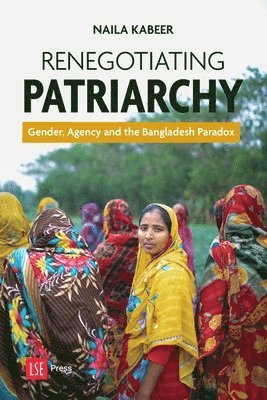
    Regnegotiating patriarchy

    Gender, agency and the 'Bangladesh paradox'

    AvNaila Kabeer

    Häftad, Engelska, 2024

    361 kr

    Beställningsvara. Skickas inom 5-8 vardagar. Fri frakt över 249 kr.

    Beskrivning

    The idea of the 'Bangladesh paradox' describes the unexpected social progress that Bangladesh has made in recent decades that has been both pro-poor and gender equitable. This began at a time when the country was characterised by extreme levels of poverty, poor quality governance, an oppressive patriarchy and rising Islamic orthodoxy.This 'paradox' has evoked a great deal of interest within the international development community because Bangladesh had been dubbed an 'international basket case' at the time of its independence in 1971, seemingly trapped in a development impasse. Previous attempts to explain this paradox have generally taken a top-down approach, focusing on the role of leading institutional actors - donors, government, NGOs and the private sector. In Renegotiating Patriarchy: Gender, Agency and the Bangladesh Paradox, Naila Kabeer starts with the rationale that policy actions taken at the top are unlikely to materialise into actual changes if they are not acted on by the mass of ordinary women and men. But what led these women and men to act? And why did they act in ways that modified some of the more oppressive aspects of patriarchy in the country? That is what this book sets out to investigate.It describes the history of the Bengal delta, and the forces that gave rise to the kind of society that Bangladesh was at the time of its independence. It considers the policy and politics that characterised post-independence Bangladesh and how these contributed to the progress captured in the idea of the Bangladesh paradox.But the key argument of the book is that much of this progress reflected the agency exercised by ordinary, often very poor, women in the course of their everyday lives. Their agency helped to translate institutional actions into concrete changes on the ground. To explore why and how this happened, the book draws on a rich body of ethnographic, qualitative and quantitative research on social change in Bangladesh - including studies by the author herself. The book is therefore about how norms and practices can change in progressive ways despite unpropitious circumstances as a result of the efforts of poor women in Bangladesh to renegotiate what had been described as one of the most non-negotiable patriarchies in the world.

    Produktinformation

    • Utgivningsdatum:2024-09-30
    • Mått:152 x 229 x 20 mm
    • Vikt:519 g
    • Format:Häftad
    • Språk:Engelska
    • Antal sidor:358
    • Förlag:LSE Press
    • ISBN:9781911712220
    • Utmärkelser:Short-listed for ACLS Open Access Book Prize 2026

    Utforska kategorier

    • Internationell ekonomi inom Ekonomi och Ledarskap
    • Genusvetenskap inom Samhälle och politik
    • Sociala grupper och identitet inom Samhälle och politik

    Mer om författaren

    Naila Kabeer (FAcSS) is Professor of Gender and Development in the Department of International Development at the London School of Economics and Political Science (LSE) and on the faculty of the International Inequalities Institute at LSE. She has carried out several years of interdisciplinary research on gendered inequalities in relation to labour markets, livelihoods, social protection and collective action. Her publications include Reversed Realities: Gender Hierarchies in Development Thought (Verso), The Power to Choose: Bangladeshi Women and Labour Market Decision-Making in London and Dhaka (Verso) and Mainstreaming Gender and Social Protection in the Informal Economy (Commonwealth Secretariat). She has worked in an advisory capacity with a number of international and bilateral agencies as well as national and international non-governmental organisations. She is on the editorial boards of Feminist Economics and Gender and Development and on the international advisory boards of Development and Change and the Canadian Journal of Development Studies. She is also on the advisory boards of the United Nations Research on Social Development (UNRISD) and the United Nations University - Institute for Global Health and has recently joined the UN Women's Leaders Network.

    Innehållsförteckning

    • About the authorAcknowledgementsGlossary and acronyms1 Unravelling the paradox meaning, motivation and methodology2 Frontiers and crossroads economy, politics and culture in the Bengal delta3 'The test case for development' policy debates in the aftermath of independence4 Behind the grim litany researching a development impasse5 Defying the prophets of doom the emergence of the Bangladesh paradox6 'My children have a future' fate, family planning and the capacity to aspire7 'Standing on your own feet' the making of a female labour force8 'We follow shariat, but we follow marfat too' contestations over gender and Islam in the nation-making project9 Unruly sons, compassionate daughters reconfiguring the intergenerational bargain10 Resolving the paradox concluding reflectionsAppendicesReferencesIndex