• Fri frakt över 249 kr
  • •
  • Snabba leveranser
  • •
  • Billiga böcker
Kundservice

Du är på sajten för privatpersoner.

Företag, bibliotek eller offentlig verksamhet?

Du handlar på classic.bokus.com, där alla dina funktioner finns intakta.
Till classic.bokus.com
Bokus logotyp. Gå till startsidan.
  • Erbjudanden
  • Student
  • Topplistor
  • Barn & ungdom
  • Bokus Play
  • E-böcker
  • Ljudböcker
  • Pocketböcker
  • Spel och pussel

Pocketfynda! Hundratals böcker för 49 kr/st →

Sidfot

Mina sidor

    Hjälp

    • Kundservice
    • Vanliga frågor och svar
    • Frakt och leverans
    • Retur vid ångerrätt
    • Reklamera vara
    • Betalning
    • Köpvillkor
    • Allmänna villkor
    • Information om webbplatsens tillgänglighet

    Om Bokus

    • Om oss
    • Pressrum
    • För studenter
    • För företag
    • För bibliotek och offentlig verksamhet
    • För leverantörer
    • Hållbarhet

    Populärt

    • Aktuella erbjudanden
    • Presentkort
    • Studentlitteratur
    • Nya böcker
    • Topplistor
    • Signerade böcker
    • Engelska böcker

    Inspiration

    • Boktips
    • BookTok
    • Barnbokskaraktärer
    • Populära författare
    Logotyp för Bokus
    Följ oss på Facebook (extern länk)Följ oss på Instagram (extern länk)Följ oss på YouTube (extern länk)Följ oss på TikTok (extern länk)
    bokus @ CookiesAnpassa cookiesIntegritetspolicyKöpvillkor
    Till Citymail hemsida (extern länk)Till Budbee hemsida (extern länk)Till Postnord hemsida (extern länk)Till Schenker hemsida (extern länk)Till Early Bird hemsida (extern länk)Till Walleys hemsida (extern länk)
    1. Ekonomi och Ledarskap
    2. Nationalekonomi
    3. Internationell ekonomi

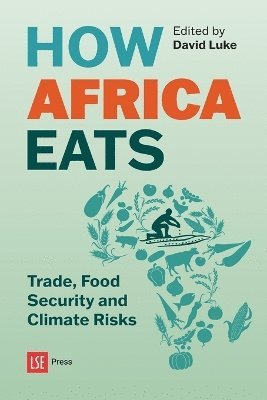
    How Africa Eats

    Trade, Food Security and Climate Risks

    AvDavid Luke

    Häftad, Engelska, 2025

    296 kr

    Beställningsvara. Skickas inom 5-8 vardagar. Fri frakt över 249 kr.

    Beskrivning

    Why do images and reports of starving and malnourished Africans appear so often in the media? What are the actual dimensions of the problem? What has trade and climate got to do with it? In How Africa Eats: Trade, Food Security and Climate Risks, award-winning author David Luke and a team of researchers seek to answer these questions, to explain why Africa struggles with food security and what can be done about it. The intersection between trade, agriculture policies, and climate risks is fundamental to this enquiry.Using a data-led approach, this book examines in detail what Africa eats and where and how it is produced. It investigates how finance, investment, foreign aid, institutions, actors and capacities interact with policies in holding Africa back from becoming an agricultural powerhouse despite having 60 per cent of the world’s arable land area.The book evaluates how climate change exacerbates the continent’s challenges and scrutinises the sustainability of production systems in the face of environmental volatility. Experts in trade policy, international law and development unpack the barriers that currently limit the growth of intra-African food trade, including the role of the World Trade Organization (WTO), and model the expected impact of the implementation of the African Continental Free Trade Area (AfCFTA) on agricultural trade.The extent of food deprivation in Africa is sobering. The United Nations estimates that a fifth of the African population is undernourished, and a quarter live with the day-to-day experience of severe food insecurity. How Africa Eats provides a vital, open access resource for academics, policymakers and trade experts seeking to address the continent’s food insecurity in the face of urgent threats from climate change, trade barriers and complex policy challenges.

    Produktinformation

    • Utgivningsdatum:2025-04-30
    • Mått:152 x 229 x 16 mm
    • Vikt:432 g
    • Format:Häftad
    • Språk:Engelska
    • Antal sidor:296
    • Förlag:LSE Press
    • ISBN:9781911712343

    Utforska kategorier

    • Internationell ekonomi inom Ekonomi och Ledarskap
    • Lantbruk, fiske och skogsbruk inom Ekonomi och Ledarskap
    • Miljövetenskap och miljöpolitik inom Naturvetenskap och teknik

    Mer om författaren

    David Luke is professor in practice and strategic director at the London School of Economics’ Firoz Lalji Institute for Africa, where he oversees a programme on African trade policy. He is a former director of the African Trade Policy Centre at the UN Economic Commission for Africa (ECA), where he led the technical work on the protocols that make up the African Continental Free Trade Area (AfCFTA) Agreement. His research interests include boosting intra-African trade; the AfCFTA initiative; Africa’s multilateral and bilateral trade relationships; and how trade policy intersects with industrialisation, structural transformation, inclusion, gender, public health and climate change. He is a member of the Board of TradeMark Africa and of the Council of the Africa Trade Foundation.Vinaye Dey Ancharaz is an independent consultant on trade and development. He was a senior lecturer at the University of Mauritius and has worked at the International Centre for Trade and Sustainable Development in Geneva and the African Development Bank. He has consulted with several organisations, including the World Bank, the African Development Bank, the United Nations, the Commonwealth Secretariat and the Indian Ocean Commission. He holds a first-class BSc (Hons) in economics from the University of Mauritius, MSc and PhD degrees in international economics from Brandeis University (USA) and an MBA from Imperial College London. He is a fellow of the Chartered Management Institute in the UK.William Davis is an economist who has worked on international trade for over 15 years mainly focused on Africa, with the UK government, United Nations and various think tanks. An Oxford University graduate, he has over 30 publications in international trade. He is currently a visiting fellow at the LSE Firoz Lalji Institute for Africa.Jamie MacLeod is an economics affairs officer at the United Nations Office of the High Representative for Least Developed Countries, Landlocked Developing Countries, and Small Island States in New York and a former policy fellow at the LSE Firoz Lalji Institute for Africa. His career spans more than a decade focusing on trade policies and negotiations, with a particular interest on the African continent, including at the UN Economic Commission for Africa, the International Trade Centre, the World Bank and the Ghana Ministry of Trade and Industry.Olawale Ogunkola is professor of economics at the University of Ibadan, Ibadan, Nigeria. He has published and consulted extensively on trade and regional integration in Africa. He has been a visiting scholar at the International Monetary Fund, a visiting lecturer at the National University of Lesotho, a resource person at the World Trade Organization’s regional trade policy course and a visiting professor at LSE.Colette Van der Ven is an international trade lawyer specialising in sustainable development. As founding director of TULIP Consulting, Colette advises the public sector on legal and policy issues at the trade–environment–development nexus. She is also a visiting lecturer in international law at the Graduate Institute in Geneva. Previously, Colette worked as an international trade lawyer at Sidley Austin’s international dispute settlement practice. She holds a juris doctor from Harvard Law School, and a master’s in public policy from the Harvard Kennedy School of Government.

    Innehållsförteckning

    • List of figures, tables and boxes viiEditors and contributors xiiiAcronyms and abbreviations xvGlossary xixPreface and acknowledgements xxvi1. Introduction: towards a reassessment of fooddeprivation in AfricaDavid Luke 1.1 Defining, measuring and monitoring hunger 1.2 The food system, challenges and global response1.3 Research focus and the book in outline 1.4 Open access publication 2. Africa’s trade, food security and climate risksJamie MacLeod 2.1 Five facts and a conceptual model of trade, food securityand climate risks in Africa 2.2 Africa’s agricultural trade in perspective 2.3 The impact of climate change on agriculture, foodsecurity and trade in Africa Conclusions Annex: categorisation of agricultural trade 3. What Africa eats – the basic foodsOlawale Ogunkola and Vinaye Dey Ancharaz 3.1 Africa in world food production and consumption3.2 The selected basic foods in relation to global productionand consumption 3.3 Trends in the production and consumption of basic foodsin Africa 3.4 Climate risks Summary 4. Policy, resources, actors and capacitiesVinaye Dey Ancharaz 4.1 Agricultural policy and implementation 4.2 Resources 4.3 Actors and capacities Summary 5. Intra-African food tradeDavid Luke, William Davis and Vinaye Dey Ancharaz 5.1 Trends in intra-African food trade 5.2 Regional food trade 5.3 Informal cross-border food trade Summary 6. Expected impact of the African ContinentalFree Trade Area on food securityJamie MacLeod 6.1 Assessing the impact of the African Continental FreeTrade Area on the agriculture sector 6.2 Structure of existing African trade and tariffs6.3 Impact of the African Continental Free Trade Area 6.4 Country-level impactsSummaryAppendix A. Model, data and reform scenario Appendix B. Elasticity sensitivity analysis: comparative lowand high elasticity models, by HS section Appendix C. Elasticity parameters 7. Food security in the African Continental Free TradeArea legal frameworkColette Van der Ven 7.1 Food security provisions in the African Continental FreeTrade Area 7.2 Implementing the African Continental Free Trade Area:removing non-tariff barriers critical for food security 7.3 The role of services, investment, digital trade, competitionpolicy and intellectual property rights7.4 Environmental provisions in the African ContinentalFree Trade AreaSummary 8. Africa’s bilateral food tradeVinaye Dey Ancharaz 8.1 Traditional and emerging partners 8.2 Net food trade 1908.3 What are the most traded foods? 8.4 Trade in agricultural inputs 8.5 What are the trade policy regimes underpinningAfrica’s bilateral food trade? Summary 9. The World Trade Organization’s legal frameworkand Africa’s food securityColette Van der Ven and David Luke 9.1 Food security and WTO rules: an unresolved conundrum 9.2 The Agreement on Agriculture9.3 Agricultural subsidies 9.4 Public stockholding of food supplies9.5 Special safeguard mechanism9.6 Export restrictions on agricultural products9.7 The Sanitary and Phytosanitary Agreement9.8 The Fisheries Subsidies Agreement9.9 Technology transfer and food security9.10 Addressing agriculture and the environment at the WTO Summary 10. Conclusion: trade, food security and climate risksDavid Luke10.1 Climate change poses multiple risks to food security 24610.2 Food production is responding to populationpressure – but not enough10.3 Productivity trails global levels for most of Africa’sbasic foods 10.4 Gaps in policy implementation, finance, institutionsand capacities increase food security vulnerabilities 10.5 Food dominates intra-African trade 10.6 The impact of African Continental Free Trade Areatariff liberalisation on food trade flows will be modest 25010.7 African Continental Free Trade Area provisions onnon-tariff barriers will have greater impact 10.8 Most African countries remain net food importersand increasingly source food from the Global South 10.9 Agricultural negotiations remain contentious at theWTO, with limited progress 10.10 Final word: the story of food deprivation in Africais complex but overcoming poverty matters most Index