• Fri frakt över 249 kr
  • •
  • Snabba leveranser
  • •
  • Billiga böcker
Kundservice

Du är på sajten för privatpersoner.

Företag, bibliotek eller offentlig verksamhet?

Du handlar på classic.bokus.com, där alla dina funktioner finns intakta.
Till classic.bokus.com
Bokus logotyp. Gå till startsidan.
  • Erbjudanden
  • Nyheter
  • Student
  • Topplistor
  • Barn & ungdom
  • Bokus Play
  • E-böcker
  • Pocketböcker
  • Spel & pussel

10% rabatt på allt med kod NYSTART10 →

Sidfot

Mina sidor

    Hjälp

    • Kundservice
    • Vanliga frågor och svar
    • Frakt och leverans
    • Retur vid ångerrätt
    • Reklamera vara
    • Betalning
    • Köpvillkor
    • Allmänna villkor
    • Information om webbplatsens tillgänglighet

    Om Bokus

    • Om oss
    • Pressrum
    • För studenter
    • För företag
    • För bibliotek och offentlig verksamhet
    • För leverantörer
    • Hållbarhet

    Populärt

    • Aktuella erbjudanden
    • Presentkort
    • Studentlitteratur
    • Nya böcker
    • Topplistor
    • Signerade böcker
    • Engelska böcker

    Inspiration

    • Boktips
    • BookTok
    • Populära bokserier
    • Barnbokskaraktärer
    • Populära författare
    Logotyp för Bokus
    Följ oss på Facebook (extern länk)Följ oss på Instagram (extern länk)Följ oss på YouTube (extern länk)Följ oss på TikTok (extern länk)
    bokus @ CookiesAnpassa cookiesIntegritetspolicyKöpvillkor
    Till Citymail hemsida (extern länk)Till Budbee hemsida (extern länk)Till Postnord hemsida (extern länk)Till Schenker hemsida (extern länk)Till Early Bird hemsida (extern länk)Till Walleys hemsida (extern länk)
    1. Historia och arkeologi
    2. Historia
    3. Europas historia

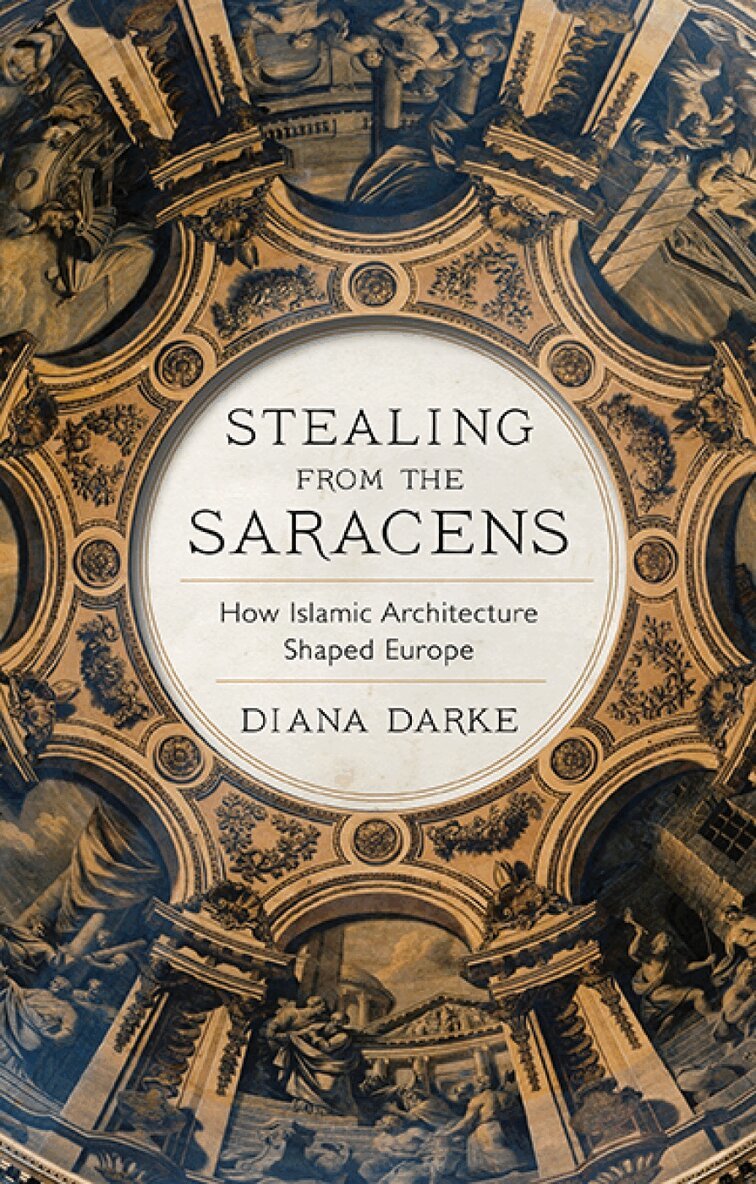
    Stealing from the Saracens

    How Islamic Architecture Shaped Europe

    AvDiana Darke

    Häftad, Engelska, 2024

    238 kr

    Beställningsvara. Skickas inom 7-10 vardagar. Fri frakt över 249 kr.

    Beskrivning

    Against a backdrop of Islamophobia, Europeans are increasingly airbrushing from history their cultural debt to the Muslim world. But this legacy lives on in some of Europe's most recognisable buildings, from Notre-Dame Cathedral to the Houses of Parliament.This beautifully illustrated book reveals the Arab and Islamic roots of Europe's architectural heritage. Diana Darke traces ideas and styles from vibrant Middle Eastern centres like Damascus, Baghdad and Cairo, via Muslim Spain, Venice and Sicily into Europe. She describes how medieval crusaders, pilgrims and merchants encountered Arab Muslim culture on their way to the Holy Land; and explores more recent artistic interaction between Ottoman and Western cultures, including Sir Christopher Wren's inspirations in the 'Saracen' style of Gothic architecture.Recovering this long yet overlooked history of architectural 'borrowing', Stealing from the Saracens is a rich tale of cultural exchange, shedding new light on Europe's greatest landmarks.A New Statesman Book of the Year 2020, chosen by William Dalrymple.A BBC History Magazine Best Book of 2020.

    Produktinformation

    • Utgivningsdatum:2024-05-09
    • Mått:156 x 234 x 22 mm
    • Vikt:826 g
    • Format:Häftad
    • Språk:Engelska
    • Antal sidor:474
    • Förlag:C Hurst & Co Publishers Ltd
    • ISBN:9781911723479

    Utforska kategorier

    • Europas historia inom Historia och arkeologi
    • Arkitekturhistoria inom Kultur
    • Islam inom Filosofi och religion

    Mer om författaren

    Diana Darke has spent four decades in the Middle East. Her books include Islamesque (forthcoming from Hurst), My House in Damascus and The Ottomans. A non-resident scholar at Washington DC's Middle East Institute, she holds degrees in Arabic and in Islamic Art and Architecture.

    Recensioner i media

    'An exhilarating, meticulously researched book that sheds light on centuries of borrowing, tracing the roots of Europe's major buildings.' -- The Guardian'Another brilliant challenge to Islamophobes everywhere, skilfully telling the architectural counterpart of Moller's tale, and showing how much Gothic architecture drew on the forms and innovations of Arab architects and mathematicians.' -- William Dalrymple in The Spectator (Book of the Year 2020)'This persuasive study argues that northern Europe's greatest gothic buildings are deeply indebted to the Arab world ... [it is] a useful reminder of the interconnectedness of civilisation.' -- The Observer'An extraordinarily ambitious work, part cri de coeur and part textbook on Islamic architecture and its influence on the West.' -- Times Literary Supplement'[A] fascinating book. Revelatory [and] eye-opening.' -- Los Angeles Times'Intriguing and eye-opening.' -- Asian Review of Books'As exhilarating as it is learned, this splendidly illustrated book shows how our cultures--including our religious cultures--interact and interweave in ways that challenge all kinds of assumptions we might make about our history. By studying our past, Darke poses essential questions about the possibility of a shared and humane civilisation in the future.' -- Rowan Williams, former Archbishop of Canterbury'Diana Darke writes about Syria and its cultural heritage with love, clarity and authority.' -- Sir Michael Palin'In this original and enlightening book, Darke takes us on a journey of discovery. From the churches of the "Dead Cities" of Syria to Notre-Dame de Paris, she guides us while sharing her passion for the connections between the cultures of the Middle East and those of Europe.' -- Venetia Porter, Curator of Islamic and Contemporary Middle East Art, British Museum'Lively and provocative, this book takes us from Christopher Wren through an exploration of how ideas from the Islamic Middle East profoundly influenced the architecture of Western Europe. Darke's enthusiasm and love for all things Syrian is apparent on every page. A great read for anyone seeking an alternative viewpoint.' -- Hugh Kennedy, Professor of Arabic, SOAS University of London'A fascinating account of the way in which architectural techniques, ideas and aesthetics are actively and explicitly shared between people, indifferently as to whether they happen to be friends or enemies. Darke's book reveals much that is surprising about the canon of European architecture, telling us how human relations are inevitably shared and forgotten only at their mutual peril.' -- Faisal Devji, Professor of Indian History, University of Oxford