• Fri frakt över 249 kr
  • •
  • Snabba leveranser
  • •
  • Billiga böcker
Kundservice

Du är på sajten för privatpersoner.

Företag, bibliotek eller offentlig verksamhet?

Du handlar på classic.bokus.com, där alla dina funktioner finns intakta.
Till classic.bokus.com
Bokus logotyp. Gå till startsidan.
  • Erbjudanden
  • Nyheter
  • Student
  • Topplistor
  • Barn & ungdom
  • Bokus Play
  • E-böcker
  • Pocketböcker
  • Spel & pussel

10% rabatt på allt med kod: NYSTART10 →

Sidfot

Mina sidor

    Hjälp

    • Kundservice
    • Vanliga frågor och svar
    • Frakt och leverans
    • Retur vid ångerrätt
    • Reklamera vara
    • Betalning
    • Köpvillkor
    • Allmänna villkor
    • Information om webbplatsens tillgänglighet

    Om Bokus

    • Om oss
    • Pressrum
    • För studenter
    • För företag
    • För bibliotek och offentlig verksamhet
    • För leverantörer
    • Hållbarhet

    Populärt

    • Aktuella erbjudanden
    • Presentkort
    • Studentlitteratur
    • Nya böcker
    • Topplistor
    • Signerade böcker
    • Engelska böcker

    Inspiration

    • Boktips
    • BookTok
    • Populära bokserier
    • Barnbokskaraktärer
    • Populära författare
    Logotyp för Bokus
    Följ oss på Facebook (extern länk)Följ oss på Instagram (extern länk)Följ oss på YouTube (extern länk)Följ oss på TikTok (extern länk)
    bokus @ CookiesAnpassa cookiesIntegritetspolicyKöpvillkor
    Till Citymail hemsida (extern länk)Till Budbee hemsida (extern länk)Till Postnord hemsida (extern länk)Till Schenker hemsida (extern länk)Till Early Bird hemsida (extern länk)Till Walleys hemsida (extern länk)
    1. Ekonomi och Ledarskap
    2. Företagsekonomi

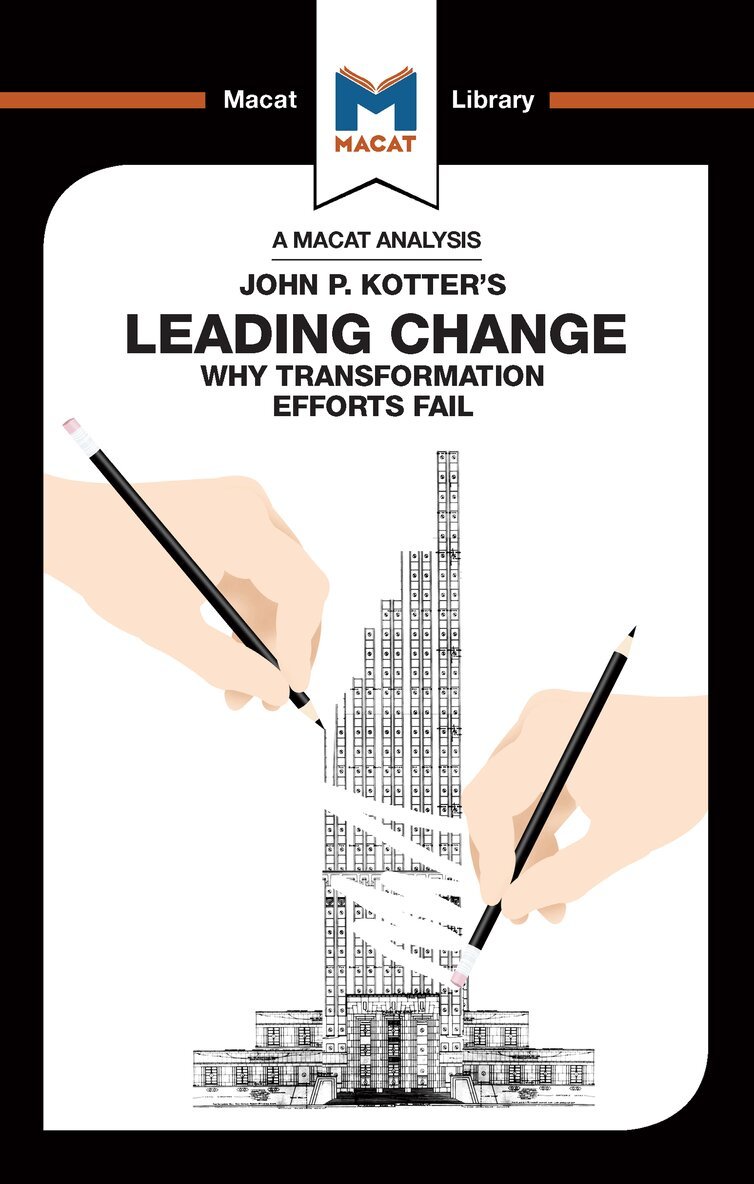
    Analysis of John P. Kotter's Leading Change

    AvYaamina Salman,Nick Broten

    Inbunden, Engelska, 2017

    Del i serien Macat Library

    296 kr

    Beställningsvara. Skickas inom 10-15 vardagar. Fri frakt över 249 kr.

    Fler format och utgåvor

    Häftad

    100 kr

    Beskrivning

    John P. Kotter’s Leading Change: Why Transformation Efforts Fail is a classic of business literature, and an example of high-level analysis and evaluation. In critical thinking, analysis is all about the sequence and features of arguments. When combined with evaluation of the strengths and weaknesses of an argument, it provides the perfect basis for understanding corporate strategies and direction. Kotter applied these skills to his own experiences of coaching large and small businesses through changes aimed at improving their performance.At its heart, Kotter’s conclusion was simple: unsuccessful transformations usually result from poor management decisions. His view was that it was not enough for executives to have management skills. Strong leadership is required, together with a clear process that can be used by all kinds of companies and organizations, no matter what sector they are operating in. Looking at his own successes and failures alike, Kotter used his analytical skills to understand the sequence and features of relevant arguments before evaluating their strengths and distilling them down to identify common mistakes managers make when they try to implement change. This practical application of two core critical thinking skills allowed him to develop an eight-stage model for successful organizational transformation – a model still widely used twenty years on.

    Produktinformation

    • Utgivningsdatum:2017-07-15
    • Mått:129 x 198 x undefined mm
    • Vikt:330 g
    • Format:Inbunden
    • Språk:Engelska
    • Serie:Macat Library
    • Antal sidor:96
    • Förlag:Macat International Limited
    • ISBN:9781912302147

    Utforska kategorier

    • Företagsekonomi inom Ekonomi och Ledarskap
    • Affärsstrategi inom Ekonomi och Ledarskap

    Mer om författaren

    Dr Yaamina Salman holds a PhD in organisational management from the University of Edinburgh. She is currently teaching at the Institute of Administrative Sciences at the University of the Punjab in Pakistan.

    Innehållsförteckning

    • Ways in to the text Who is John P. Kotter? What does Leading Change Say? Why does Leading Change Matter? Section 1: Influences Module 1: The Author and the Historical Context Module 2: Academic Context Module 3: The Problem Module 4: The Author's Contribution Section 2: Ideas Module 5: Main Ideas Module 6: Secondary Ideas Module 7: Achievement Module 8: Place in the Author's Work Section 3: Impact Module 9: The First Responses Module 10: The Evolving Debate Module 11: Impact and Influence Today Module 12: Where Next? Glossary of Terms People Mentioned in the Text Works Cited