• Fri frakt över 249 kr
  • •
  • Snabba leveranser
  • •
  • Billiga böcker
Kundservice

Du är på sajten för privatpersoner.

Företag, bibliotek eller offentlig verksamhet?

Du handlar på classic.bokus.com, där alla dina funktioner finns intakta.
Till classic.bokus.com
Bokus logotyp. Gå till startsidan.
  • Erbjudanden
  • Nyheter
  • Student
  • Topplistor
  • Barn & ungdom
  • Bokus Play
  • E-böcker
  • Pocketböcker
  • Spel & pussel

10% rabatt på allt med kod: NYSTART10 →

Sidfot

Mina sidor

    Hjälp

    • Kundservice
    • Vanliga frågor och svar
    • Frakt och leverans
    • Retur vid ångerrätt
    • Reklamera vara
    • Betalning
    • Köpvillkor
    • Allmänna villkor
    • Information om webbplatsens tillgänglighet

    Om Bokus

    • Om oss
    • Pressrum
    • För studenter
    • För företag
    • För bibliotek och offentlig verksamhet
    • För leverantörer
    • Hållbarhet

    Populärt

    • Aktuella erbjudanden
    • Presentkort
    • Studentlitteratur
    • Nya böcker
    • Topplistor
    • Signerade böcker
    • Engelska böcker

    Inspiration

    • Boktips
    • BookTok
    • Populära bokserier
    • Barnbokskaraktärer
    • Populära författare
    Logotyp för Bokus
    Följ oss på Facebook (extern länk)Följ oss på Instagram (extern länk)Följ oss på YouTube (extern länk)Följ oss på TikTok (extern länk)
    bokus @ CookiesAnpassa cookiesIntegritetspolicyKöpvillkor
    Till Citymail hemsida (extern länk)Till Budbee hemsida (extern länk)Till Postnord hemsida (extern länk)Till Schenker hemsida (extern länk)Till Early Bird hemsida (extern länk)Till Walleys hemsida (extern länk)
    1. Ekonomi och Ledarskap
    2. Företagsekonomi

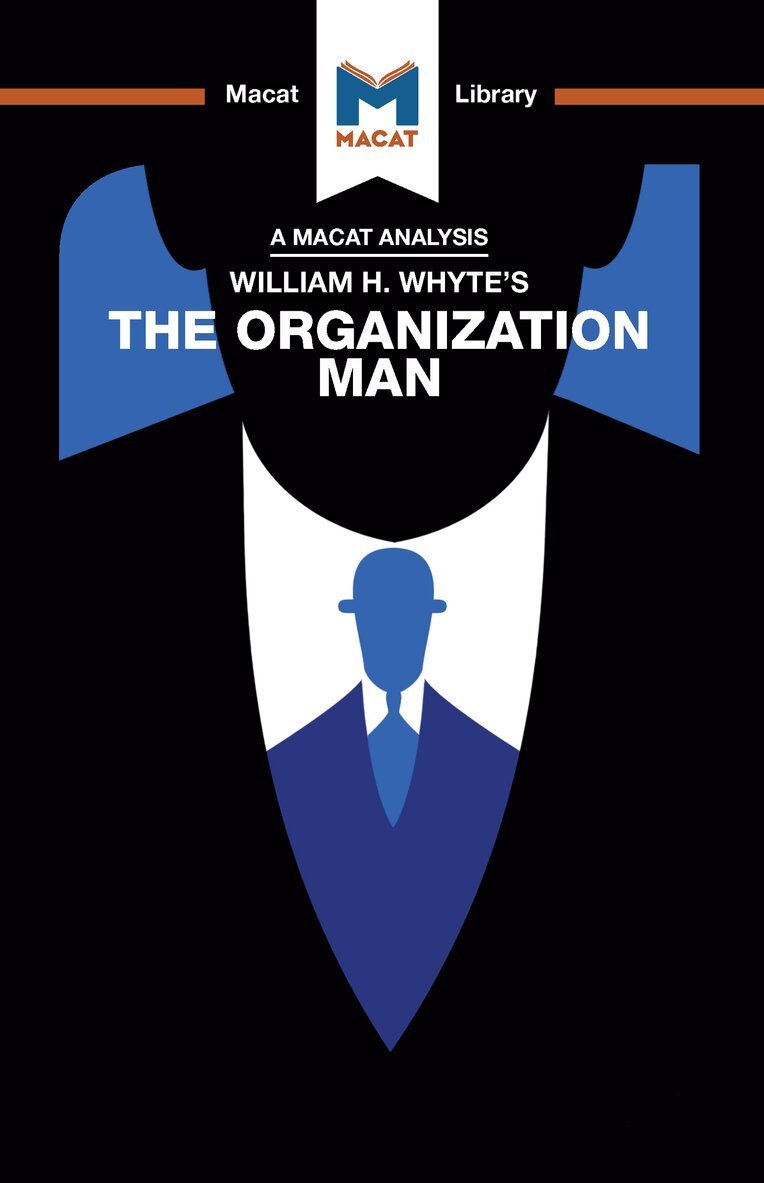
    Analysis of William H. Whyte's The Organization Man

    AvNikki Springer

    Inbunden, Engelska, 2018

    Del i serien Macat Library

    296 kr

    Beställningsvara. Skickas inom 10-15 vardagar. Fri frakt över 249 kr.

    Fler format och utgåvor

    E-bok

    135 kr

    E-bok

    136 kr

    Häftad

    101 kr

    Beskrivning

    William Whyte’s core idea in The Organization Man is that the Protestant Ethic that characterized financial and personal success in American history had been replaced in modern times by the Social Ethic. This stressed the group as the source of creativity and emphasized that the greatest need of the individual is to belong to a group. To investigate this idea, Whyte spent years interviewing the CEOs of Fortune 500 companies when he was an editor at Fortune magazine, one of the top business publications in the United States at the time. What he found was that the recruitment and training were much more focused on “cultural fit” than on technical skill or experience level. As the ranks of new junior executives grew in post-World War II America, so did their impact on urban development and consumer spending. Droves of “package suburbs” sprang up in the fields surrounding major metropolitan areas, and a strong post-war economy coupled with funding from the GI Bill made new homes, cars, and household goods affordable for young families.

    Produktinformation

    • Utgivningsdatum:2018-05-17
    • Mått:129 x 198 x undefined mm
    • Vikt:340 g
    • Format:Inbunden
    • Språk:Engelska
    • Serie:Macat Library
    • Antal sidor:96
    • Förlag:Macat International Limited
    • ISBN:9781912453474

    Utforska kategorier

    • Företagsekonomi inom Ekonomi och Ledarskap

    Mer om författaren

    Nikki Johnson Springer is currently a joint MBA and PhD Student at Yale University.

    Innehållsförteckning

    • Ways in to the Text Who was William H. Whyte? What does The Organization Man Say? Why does The Organization Man Matter? Section 1: Influences Module 1: The Author and the Historical Context Module 2: Academic Context Module 3: The Problem Module 4: The Author's Contribution Section 2: Ideas Module 5: Main Ideas Module 6: Secondary Ideas Module 7: Achievement Module 8: Place in the Author's Work Section 3: Impact Module 9: The First Responses Module 10: The Evolving Debate Module 11: Impact and Influence Today Module 12: Where Next? Glossary of Terms People Mentioned in the Text Works Cited