• Fri frakt över 249 kr
  • •
  • Snabba leveranser
  • •
  • Billiga böcker
Kundservice

Du är på sajten för privatpersoner.

Företag, bibliotek eller offentlig verksamhet?

Du handlar på classic.bokus.com, där alla dina funktioner finns intakta.
Till classic.bokus.com
Bokus logotyp. Gå till startsidan.
  • Erbjudanden
  • Nyheter
  • Student
  • Topplistor
  • Barn & ungdom
  • Bokus Play
  • E-böcker
  • Pocketböcker
  • Spel & pussel

10% studentrabatt med kod TERM26

Sidfot

Mina sidor

    Hjälp

    • Kundservice
    • Vanliga frågor och svar
    • Frakt och leverans
    • Retur vid ångerrätt
    • Reklamera vara
    • Betalning
    • Köpvillkor
    • Allmänna villkor
    • Information om webbplatsens tillgänglighet

    Om Bokus

    • Om oss
    • Pressrum
    • För studenter
    • För företag
    • För bibliotek och offentlig verksamhet
    • För leverantörer
    • Hållbarhet

    Populärt

    • Aktuella erbjudanden
    • Presentkort
    • Studentlitteratur
    • Nya böcker
    • Topplistor
    • Signerade böcker
    • Engelska böcker

    Inspiration

    • Boktips
    • BookTok
    • Populära bokserier
    • Barnbokskaraktärer
    • Populära författare
    Logotyp för Bokus
    Följ oss på Facebook (extern länk)Följ oss på Instagram (extern länk)Följ oss på YouTube (extern länk)Följ oss på TikTok (extern länk)
    bokus @ CookiesAnpassa cookiesIntegritetspolicyKöpvillkor
    Till Citymail hemsida (extern länk)Till Budbee hemsida (extern länk)Till Postnord hemsida (extern länk)Till Schenker hemsida (extern länk)Till Early Bird hemsida (extern länk)Till Walleys hemsida (extern länk)
    1. Språk och ordböcker
    2. Språkvetenskap och lingvistik

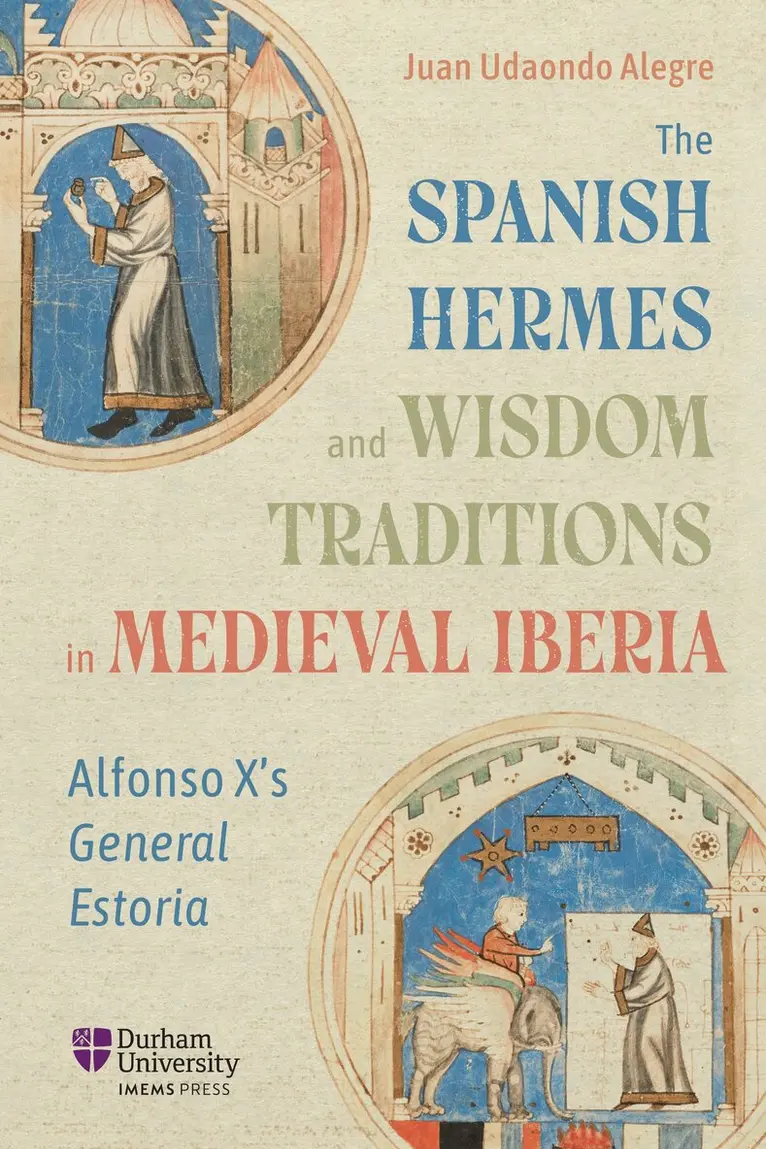
    Spanish Hermes and Wisdom Traditions in Medieval Iberia

    Alfonso X’s General Estoria

    AvJuan Udaondo Alegre

    Inbunden, Engelska, 2024

    Del 1 i serien Translatio

    1 243 kr

    Beställningsvara. Skickas inom 5-8 vardagar. Fri frakt över 249 kr.

    Beskrivning

    A captivating study of translation, adaptation, and intellectual cross-pollination that situates the Castilian Hermes in the center of medieval Mediterranean cultural exchangeHermes Trismegistus, a Hellenistic conflation of the Greek Hermes (god of interpretative wisdom) and the Egyptian Thoth (god of wisdom) was considered by many in the medieval world as the father of culture. Between c. 300 BCE - c. 1200 CE various treatises were attributed to the legendary sage, becoming known as the Hermetica - a combination of diverse philosophical and spiritual systems, addressing subjects such as alchemy, magic, and astrology.The Hermetica circulated widely, with premodern translations in Latin, Hebrew, Syriac, Persian, Arabic, and other Eastern languages. Whilst these iterations have been thoroughly researched, little attention has been paid to the Castilian Hermes, the first rendition of the wisdom traditions of Hermes Trismegistus in a Romance language. This book follows the ways in which Hermetic knowledge was brought to the Iberian Peninsula, showing how Hermes became the philosophical and spiritual inspiration for Christian, Arabic, and Jewish scholars there.Udaondo Alegre unveils the pivotal role of King Alfonso X ("the Learned") of Castile (1252-84) in creating this Spanish Hermes. Through the meticulous tracing of source texts and literary influences, the author explores the myriad ways in which Hermes crossed religious and linguistic boundaries to embody a composite intellectual identity, emblematic of medieval Spain's multicultural ethos. Alfonso's court is revealed as the site for a unique convergence of translation and interpretation that shaped a distinctly "Hispanic" Hermes.

    Produktinformation

    • Utgivningsdatum:2024-11-05
    • Mått:156 x 234 x 20 mm
    • Vikt:540 g
    • Format:Inbunden
    • Språk:Engelska
    • Serie:Translatio
    • Antal sidor:254
    • Förlag:Boydell & Brewer Ltd
    • ISBN:9781914967092

    Utforska kategorier

    • Språkvetenskap och lingvistik inom Språk och ordböcker
    • Filosofiska discipliner inom Filosofi och religion
    • Litteraturvetenskap inom Skönlitteratur

    Mer om författaren

    JUAN UDAONDO ALEGRE is an Assistant Professor of Spanish at Penn State University. He earned a Ph.D. in Education and Literature from the University of La Coruña (Spain), as well as an MA in Classics and a Ph.D. in Spanish Literature from the University of Michigan (Ann Arbor, USA).

    Recensioner i media

    Central to understanding [the intellectual culture of the Middle Ages] is the book known in Arabic as Ghayat al-Hakim and in Latin as Picatrix. Studying this tradition requires a conceptual clarity capable of engaging with the nascent production of scientific texts that do not always adhere to the established rules of what we now understand as science, while at the same time acknowledging that all our knowledge owes to a long scholarly tradition. It is an imposing tradition that demands meticulous attention to detail. Juan Udaondo Alegre successfully tackles all these challenges.Central a la hora de considerar [la cultura intelectual de la Edad Media] es el libro conocido en árabe como Ghāyat al-Ḥakīm y en latín como Picatrix. El estudio de esta tradición requiere combinar una claridad conceptual capaz de enfrentarse a la producción incipiente de textos científicos que no siguen siempre las reglas enunciativas de aquello que hoy conocemos como ciencia, mientras que a la vez la persona interesada en estos textos debe todo aquello que sabemos a una larga tradición erudita que pasa por Fritz Saxl, Eugenio Garin o, más recientemente, Charles Burnett. Se trata de una tradición imponente que requiere atención al detalle. A todas estas pruebas se enfrenta con gran éxito Juan Udaondo Alegre.

    Innehållsförteckning

    • AcknowledgementsList of IllustrationsNote on names, translations, transliterations, abbreviations, and quotationsIntroduction1. Hermetic Wisdom's Arrival in Spain and Its Diffusion Among the "Three Cultures"2. Hermetic History in the Arabic Sources of Alfonso the Wise's General Estoria3. Interpreting Ovid's Metamorphoses in the General Estoria through Hermetic Motives and Adab4. The Legend of the Three Hermeses in the General Estoria5. Hermes's Wisdom and the Liberal Arts in the General EstoriaConclusionBibliographyIndex