• Fri frakt över 249 kr
  • •
  • Snabba leveranser
  • •
  • Billiga böcker
Kundservice

Du är på sajten för privatpersoner.

Företag, bibliotek eller offentlig verksamhet?

Du handlar på classic.bokus.com, där alla dina funktioner finns intakta.
Till classic.bokus.com
Bokus logotyp. Gå till startsidan.
  • Erbjudanden
  • Nyheter
  • Student
  • Topplistor
  • Barn & ungdom
  • Bokus Play
  • E-böcker
  • Pocketböcker
  • Spel & pussel

10% rabatt på allt med kod: NYSTART10 →

Sidfot

Mina sidor

    Hjälp

    • Kundservice
    • Vanliga frågor och svar
    • Frakt och leverans
    • Retur vid ångerrätt
    • Reklamera vara
    • Betalning
    • Köpvillkor
    • Allmänna villkor
    • Information om webbplatsens tillgänglighet

    Om Bokus

    • Om oss
    • Pressrum
    • För studenter
    • För företag
    • För bibliotek och offentlig verksamhet
    • För leverantörer
    • Hållbarhet

    Populärt

    • Aktuella erbjudanden
    • Presentkort
    • Studentlitteratur
    • Nya böcker
    • Topplistor
    • Signerade böcker
    • Engelska böcker

    Inspiration

    • Boktips
    • BookTok
    • Populära bokserier
    • Barnbokskaraktärer
    • Populära författare
    Logotyp för Bokus
    Följ oss på Facebook (extern länk)Följ oss på Instagram (extern länk)Följ oss på YouTube (extern länk)Följ oss på TikTok (extern länk)
    bokus @ CookiesAnpassa cookiesIntegritetspolicyKöpvillkor
    Till Citymail hemsida (extern länk)Till Budbee hemsida (extern länk)Till Postnord hemsida (extern länk)Till Schenker hemsida (extern länk)Till Early Bird hemsida (extern länk)Till Walleys hemsida (extern länk)
    1. Ekonomi och Ledarskap
    2. Nationalekonomi
    3. Ekonomisk historia

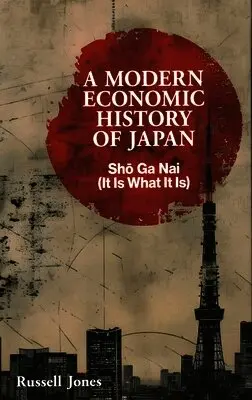
    Modern Economic History of Japan

    Sho Ga Nai (It Is What It Is)

    AvRussell Jones

    Inbunden, Engelska, 2025

    403 kr

    Skickas . Fri frakt över 249 kr.

    Beskrivning

    The modern economic history of Japan is an extraordinary tale. The country rose over the course of just a hundred and twenty odd years from outright backwardness to the elite tier of the most advanced economies. This was a unique achievement, and one realised despite the nation succumbing to a damaging interlude of ugly totalitarianism and subsequently suffering the most demoralising of military defeats.If Japan's progress before World War II was impressive, the decades following its subjugation and occupation by the US saw it record hitherto unheard of rates of economic growth. By the 1980s, such was Japan's record of unrelenting achievement, not only did it spawn a rising tide of political resentment among its competitors, but it also encouraged them to adopt important aspects of the country's economic model.The belief at this time, both at home and abroad, was that Japan's success was set to continue. Such predictions, however, proved wide of the mark. The powerful forces that had driven its post-war boom had already been waning for some time, and its model of economic development was becoming increasingly ill-suited to the requirements of high-income country status.Its rapid rate of expansion became more and more dependent on the unsustainable combination of asset price inflation and the rapid accumulation of private, in particular corporate, debt. This was bound to end in tears, and it did, although the extent of Japan's subsequent fall from grace came as a surprise to most.By the early 2020s, Japan was again a far away country about which relatively little was known and a dwindling proportion cared less. Only a minority were aware, apart from in vague terms, of Japan's initial meteoric rise from impoverished backwater, the nature and extent of its wartime calamity, its remarkable mid-twentieth century economic miracle, and the manner in which it came to be held up as the exemplar for other nations. Instead, Japanification had emerged as a derogatory byword for stagnation.But this was to undersell a still vitally important mature and sophisticated economy and to ignore the enduring lessons that Japan's experience could offer. These extended beyond the process of successful and enduring economic development, to the management of asset price cycles and the currency markets, the complexities of combating deflation, the painful trade offs implicit in successful structural reform, and perhaps most pertinently of all, how best to deal with the inexorable forces of demographic change.

    Produktinformation

    • Utgivningsdatum:2025-06-05
    • Mått:230 x 30 x 160 mm
    • Vikt:620 g
    • Format:Inbunden
    • Språk:Engelska
    • Antal sidor:288
    • Förlag:London Publishing Partnership
    • ISBN:9781916749399

    Utforska kategorier

    • Ekonomisk historia inom Ekonomi och Ledarskap
    • Makroekonomi inom Ekonomi och Ledarskap

    Mer om författaren

    Russell Jones has been a professional economist for over forty years. During a long career in academia and the financial markets he was at different times domiciled in London, Tokyo, Abu Dhabi and Sydney, applying his expertise to all the major asset classes. He worked for a number of major financial institutions and provided advice not just to leading asset managers but also to governments and central banks. He is the author of The Itinerant Economist and The Tyranny of Nostalgia: Half a Century of British Economic Decline.

    Recensioner i media

    "Russell Jones is a rarity: an English economist who spent a major part of his professional career analysing Japan from within. Drawing on this uncommon experience, this book not only offers fascinating insights into the remarkable ebbs and flows in Japan's modern economic history; it also draws out the lessons that Japan's extraordinary journey can offer to many countries in the future." - John Llewellyn, former head of International Forecasting and Policy Analysis at the OECD, and advisor to HM Treasury"Russell Jones has written a well-researched and readily accessible account of Japan's economic experience since the Meiji Restoration of 1868 - a story of rise, fall, rise and struggle, of hubris and nemesis, and one that is full of insights into what is still one of the world's most fascinating economies." - Saul Eslake, economic consultant and advisor to the Australian government

    Innehållsförteckning

    • PrefaceAcknowledgementsSetting the SceneReconstruction and RenaissanceThe Bubble EconomyThe Bubble BurstsThe Crisis DeepensLeaving the Lost Decade BehindThe Global Financial CrisisOut of the Frying Pan ...Abenomics and AfterConclusions and PrognosesBibliography and SourcesEndnotesIndex