• Fri frakt över 249 kr
  • •
  • Snabba leveranser
  • •
  • Billiga böcker
Kundservice

Du är på sajten för privatpersoner.

Företag, bibliotek eller offentlig verksamhet?

Du handlar på classic.bokus.com, där alla dina funktioner finns intakta.
Till classic.bokus.com
Bokus logotyp. Gå till startsidan.
  • Erbjudanden
  • Nyheter
  • Student
  • Topplistor
  • Barn & ungdom
  • Bokus Play
  • E-böcker
  • Pocketböcker
  • Spel & pussel

10% rabatt på allt med kod: NYSTART10 →

Sidfot

Mina sidor

    Hjälp

    • Kundservice
    • Vanliga frågor och svar
    • Frakt och leverans
    • Retur vid ångerrätt
    • Reklamera vara
    • Betalning
    • Köpvillkor
    • Allmänna villkor
    • Information om webbplatsens tillgänglighet

    Om Bokus

    • Om oss
    • Pressrum
    • För studenter
    • För företag
    • För bibliotek och offentlig verksamhet
    • För leverantörer
    • Hållbarhet

    Populärt

    • Aktuella erbjudanden
    • Presentkort
    • Studentlitteratur
    • Nya böcker
    • Topplistor
    • Signerade böcker
    • Engelska böcker

    Inspiration

    • Boktips
    • BookTok
    • Populära bokserier
    • Barnbokskaraktärer
    • Populära författare
    Logotyp för Bokus
    Följ oss på Facebook (extern länk)Följ oss på Instagram (extern länk)Följ oss på YouTube (extern länk)Följ oss på TikTok (extern länk)
    bokus @ CookiesAnpassa cookiesIntegritetspolicyKöpvillkor
    Till Citymail hemsida (extern länk)Till Budbee hemsida (extern länk)Till Postnord hemsida (extern länk)Till Schenker hemsida (extern länk)Till Early Bird hemsida (extern länk)Till Walleys hemsida (extern länk)
    1. Naturvetenskap och teknik
    2. Teknik och industri
    3. Agronomi och lantbruk

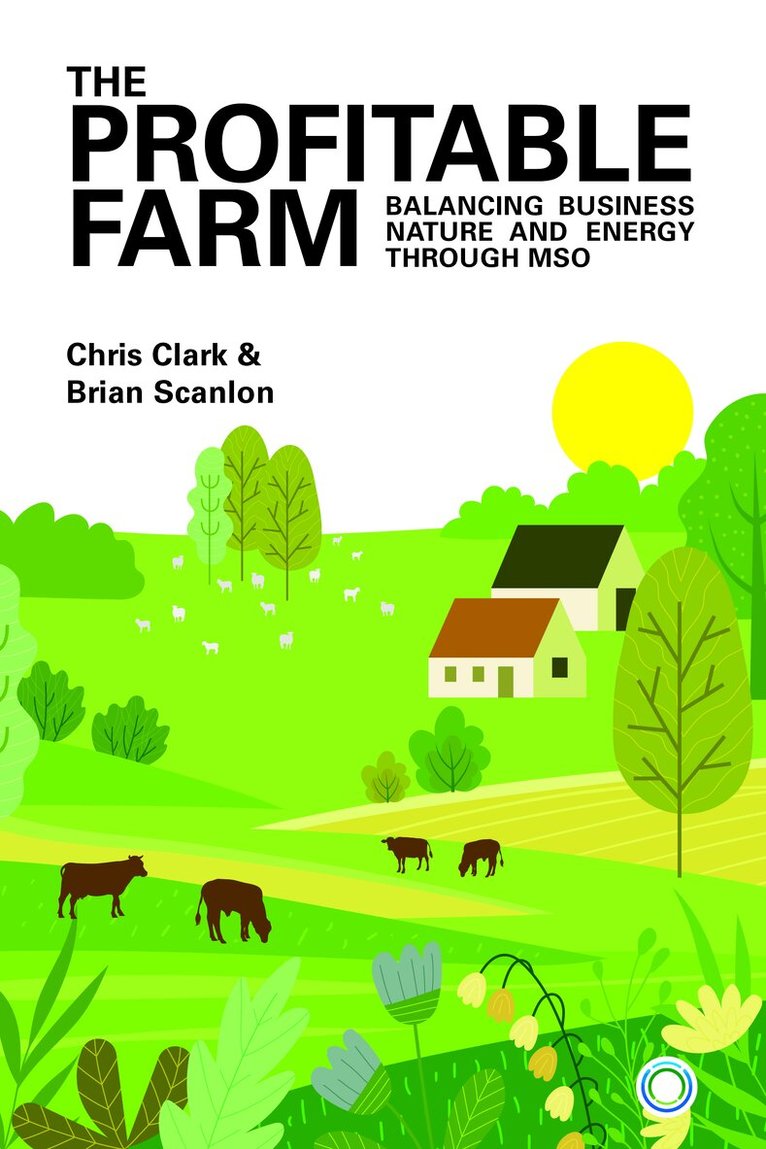
    Profitable Farm

    Balancing Business, Nature and Energy through Maximum Sustainable Output

    AvChris Clark,Brian Scanlon

    Häftad, Engelska, 2025

    352 kr

    Skickas . Fri frakt över 249 kr.

    Beskrivning

    Maximum sustainable output offers increased economic and environmental resilience at both the individual farm and wider industry levels.The Profitable Farm is a pragmatic guide for farmers and other interested parties to maximum sustainable output (MSO) concepts, practices and applications. The Profitable Farm is suitable for farmers seeking greater resilience and increased profitability, academics who need to re-visit the ‘Standard Theory of The Firm’ as it applies to farming, and policy-makers charged with responsibility to secure food-supplies and provide support programmes for the sector.The Profitable Farm provides both the technical background and the practical implications of MSO practices. In particular, it addresses the inescapable realities of energy issues on profitability and environmental damage. Case studies are used throughout to emphasise key points and the appendices will satisfy those wishing to delve further into the technical concepts behind MSO. Unlike most publications on farming, which tend to focus on farming practices, sectoral economics (at a national planning level) or environmental impact issues, The Profitable Farm is essentially about farming as businesses with significant responsibilities to the natural environment and uncompromised animal welfare.

    Produktinformation

    • Utgivningsdatum:2025-04-15
    • Mått:156 x 234 x 15 mm
    • Vikt:497 g
    • Format:Häftad
    • Språk:Engelska
    • Antal sidor:224
    • Förlag:5M Books Ltd
    • Medarbetare:Johnnie Balfour
    • ISBN:9781917159098

    Utforska kategorier

    • Agronomi och lantbruk inom Naturvetenskap och teknik
    • Ekonomiska system inom Ekonomi och Ledarskap

    Mer om författaren

    Chris Clark is an agriculturally educated, non-generational farmer, who when at agricultural college with his wife-to-be, decided that they would buy a farm before he turned 50. His post-college career, with his wife, included spells farming entirely free-range pigs on an organic arable farm, as a tenant farmer and setting-up a successful management consultancy practice specialising in marketing and graphic design work. He purchased Nethergill, a 170 ha farm set in the magnificently moody landscape of Upper Wharfedale, Yorkshire, at 49 and set about turning it into a model of upland farming applying all his considerable management consulting experience.Brian Scanlon is a graduate in mathematics and physics with a post-graduate qualification in operational research. His career started in the steel industry and later embraced management consulting and banking. He had, in parallel, set-up a company which had effected some privatisation projects and flotations on AIM. Farming, to him, was an alien world and he would be 55 before he set foot on a farm. His career had been with major corporations in North America, Europe, and Japan.

    Recensioner i media

    How we live, and in what numbers, and indeed whether we and our fellow creatures can live at all, depends very much on how we farm, and how we farm is determined to a critical extent by the economy. You might think, therefore, that in a rational world the economics of farming would be high on the agriculturalists’ and the government’s agenda, well worked out and well understood.But this isn’t a rational world. Very few farmers have a firm grip of economics or of accountancy, and neither – all too obviously – do most secretaries of state, put in charge before drifting off into the House of Lords or moving on to what are perceived to be higher things. So The Profitable Farm, which spells out the very basics of accountancy as they apply to farming, comes as something of a revelation. The subject is remarkably complex but is explained with clarity and easily followed examples.Chris Clark found, as so many have, that he could not make a profit or living from the 170-hectare upland Yorkshire farm he bought in 2005 – but his fortunes improved when he downsized. This was counterintuitive to the accepted narrative of “Get big or get out!” made popular by the influential Earl Butz, US Secretary for Agriculture in the 1970s. Puzzled, Clark consulted his friend Brian Scanlon, a business strategist, and between them they developed two big ideas.The first is that farming is basically an exercise in energy conversion. Sunlight (via photosynthesis) plus mechanical energy (tillage) are converted into stored chemical energy in the form of human food. But as energy is converted from one form to another, some is wasted. Solar energy into grass, via photosynthesis, is very energy-efficient. Grass energy into cereals or pulses for human food is also efficient. Grass energy into meat via grazing seems very inefficient. However, much of the land in the UK, is not suitable for large-scale crop production, so grazing is often the best option, especially in the uplands.But yields of meat from traditional breeds on ‘unimproved’ pasture may be disappointingly low. Therefore, it is tempting – and in recent decades has become the norm – to apply fertiliser and the rest of the agrochemical pharmacopoeia, and to swap old breeds for modern fast-growing and sometimes extra-fecund livestock to consume the increased yields. But it takes a lot of energy to produce the agrochemicals, and thus the whole process becomes much less efficient. Worse: about half of Britain’s home-grown cereal is fed to livestock for humans to eat. One more highly inefficient step. In the present economy, less energy-efficient doesn’t necessarily mean less profitable, but it often does. So it can indeed pay to produce less, more cheaply.Attempts to maximise yields with extra inputs take their toll on both the soil structure and the natural world, expropriating rivers and groundwater, and polluting soil, watercourses and the atmosphere. Clark and Scanlon have developed the concept of Maximum Sustainable Output or MSO: the amount a given farm and/or agriculture as a whole can produce without triggering environmental decline.The complications arise when we start to cost the exercise – an influx of balance sheets, profit-and-loss accounts, assets and liabilities and cash flow (which so often is the sticking point). The ideas of ‘term’ and ‘discounting’ – money changes value just by sitting around – complicate things further. The authors explain all this admirably, but some of it is unavoidably hard. Good accountants certainly earn their fees.Everyone with a stake in farming should read this book. Ideally that means all of us, since our lives depend on it. As the authors point out, though, there’s still a lot of thinking to be done. I wonder if any existing economic system, whether Marxist, neoliberal or anything in between, is really fit for purpose – if the purpose is indeed to provide all of humanity with good food without destroying the rest of the world. And if not, what do we need instead?

    Innehållsförteckning

    • ForewordAbout the authorsAbbreviationsIntroductionFarm accountsBusiness performanceEconomic modelsEnergyNatural capitalMSO theoryMSO in practiceMSO for the wider communityAddressing the futureAn outline programme for business developmentEpilogueAppendicesNotesGlossaryFurther reading & listeningIndex