• Fri frakt över 249 kr
  • •
  • Snabba leveranser
  • •
  • Billiga böcker
Kundservice

Du är på sajten för privatpersoner.

Företag, bibliotek eller offentlig verksamhet?

Du handlar på classic.bokus.com, där alla dina funktioner finns intakta.
Till classic.bokus.com
Bokus logotyp. Gå till startsidan.
  • Erbjudanden
  • Nyheter
  • Student
  • Topplistor
  • Barn & ungdom
  • Bokus Play
  • E-böcker
  • Pocketböcker
  • Spel & pussel

10% rabatt på allt med kod NYSTART10 →

Sidfot

Mina sidor

    Hjälp

    • Kundservice
    • Vanliga frågor och svar
    • Frakt och leverans
    • Retur vid ångerrätt
    • Reklamera vara
    • Betalning
    • Köpvillkor
    • Allmänna villkor
    • Information om webbplatsens tillgänglighet

    Om Bokus

    • Om oss
    • Pressrum
    • För studenter
    • För företag
    • För bibliotek och offentlig verksamhet
    • För leverantörer
    • Hållbarhet

    Populärt

    • Aktuella erbjudanden
    • Presentkort
    • Studentlitteratur
    • Nya böcker
    • Topplistor
    • Signerade böcker
    • Engelska böcker

    Inspiration

    • Boktips
    • BookTok
    • Populära bokserier
    • Barnbokskaraktärer
    • Populära författare
    Logotyp för Bokus
    Följ oss på Facebook (extern länk)Följ oss på Instagram (extern länk)Följ oss på YouTube (extern länk)Följ oss på TikTok (extern länk)
    bokus @ CookiesAnpassa cookiesIntegritetspolicyKöpvillkor
    Till Citymail hemsida (extern länk)Till Budbee hemsida (extern länk)Till Postnord hemsida (extern länk)Till Schenker hemsida (extern länk)Till Early Bird hemsida (extern länk)Till Walleys hemsida (extern länk)
    1. Hem och Trädgård
    2. Trädgårdsböcker
    3. Odlingsmetoder
    4. Hållbar trädgårdsodling

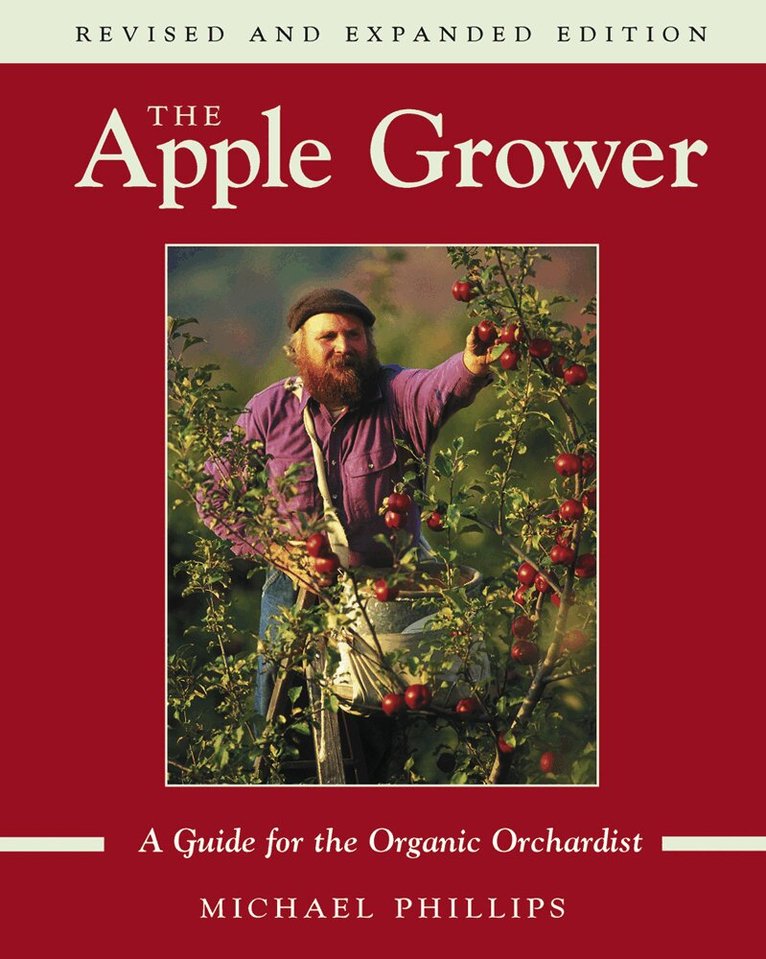
    Apple Grower

    Guide for the Organic Orchardist, 2nd Edition

    AvMichael Phillips

    Häftad, Engelska, 2005

    322 kr

    Beställningsvara. Skickas inom 7-10 vardagar. Fri frakt över 249 kr.

    Fler format och utgåvor

    E-bok

    469 kr

    Beskrivning

    For decades fruit growers have sprayed their trees with toxic chemicals in an attempt to control a range of insect and fungal pests. Yet it is possible to grow apples responsibly, by applying the intuitive knowledge of our great-grandparents with the fruits of modern scientific research and innovation.Since The Apple Grower first appeared in 1998, orchardist Michael Phillips has continued his research with apples, which have been called "organic's final frontier." In this new edition of his widely acclaimed work, Phillips delves even deeper into the mysteries of growing good fruit with minimal inputs. Some of the cutting-edge topics he explores include:The use of kaolin clay as an effective strategy against curculio and borers, as well as its limitationsCreating a diverse, healthy orchard ecosystem through understory management of plants, nutrients, and beneficial microorganismsHow to make a small apple business viable by focusing on heritage and regional varieties, value-added products, and the "community orchard" modelThe author's personal voice and clear-eyed advice have already made The Apple Grower a classic among small-scale growers and home orchardists. In fact, anyone serious about succeeding with apples needs to have this updated edition on their bookshelf.

    Produktinformation

    • Utgivningsdatum:2005-10-01
    • Mått:203 x 251 x 18 mm
    • Vikt:854 g
    • Format:Häftad
    • Språk:Engelska
    • Antal sidor:360
    • Upplaga:2
    • Förlag:Chelsea Green Publishing Co
    • ISBN:9781931498913

    Utforska kategorier

    • Hållbar trädgårdsodling inom Hem och Trädgård

    Mer om författaren

    Michael Phillips was a farmer, writer, carpenter, orchard consultant, and speaker. He lived with his wife, Nancy, and daughter, Grace, on Heartsong Farm in northern New Hampshire, growing apples and a variety of medicinal herbs. Michael is the author of The Apple Grower (Chelsea Green, 2005) and The Holistic Orchard (2011), and teamed up with Nancy to write The Herbalist’s Way (2005). His Lost Nation Orchard is part of the Holistic Orchard Network, and Michael also led the community orchard movement at www.GrowOrganicApples.com.

    Recensioner i media

    Northern Woodlands (Review)-As anyone who has ever planted a few apple trees knows all too well, growing apples can be a perplexing and frustrating endeavor. The trouble is that apples are very attractive to many of nature's creatures besides humans. And at least one of these creatures, from deer to apple maggot flies, and from the roundheaded apple tree borer to mice (not to mention the long list of diseases that also affect apples), is sure to be working for its share of the fruit (and in some cases the tree) every day of the year. But if you've ever baked a pie made from your own apples, or pressed a batch of cider from them, the trials and tribulations all seem worth it with that first bite or sip.Michael Phillips' revised The Apple Grower has as much help as you'll find anywhere to get you to that first bite of pie or sip of cider. The previous edition, published in 1998, was the bible for many backyard orchardists and commercial organic growers. The new edition, boasting color photos and expanded and better-organized chapters, is a real treat for anyone interested in apples. The new edition's chapter on diseases and pests will be helpful to those left scratching their head about who or what is eating the apples or trees they are trying to grow.Phillips sprinkles tributes to other apple growers throughout the text. These persistent and dedicated souls, along with Phillips, are exploring uncharted territory: they are trying, without the use of traditional pesticides and chemicals, to keep ever-evolving pests and diseases away from trees that are themselves not evolving. All named apple varieties are genetic dead ends. A Macintosh today is genetically identical to a Macintosh from a century ago, but the bugs and diseases have spent that time evolving to break through the trees' defenses.Phillips presents intriguing ideas about orchard soils. Since people started growing apples in orchards, those orchard soils have largely been bacterially based, meaning that fertility has been maintained by the addition of bacteria-laden manure. Sheep and cattle were allowed to graze the grass and eat dropped apples, adding manure to the soils, and often the orchard was formerly pasture or hayfield, where manure was regularly added to maintain fertility. Bacteria-based soils are great for grasses and hay crops, but not necessarily for trees.Phillips argues that apple trees are still, well, trees, and like other trees, they prefer forest soils, which rely mainly on fungi to break down organic matter such as bark, wood, and other plant matter to maintain soil fertility. Phillips believes that this soil is what apple trees naturally want, and that it makes them healthier and better able to deal with pests and diseases. He has been experimenting with using fast-growing comfrey in his orchard, cutting it down to add rotting plant matter and to stifle the growth of grass, which can rob an apple tree's surface feeder roots of nutrients. He advocates adding composted branches, bark, wood chips, and even excess chunks of sheetrock to your orchard to promote the fungi in the soil and deter grasses.Phillips' style is more writerly than reference. His homespun stories about his many years of trying to outwit and outmaneuver the legions of apple-loving creatures are both entertaining and packed with tips. Phillips' extremely handy compendium of orchard tasks has always served as my basic plan of attack for what to do in my orchard, and the revised and expanded edition will be a welcome addition to my library. I have no doubt that over time it will take on the grimy, thumbed-through, and well-used look of my copy of the first edition of The Apple Grower.

    Innehållsförteckning

    • AcknowledgmentsIntroductionChapter OneGrowing Apples LocallyApple Growing a Hundred Years Ago Today's Integrated Pest Management Bringing It All TogetherConventional WisdomThe Small Commercial Orchard in ContextChapter TwoThe Orchard Site and Its ClimateSacred SlopesThe Four Points of the CompassDry GroundZone HardinessWindbreaksBiodiversity in a Fruit OrchardProximity to MarketsChapter ThreeThe Enriching of Fruit LandsThe Living SoilCompost ForeverSoil AmendmentsFoliar FeedingBiodynamic TeachingsCover CroppingPonderable MulchSoil Tests and Leaf AnalysisTrace Minerals for Every TreeChapter FourThe Trees and the PlantingCultivar SelectionRootstocks and Tree SpacingNursery Sources and Varietal CollectorsGrafting and PropagationThe Setting of the TreesOrchard Size and LayoutHigh-Density PlantingsDown to the Nitty-GrittyChapter FiveCare of the OrchardIntuitive PruningTraining the Apple TreePollination and Fruit SetFrost ProtectionThinning the FruitThe Great Grass DebateMowing OptionsSummer CarePreparing for WinterRestoring Neglected OrchardsChapter SixApple Pests and DiseasesThe Beginning of UnderstandingGood-bye, Foliar PestsInsect Identification Bug-by-Bug ProfilesBeneficial Insects Good SanitationFungal DiseasesOther Diseases of the AppleFour-Legged ConsiderationsChapter SevenSpraying for BalanceThe Complexities of NatureAll the Answers Aren't Known, but We're GainingTiming Is EverythingThe Orchard CalendarBotanicals, Elementals, and Forbidden FruitGentler SpraysSpray Equipment for the Small Commercial OrchardMatters of Concern Chapter EightReaping the Harvest When to PickHarvest Equipment The Apple Picker's Reel Hiring Help Windfalls and Fat Sheep From Orchard to Packing Shed Grading Revisited Cider Making The Juice of the Apple Apple Storage Chapter NineMarketing in the Local Economy Getting a Fair Price Apple Economics Niche Marketing Value-Added Products Organic Certification Advertising Marketing Innovations Long-Term Vision Chapter TenThe Last Organic Frontier The Sustainable Orchard Tree Spirit, Community Spirit Organic Perseverance Here We Come a-Wassailing Esopus Spitzenberg and a Better Tomorrow Appendix I Compendium of Orchard Tasks Appendix 2 Apple Grower's Source List Appendix 3 Lost Nation Apple Recipes Appendix 4 Bibliography Index