• Fri frakt över 249 kr
  • •
  • Snabba leveranser
  • •
  • Billiga böcker
Kundservice

Du är på sajten för privatpersoner.

Företag, bibliotek eller offentlig verksamhet?

Du handlar på classic.bokus.com, där alla dina funktioner finns intakta.
Till classic.bokus.com
Bokus logotyp. Gå till startsidan.
  • Erbjudanden
  • Nyheter
  • Student
  • Topplistor
  • Barn & ungdom
  • Bokus Play
  • E-böcker
  • Pocketböcker
  • Spel & pussel

Må bättre, för mindre! Upp till 50% rabatt på hälsoböcker

Sidfot

Mina sidor

    Hjälp

    • Kundservice
    • Vanliga frågor och svar
    • Frakt och leverans
    • Retur vid ångerrätt
    • Reklamera vara
    • Betalning
    • Köpvillkor
    • Allmänna villkor
    • Information om webbplatsens tillgänglighet

    Om Bokus

    • Om oss
    • Pressrum
    • För studenter
    • För företag
    • För bibliotek och offentlig verksamhet
    • För leverantörer
    • Hållbarhet

    Populärt

    • Aktuella erbjudanden
    • Presentkort
    • Studentlitteratur
    • Nya böcker
    • Topplistor
    • Signerade böcker
    • Engelska böcker

    Inspiration

    • Boktips
    • BookTok
    • Populära bokserier
    • Barnbokskaraktärer
    • Populära författare
    Logotyp för Bokus
    Följ oss på Facebook (extern länk)Följ oss på Instagram (extern länk)Följ oss på YouTube (extern länk)Följ oss på TikTok (extern länk)
    bokus @ CookiesAnpassa cookiesIntegritetspolicyKöpvillkor
    Till Citymail hemsida (extern länk)Till Budbee hemsida (extern länk)Till Postnord hemsida (extern länk)Till Schenker hemsida (extern länk)Till Early Bird hemsida (extern länk)Till Walleys hemsida (extern länk)
    1. Psykologi och pedagogik
    2. Pedagogik

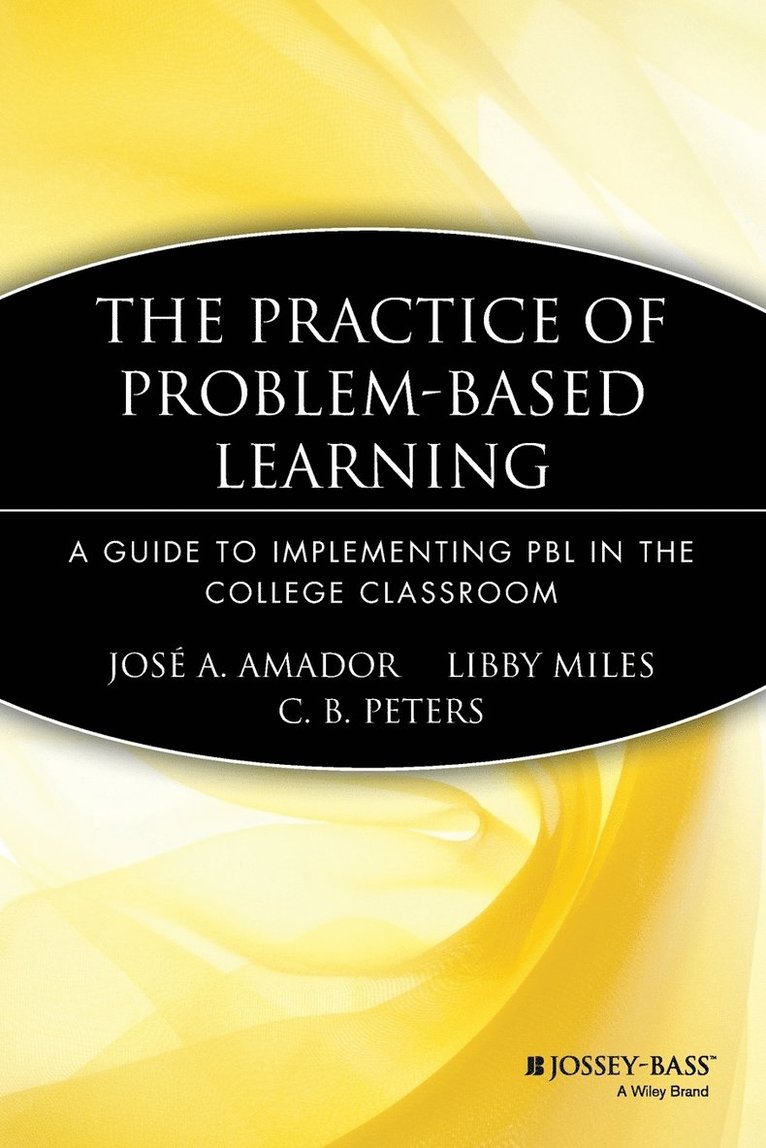
    Practice of Problem-Based Learning

    A Guide to Implementing PBL in the College Classroom

    AvJosé A. Amador,Libby Miles

    Häftad, Engelska, 2007

    Del 82 i serien JB - Anker

    410 kr

    Beställningsvara. Skickas inom 5-8 vardagar. Fri frakt över 249 kr.

    Beskrivning

    This book is a guide for the development and implementation of problem-based learning (PBL) in college-level courses. It provides practical advice from real professors, includes examples of PBL in action through every stage from problem development to implementation, and integrates cross-disciplinary experiences into the practice of PBL in the college classroom. Its nuts-and-bolts approach makes it valuable to faculty, graduate teaching assistants, and faculty development professionals interested in learning how to do PBL, as well as to those already using PBL who would like to learn more about what other practitioners do in their classrooms.Readers will learn what really is and isn’t PBL and why some choose to use it, what is its effect on the learning landscape, and how to overcome tricky issues such as class size, student resistance, controlling classroom chaos, conservative colleagues, assessment, and student evaluations. Extensive examples and resources for further study are included, making it a concise, yet comprehensive guide to launching a successful problem-based learning course on your own.

    Produktinformation

    • Utgivningsdatum:2007-07-24
    • Mått:153 x 231 x 9 mm
    • Vikt:227 g
    • Format:Häftad
    • Språk:Engelska
    • Serie:JB - Anker
    • Antal sidor:160
    • Förlag:John Wiley & Sons Inc
    • ISBN:9781933371078

    Utforska kategorier

    • Pedagogik inom Psykologi och pedagogik

    Mer om författaren

    Jose A. Amador is professor of soil science and microbial ecology at the University of Rhode Island. He received his B.S. degree (1982) in biochemistry, and M.S. (1986) and Ph.D. (1990) degrees in soil microbiology from Cornell University. Jose has been at the University of Rhode Island since 1992, where he teaches in the department of Natural Resources Science and the Honors Program. For the past six years, he has used the problem-based learning approach to teach courses in introductory soil science, soil microbiology, soil and water chemistry, and land use. His research focuses on the applications of soil ecology and microbiology to problems in nutrient cycling, wastewater disposal, bioremediation, and plant nutrition. Libby Miles is associate professor in the College Writing Program at the University of Rhode Island. She received her B.A. degree in theatre from Williams College (1986), and M.A. (1995) and Ph.D. (1999) degrees in rhetoric and composition from Purdue University. Libby has been at the University of Rhode Island since 1998, where she has taught in the college writing program, the English department's graduate program, and the honors program. She also directed the university's writing center. She has used problem-based learning in several of her writing classes, from Honors Writing for First-Year Students, to Business Communications to a graduate seminar in Rhetoric and Institutional Critique. Her current research interests are the economic and institutional conditions of writing and writing instruction, rhetoric as an agent of social change, and interdisciplinary writing. C.B. Peter is professor of sociology at the University of Rhode Island. He received his B.A. degree (1971) from Westmont College, and M.A. (1973) and Ph.D. (1977) degrees from the University of Kentucky. His scholarly expertise is in cultural sociology and the sociology of knowledge. In addition to his sociological books and articles, C.B. has published papers and presented workshops and seminars on teaching and instructional design. He has used problem-based learning units with first-year students in large enrollment sections of introductory sociology.

    Innehållsförteckning

    • About the Authors. Foreword.Preface.1 Why (We) Use PBL.Why We Switched.What Is PBL?Issues.2 Changing the Landscape.Changing Ourselves.Changing Our Courses.Changing Our Students.3 No Problems? No Problem.The Basics.Sources for Problems.Designing a Successful Problem.4 Controlling Chaos in PBL: The Messy Middle.Conducting Class.Our Role.Student Contribution.5 What Now? Evaluation, Revision, and Reflection.The Students.What Worked—and What Didn’t.The Sustainability of PBL.Epilogue.Bibliography.Index.