• Fri frakt över 249 kr
  • •
  • Snabba leveranser
  • •
  • Billiga böcker
Kundservice

Du är på sajten för privatpersoner.

Företag, bibliotek eller offentlig verksamhet?

Du handlar på classic.bokus.com, där alla dina funktioner finns intakta.
Till classic.bokus.com
Bokus logotyp. Gå till startsidan.
  • Erbjudanden
  • Nyheter
  • Student
  • Topplistor
  • Barn & ungdom
  • Bokus Play
  • E-böcker
  • Pocketböcker
  • Spel & pussel

10% rabatt på allt med kod: NYSTART10 →

Sidfot

Mina sidor

    Hjälp

    • Kundservice
    • Vanliga frågor och svar
    • Frakt och leverans
    • Retur vid ångerrätt
    • Reklamera vara
    • Betalning
    • Köpvillkor
    • Allmänna villkor
    • Information om webbplatsens tillgänglighet

    Om Bokus

    • Om oss
    • Pressrum
    • För studenter
    • För företag
    • För bibliotek och offentlig verksamhet
    • För leverantörer
    • Hållbarhet

    Populärt

    • Aktuella erbjudanden
    • Presentkort
    • Studentlitteratur
    • Nya böcker
    • Topplistor
    • Signerade böcker
    • Engelska böcker

    Inspiration

    • Boktips
    • BookTok
    • Populära bokserier
    • Barnbokskaraktärer
    • Populära författare
    Logotyp för Bokus
    Följ oss på Facebook (extern länk)Följ oss på Instagram (extern länk)Följ oss på YouTube (extern länk)Följ oss på TikTok (extern länk)
    bokus @ CookiesAnpassa cookiesIntegritetspolicyKöpvillkor
    Till Citymail hemsida (extern länk)Till Budbee hemsida (extern länk)Till Postnord hemsida (extern länk)Till Schenker hemsida (extern länk)Till Early Bird hemsida (extern länk)Till Walleys hemsida (extern länk)
    1. Psykologi och pedagogik
    2. Pedagogik
    3. Pedagogisk teori och filosofi

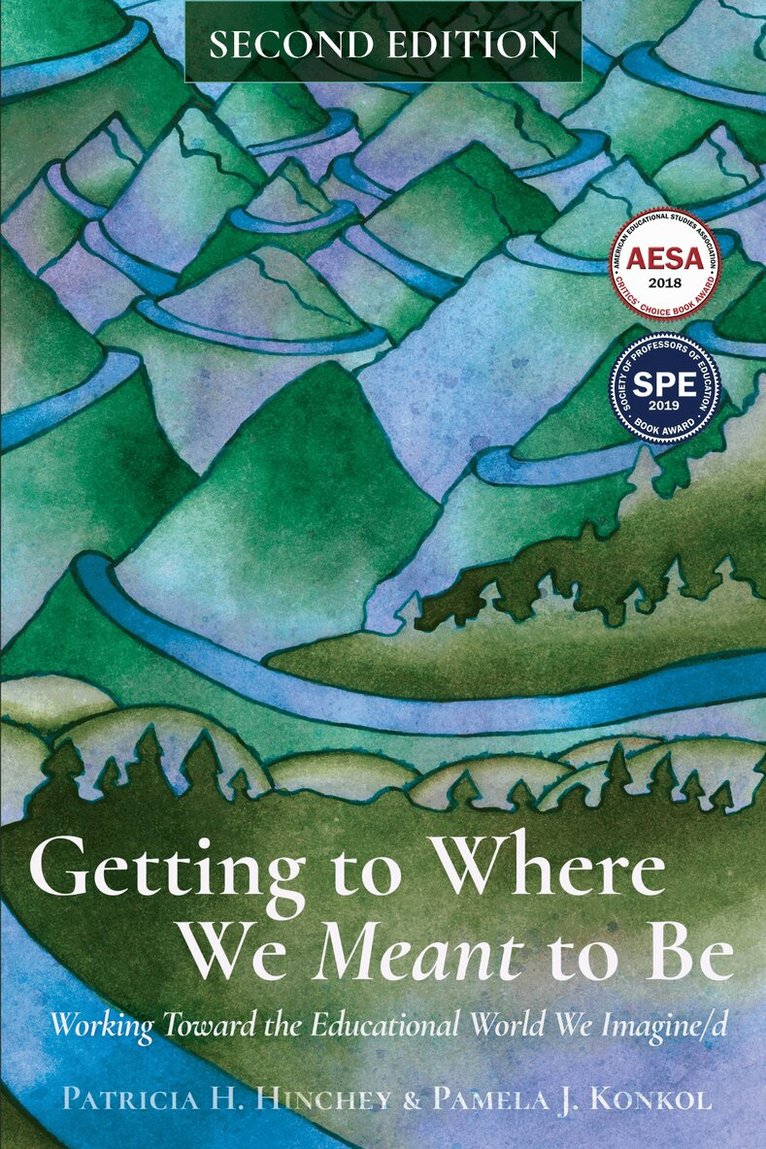
    Getting to Where We Meant to Be

    Working Toward the Educational World We Imagine/d

    AvPatricia H. Hinchey,Pamela J. Konkol

    Häftad, Engelska, 2024

    473 kr

    Beställningsvara. Skickas inom 5-8 vardagar. Fri frakt över 249 kr.

    Beskrivning

    At a moment when brawls are breaking out at school board meetings and state officials are increasingly issuing curricular mandates, it's possible that this text's central question is more important than ever: How is it that given good intentions and hard work among education professionals, things in schools can go so very wrong? As in the first edition, Hinchey and Konkol suggest that unspoken and misleading assumptions can produce choices, decisions and policies with disastrous consequences for kids. They tease out such assumptions on the key issues of school goals, curriculum, education for citizenship, discipline and school reform, inviting readers to question the taken-for-granted in order to better align intentions and outcomes. Such contemporary issues as book banning and parents' movements are presented not as isolated controversies, but instead in their historical, cultural and political contexts. Designed for both undergraduate and graduate classrooms, the text applies to a wide range of studies related to public education, including its theory, policy, history and politics. Without proselytizing, the text asks readers to think for themselves and articulate their own commitments guided by end-of-chapter questions, some intended for all readers and some specifically for experienced professionals. Suggested additional readings, websites and videos invite further exploration of the topics under discussion and offer still more food for thought.

    Produktinformation

    • Utgivningsdatum:2024-04-02
    • Mått:152 x 229 x 16 mm
    • Vikt:272 g
    • Format:Häftad
    • Språk:Engelska
    • Antal sidor:250
    • Upplaga:2
    • Förlag:Myers Education Press
    • ISBN:9781975506568

    Utforska kategorier

    • Pedagogisk teori och filosofi inom Psykologi och pedagogik
    • Utbildningsstrategier och utbildningspolitik inom Psykologi och pedagogik

    Mer om författaren

    Patricia H. Hinchey is Penn State Professor Emerita of Education and a Fellow of the National Education Policy Center. She holds a doctorate from Teachers College, Columbia University, where she taught several graduate courses in secondary English education. In addition to teaching a wide variety of both undergraduate and graduate education courses at Penn State, she has conducted professional development for K-12 and university faculty nationally and internationally. She also served as director of a professional development unit serving university faculty at multiple campus locations. In addition to teacher education, professional development, and action research, her interests include the intersection of theory and classroom practice, a focus of this most recent work from Myers Education Press. She is as well the author or co-author of several well-known books and numerous articles.Pamela J. Konkol, PhD is the Executive Director of the American Educational Studies Association and a professor of foundations, social policy, and research at Concordia University. She holds a PhD in Policy Studies in Urban Education and an MEd in Curriculum Studies from the University of Illinois at Chicago, and a BS in Communication/Cultural Studies and Women's Studies from Northwestern University. When not fighting the good fight for children, families, and communities, she's active in English Bull Terrier rescue efforts.

    Innehållsförteckning

    • A Message from the PublisherPreface1. "You Have Arrived at Your Destination." Oh,really?The Many Ways We Lose Our WayThe Many Ways We Lose Our Way in SchoolsWhere Do You Want to Go . . . and How Will You Get There?Things to Think AboutThings to Explore2. What are Schools for, Anyway?Assumptions about the Goals of Public SchoolsFrameworks for Goal SettingChoices for EducatorsThings to Think AboutThings to Explore3. What Does It Mean to Educate for Citizenship?Assumptions about Educating for CitizenshipFrameworks for Citizenship EducationChoices for EducatorsThings to Think AboutThings to Explore4. What Is Curriculum? And Who Decides What's inIt?Assumptions around CurriculumFrameworks for CurriculumChoices for EducatorsThings to Think AboutThings to Explore5. How Much Control Does a (Student) Body Need?Assumptions about Control in SchoolsFrameworks for Disciplinary PoliciesChoices for EducatorsThings to Think AboutThings to Explore6. Reform? By Whom, and For What?Assumptions about ReformFrameworks for ReformChoices for EducatorsThings to Think AboutThings to Explore7. The Way ForwardIndex