• Fri frakt över 249 kr
  • •
  • Snabba leveranser
  • •
  • Billiga böcker
Kundservice

Du är på sajten för privatpersoner.

Företag, bibliotek eller offentlig verksamhet?

Du handlar på classic.bokus.com, där alla dina funktioner finns intakta.
Till classic.bokus.com
Bokus logotyp. Gå till startsidan.
  • Erbjudanden
  • Nyheter
  • Student
  • Topplistor
  • Barn & ungdom
  • Bokus Play
  • E-böcker
  • Pocketböcker
  • Spel & pussel

10% rabatt på allt med kod: NYSTART10 →

Sidfot

Mina sidor

    Hjälp

    • Kundservice
    • Vanliga frågor och svar
    • Frakt och leverans
    • Retur vid ångerrätt
    • Reklamera vara
    • Betalning
    • Köpvillkor
    • Allmänna villkor
    • Information om webbplatsens tillgänglighet

    Om Bokus

    • Om oss
    • Pressrum
    • För studenter
    • För företag
    • För bibliotek och offentlig verksamhet
    • För leverantörer
    • Hållbarhet

    Populärt

    • Aktuella erbjudanden
    • Presentkort
    • Studentlitteratur
    • Nya böcker
    • Topplistor
    • Signerade böcker
    • Engelska böcker

    Inspiration

    • Boktips
    • BookTok
    • Populära bokserier
    • Barnbokskaraktärer
    • Populära författare
    Logotyp för Bokus
    Följ oss på Facebook (extern länk)Följ oss på Instagram (extern länk)Följ oss på YouTube (extern länk)Följ oss på TikTok (extern länk)
    bokus @ CookiesAnpassa cookiesIntegritetspolicyKöpvillkor
    Till Citymail hemsida (extern länk)Till Budbee hemsida (extern länk)Till Postnord hemsida (extern länk)Till Schenker hemsida (extern länk)Till Early Bird hemsida (extern länk)Till Walleys hemsida (extern länk)
    1. Samhälle och politik
    2. Samhälle och kultur
    3. Sociala grupper och identitet

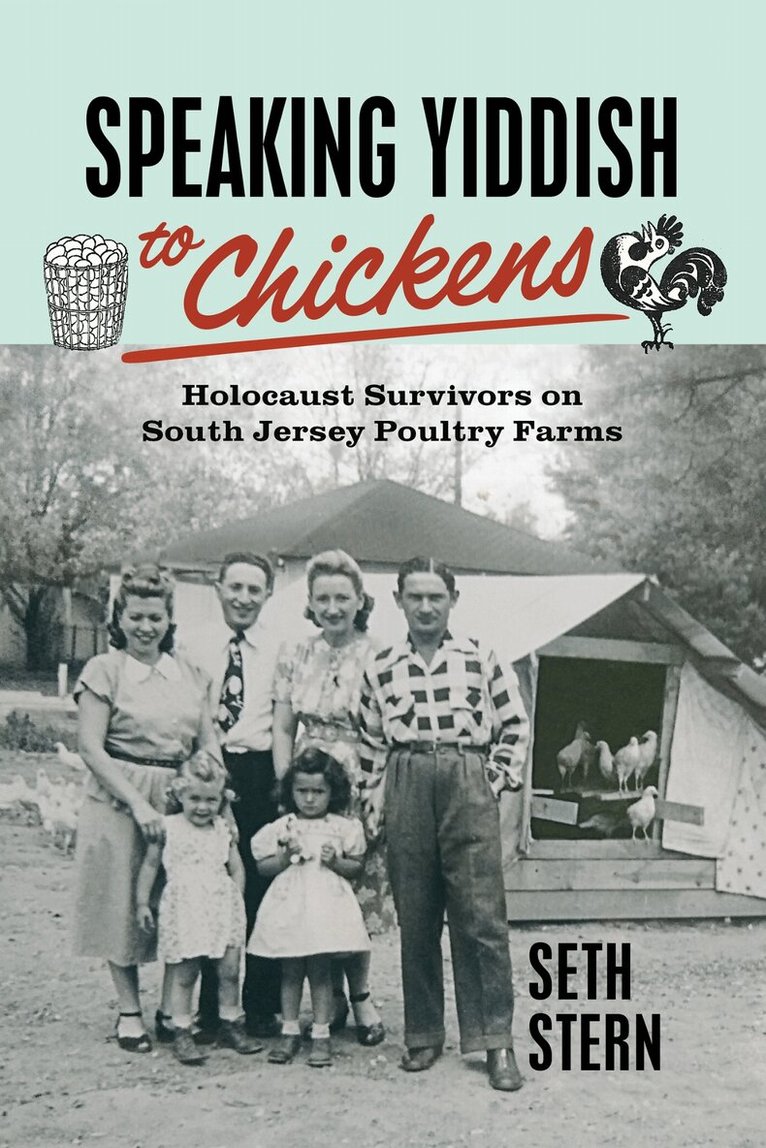
    Speaking Yiddish to Chickens

    Holocaust Survivors on South Jersey Poultry Farms

    AvSeth Stern

    Häftad, Engelska, 2023

    349 kr

    Beställningsvara. Skickas inom 5-8 vardagar. Fri frakt över 249 kr.

    Fler format och utgåvor

    Inbunden

    814 kr

    Beskrivning

    Most of the roughly 140,000 Holocaust survivors who came to the United States in the first decade after World War II settled in big cities such as New York. But a few thousand chose an alternative way of life on American farms. More of these accidental farmers wound up raising chickens in southern New Jersey than anywhere else. Speaking Yiddish to Chickens is the first book to chronicle this little-known chapter in American Jewish history when these mostly Eastern European refugees – including the author's grandparents - found an unlikely refuge and gateway to new lives in the US on poultry farms. They gravitated to a section of south Jersey anchored by Vineland, a small rural city where previous waves of Jewish immigrants had built a rich network of cultural and religious institutions. This book relies on interviews with dozens of these refugee farmers and their children, as well as oral histories and archival records to tell how they learned to farm while coping with unimaginable grief. They built small synagogues within walking distance of their farms and hosted Yiddish cultural events more frequently found on the Lower East Side than perhaps anywhere else in rural America at the time. Like refugees today, they embraced their new American identities and enriched the community where they settled, working hard in unfamiliar jobs for often meager returns. Within a decade, falling egg prices and the rise of industrial-scale agriculture in the South would drive almost all of these novice poultry farmers out of business, many into bankruptcy. Some hated every minute here; others would remember their time on south Jersey farms as their best years in America. They enjoyed a quieter way of life and more space for themselves and their children than in the crowded New York City apartments where so many displaced persons settled. This is their remarkable story of loss, renewal, and perseverance in the most unexpected of settings. Author Facebook page (https://www.facebook.com/YiddishtoChickens)

    Produktinformation

    • Utgivningsdatum:2023-03-17
    • Mått:152 x 229 x 23 mm
    • Vikt:426 g
    • Format:Häftad
    • Språk:Engelska
    • Antal sidor:288
    • Förlag:Rutgers University Press
    • ISBN:9781978831612

    Utforska kategorier

    • Sociala grupper och identitet inom Samhälle och politik
    • Amerikas historia inom Historia och arkeologi
    • Religion: allmänt inom Filosofi och religion

    Mer om författaren

    SETH STERN is a legal journalist and editor at Bloomberg Industry Group. He previously reported for Bloomberg News, Congressional Quarterly, and the Christian Science Monitor. He co-authored Justice Brennan: Liberal Champion. He is a graduate of Harvard Law School, the Harvard Kennedy School, and Cornell University.

    Recensioner i media

    "Speaking Yiddish to Chickens is much more than one man's story about his grandparents. Stern's journalistic expertise allows him to broaden his scope, deftly layering different perspectives and narratives throughout the book."— Rokhl Kafrissen, Tablet"Seth Stern has created a nuanced, sensitive, and even affectionate account of an important, albeit neglected, outgrowth of the Jewish diaspora in North America. It will be of great interest to anyone who has a personal, social, or academic interest in the postwar period, oral history, and/or post-Holocaust immigration."— Jewish Book Council"Stern is himself no stranger to the Yiddish-speaking, Jewish immigrant poultry farmers of Vineland, and perhaps it is this personal connection that makes this book so compassionate a telling, and so superb a history." — Marjorie N. Feld, American Jewish History"Speaking Yiddish to Chickens is attentive to the ways in which Holocaust survivors who took up poultry farming in Vineland built upon the achievements of their Jewish predecessors. Stern's individual stories are easy to follow, upbeat, and colorful. Stern is a seasoned and skilled journalist." — Ellen Eisenberg, author of Jewish Agricultural Colonies in New Jersey, 1882-1920"I grew up Jewish on a chicken farm. This book gets it right...Stern not only pinpoints the economic hardships and social dislocation the survivors experienced...The beauty of Speaking Yiddish to Chickens lies in Stern's skill at conveying the ups and downs of some 1,000 survivors, each with their unique hardscrabble story."— Barbara Finkelstein, The Forward"Seth Stern skillfully brings to life a remarkable chapter in the little-known history of modern Jewish farming in the Diaspora.  Lovingly written, Speaking Yiddish to Chickens travels with Stern's grandparents and other European Jews from the horrors of the Holocaust to new lives in and around Vineland, New Jersey's poultry farms, where these survivors healed their wounds and embarked upon their American journeys. Through meticulous research, Stern captures the extraordinary cooperation between the American government, Jewish philanthropic agencies, and the farmers themselves who made this bold experiment possible."— Jonathan Dekel-Chen, author of Farming the Red Land: Jewish Agricultural Colonization and Local Soviet Power, 1924–1941"Seth Stern skillfully brings to life a remarkable chapter in the little-known history of modern Jewish farming in the Diaspora.  Lovingly written, Speaking Yiddish to Chickens travels with Stern's grandparents and other European Jews from the horrors of the Holocaust to new lives in and around Vineland, New Jersey's poultry farms, where these survivors healed their wounds and embarked upon their American journeys. Through meticulous research, Stern captures the extraordinary cooperation between the American government, Jewish philanthropic agencies, and the farmers themselves who made this bold experiment possible."— Jonathan Dekel-Chen, author of Farming the Red Land: Jewish Agricultural Colonization and Local Soviet Power, 1924–1941"Seth Stern has created a nuanced, sensitive, and even affectionate account of an important, albeit neglected, outgrowth of the Jewish diaspora in North America. It will be of great interest to anyone who has a personal, social, or academic interest in the postwar period, oral history, and/or post-Holocaust immigration."— Jewish Book Council"Stern is himself no stranger to the Yiddish-speaking, Jewish immigrant poultry farmers of Vineland, and perhaps it is this personal connection that makes this book so compassionate a telling, and so superb a history." — Marjorie N. Feld, American Jewish History"Speaking Yiddish to Chickens is attentive to the ways in which Holocaust survivors who took up poultry farming in Vineland built upon the achievements of their Jewish predecessors. Stern's individual stories are easy to follow, upbeat, and colorful. Stern is a seasoned and skilled journalist." — Ellen Eisenberg, author of Jewish Agricultural Colonies in New Jersey, 1882-1920"Speaking Yiddish to Chickens is much more than one man's story about his grandparents. Stern's journalistic expertise allows him to broaden his scope, deftly layering different perspectives and narratives throughout the book."— Rokhl Kafrissen, Tablet"I grew up Jewish on a chicken farm. This book gets it right...Stern not only pinpoints the economic hardships and social dislocation the survivors experienced...The beauty of Speaking Yiddish to Chickens lies in Stern's skill at conveying the ups and downs of some 1,000 survivors, each with their unique hardscrabble story."— Barbara Finkelstein, The Forward

    Innehållsförteckning

    • Author's NotePrologue1 Passage2 New York3 Finding a Farm4 Settling In5 Small-Town Jews6 Word-of-Mouth Migration7 Mixed Reception8 Getting Noticed9 Vicissitudes10 Comfort Zones11 Community Building12 New Connections13 Family and Friends14 Downturn15 Rural Childhoods16 Hurricanes17 Coping18 Grief and Faith19 Feed Men and a Record-Breaking Hen20 Laborers21 The Golden Egg22 Seeking Help23 Alternative Livelihoods24 Teenagers25 Valedictory26 After FarmingPostscriptAcknowledgmentsNotesIndex