• Fri frakt över 249 kr
  • •
  • Snabba leveranser
  • •
  • Billiga böcker
Kundservice

Du är på sajten för privatpersoner.

Företag, bibliotek eller offentlig verksamhet?

Du handlar på classic.bokus.com, där alla dina funktioner finns intakta.
Till classic.bokus.com
Bokus logotyp. Gå till startsidan.
  • Erbjudanden
  • Nyheter
  • Student
  • Topplistor
  • Barn & ungdom
  • Bokus Play
  • E-böcker
  • Pocketböcker
  • Spel & pussel

10% rabatt på allt med kod: NYSTART10 →

Sidfot

Mina sidor

    Hjälp

    • Kundservice
    • Vanliga frågor och svar
    • Frakt och leverans
    • Retur vid ångerrätt
    • Reklamera vara
    • Betalning
    • Köpvillkor
    • Allmänna villkor
    • Information om webbplatsens tillgänglighet

    Om Bokus

    • Om oss
    • Pressrum
    • För studenter
    • För företag
    • För bibliotek och offentlig verksamhet
    • För leverantörer
    • Hållbarhet

    Populärt

    • Aktuella erbjudanden
    • Presentkort
    • Studentlitteratur
    • Nya böcker
    • Topplistor
    • Signerade böcker
    • Engelska böcker

    Inspiration

    • Boktips
    • BookTok
    • Populära bokserier
    • Barnbokskaraktärer
    • Populära författare
    Logotyp för Bokus
    Följ oss på Facebook (extern länk)Följ oss på Instagram (extern länk)Följ oss på YouTube (extern länk)Följ oss på TikTok (extern länk)
    bokus @ CookiesAnpassa cookiesIntegritetspolicyKöpvillkor
    Till Citymail hemsida (extern länk)Till Budbee hemsida (extern länk)Till Postnord hemsida (extern länk)Till Schenker hemsida (extern länk)Till Early Bird hemsida (extern länk)Till Walleys hemsida (extern länk)
    1. Samhälle och politik
    2. Samhälle och kultur
    3. Sociala grupper och identitet

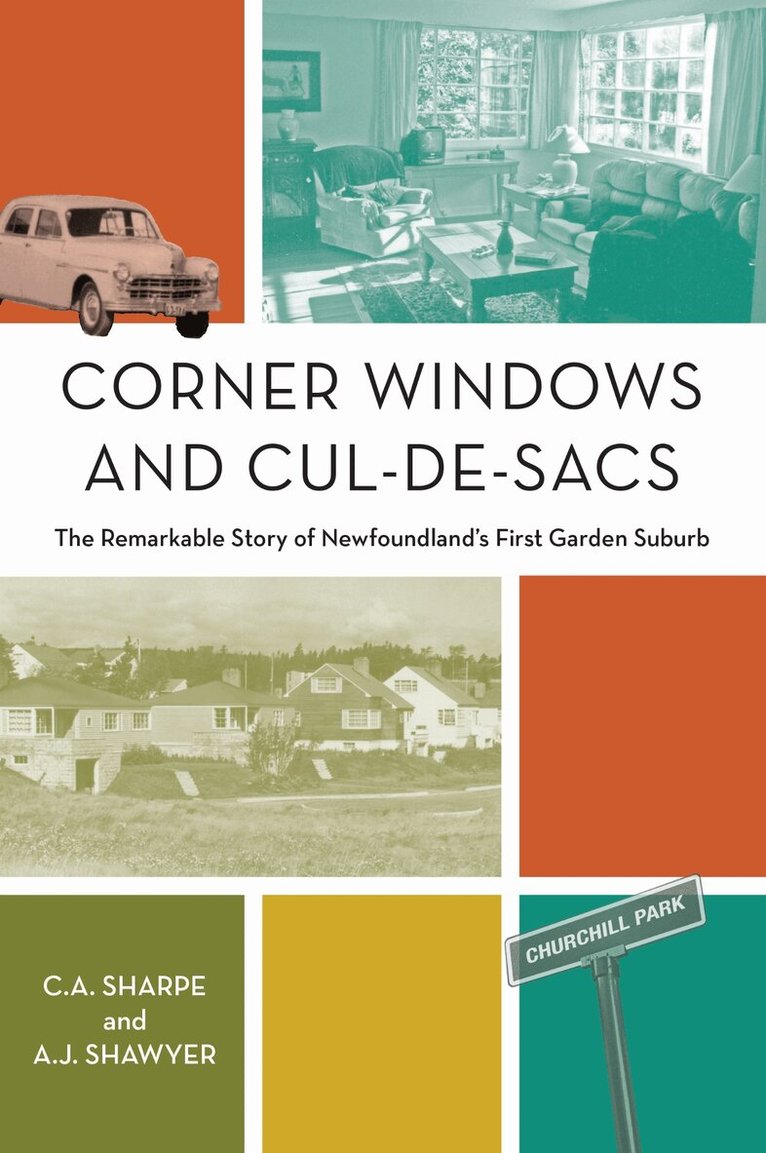
    Corner Windows and Cul-de-Sacs

    The Remarkable Story of Newfoundland's First Garden Suburb

    AvC.A. Sharpe,A.J. Shawyer

    Häftad, Engelska, 2021

    Del i serien Social and Economic Studies

    308 kr

    Beställningsvara. Skickas inom 5-8 vardagar. Fri frakt över 249 kr.

    Beskrivning

    At a distance, Corner Windows and Cul-De-Sacs is a study of urban growth, planning, and household reform; up close, the study reveals a much more human story. In 1942, while Newfoundland was in an active war zone, the death rate in St. John's was higher than anywhere else in the colony. Overcrowded and dilapidated tenements, huddled on a maze of narrow lanes, fell prey to rampant tuberculosis, shockingly high infant mortality rates, and infectious disease. In 1944, under crippling debt, the St. John's Housing Corporation was formed, with a mandate to build a new garden suburb north of the city that would lead to the abandonment and demolition of the derelict housing. Churchill Park became the core of this residential development, and between 1945 and 1947 more than 200 houses and nearly 100 apartment units were constructed, laying the groundwork for the orderly post-war expansion of the city.

    Produktinformation

    • Utgivningsdatum:2021-12-31
    • Mått:152 x 229 x 13 mm
    • Vikt:576 g
    • Format:Häftad
    • Språk:Engelska
    • Serie:Social and Economic Studies
    • Antal sidor:352
    • Förlag:Memorial University Press
    • ISBN:9781990445019

    Utforska kategorier

    • Sociala grupper och identitet inom Samhälle och politik
    • Geografi inom Naturvetenskap och teknik

    Mer om författaren

    Chris Sharpe is Professor Emeritus of Geography, Memorial University of Newfoundland and Labrador. During his 40-year career at MUNL, he pursued an interest in urban landscapes and housing. He is co-author of Sweat Equity: Cooperative House-Building in Newfoundland, 1920–1974.Jo Shawyer is a retired Associate Professor, Department of Geography, Memorial University of Newfoundland and Labrador. Throughout her career she has explored the dynamic character of cultural landscapes - their creation, maintenance, and change. Employing both field work and archival research, Jo has studied landscapes personal and public, urban and rural, historical and contemporary. She is co-author of Sweat Equity: Cooperative House-Building in Newfoundland, 1920–1974.

    Recensioner i media

    "Corner Windows and Cul-de-Sacs remains a significant work that will aid in promoting the study of postwar planning and architecture in Newfoundland, a topic overshadowed by public and scholarly interest in the island's colonial fishing heritage. [This] book stands as a powerful reminder of the classist dimensions of postwar planning as well as the urgent relevance of these issues today. - Dustin Valen, The Canadian Historical Review "We keep being told that Don Mills was Canada's first planned suburb (in truth a Garden City), and such claims are challenged only by those familiar with Montreal's Ville de Mont-Royal. Fortunately, Chris Sharpe and A.J. Shawyer's study of Churchill Park, St. John's, should give them pause…" - Richard Harris, Urban History Review

    Innehållsförteckning

    • Acknowledgements (ix)Prologue (1)1.     St. John's before 1888: A Town UnplannedTransition from Fishery to Industry (8)A Haphazard Collection of Buildings (10)Who Owned the Houses? The Leasehold Property System (16)Absentee Landlords (18)Public Health: A Desperate Situation (21)Water Sources, Sewer Systems, and Nuisance (22)2.     The Fledgling Municipal Council Faces Reality Launching the Municipal Council: Straight into Debt (30)Improving the Water Supply: "Waste Water" and Fire Protection (31)Expanding the Sewer Network: Not an Easy Task (32)Public Health Becomes a Priority (39)Public Health: The Public Becomes Engaged (41)3.     The Municipal Council Seeks "A Cure for Housing Ills" What Was the Urban Reform Movement? (48)Thomas Adams: An Influential Town Planner (51)Land Speculation: An Obstacle to Planning (54)The City Charter: The First Planning Document for St. John's (55)Mayor Gosling's Initiatives (58)Building Houses for Workingmen: Quidi Vidi, Cavell, and Merrymeeting (61)4.     The 1920s and 1930s: Difficult TimesMayor Tasker Cook (1921–29) (68)The Rotary Club Investigates (69)Arthur Dalzell: "Is All Well?" (71)Mayor Charles J. Howlett (1929–32) (74)Frederick Todd: "Though Slums Are Bad the Cure is Simple" (75)The Unimaginable: The Arrival of the Commission of Government (1934–49) (77)Mayor Andrew Carnell (1933–49) (78)Housing: "Shacktowns," New Houses, and Old Tenements (79)Councillor Meaney's Proposal (88)The Commission of Government Examines Councillor Meaney's Proposal (92)5.     War and Modernity Come to St. John'sWorld War II, 1939–45 (95)The Municipal Council Copes with the "Friendly Invasion" (97)The War Opens a Window on the World (100)The Municipal Council and Town Planning (102)The Municipal Council Pursues Councillor Meaney's Proposal (104)6.     "A Humiliating Catalogue of Facts"The Commission of Enquiry on Housing and Town Planning (110)Introducing Brian Dunfield (111)The Six Reports of the CEHTP (115)The Public's Reaction to the Report: "A Humiliating Catalogue of Facts" (123)7.     "A Bold Scheme for Doubling the Living Space of the Town"Properties: Expropriation, Compensation, and Cost of Acquisition (131)What Kind of Houses? How Will They Be Financed? (135)The St. John's Housing Corporation (137)The Public's Reaction to the Proposal (138)The Fourth and Fifth Interim Reports (140)Sixth Report: The Commission Resigns (146)From Dream to Reality: Filtering Out the Poor (147)8.     Dealing with the Opposition Selling the Project to the Dominions Office in London (151)A Sharp Reminder (157)The Leasehold Question (159)9.     Shovels in the Ground The Trunk Sewer (162)Turning the Sod (167)"The Housing": Owner-Occupied and Detached (169)Paul Meschino Joins the Team (170)Meschino Brings House Styles from "Away" to Newfoundland (173)Inside Meschino's Houses: A New Style of Living (178)Inside Meschino's Houses: Retaining Newfoundland Tradition (180)10.  Mr. Dunfield's Folly?1945: The Rising Cost of Construction (187)Construction Begins: "Citizens Enthused Over New Houses" (190)Unexpected Demands: The "Widows' Mansions" and the "Soldier Emergency" (193)1946: The Changing Landscape (199)Who Could Afford to Buy the Corporation's Houses? The SJHC Tries to Economize (201)The SJHC Begins to Lose Control of the Project (210)The Housing Area Gets a Name (214)1947: The Axe Falls on the SJHC (215)11.  Canada Enters the Discussion1948: Phasing Out the SJHC (219)The Central Mortgage and Housing Corporation (220)1949: Brian Dunfield Leaves the SJHC (223)1950: Loose Ends, and a Tangle of Financial Troubles (224)1951–81: A New Mandate and a New Philosophy for the SJHC (227)The Residents of the Inner City Are Finally Rehoused (229)12.  Churchill Park: A Daring ExperimentThe Two Mandates of the CEHTP (236)The Three Villages (239)Life in Churchill Park (243)Brian Dunfield and His Passion for "The Housing" (249)Appendices (253)Bibliography (322)Index (357)About the Authors (363)