• Fri frakt över 249 kr
  • •
  • Snabba leveranser
  • •
  • Billiga böcker
Kundservice

Du är på sajten för privatpersoner.

Företag, bibliotek eller offentlig verksamhet?

Du handlar på classic.bokus.com, där alla dina funktioner finns intakta.
Till classic.bokus.com
Bokus logotyp. Gå till startsidan.
  • Erbjudanden
  • Nyheter
  • Student
  • Topplistor
  • Barn & ungdom
  • Bokus Play
  • E-böcker
  • Pocketböcker
  • Spel & pussel

10% rabatt på allt med kod: NYSTART10 →

Sidfot

Mina sidor

    Hjälp

    • Kundservice
    • Vanliga frågor och svar
    • Frakt och leverans
    • Retur vid ångerrätt
    • Reklamera vara
    • Betalning
    • Köpvillkor
    • Allmänna villkor
    • Information om webbplatsens tillgänglighet

    Om Bokus

    • Om oss
    • Pressrum
    • För studenter
    • För företag
    • För bibliotek och offentlig verksamhet
    • För leverantörer
    • Hållbarhet

    Populärt

    • Aktuella erbjudanden
    • Presentkort
    • Studentlitteratur
    • Nya böcker
    • Topplistor
    • Signerade böcker
    • Engelska böcker

    Inspiration

    • Boktips
    • BookTok
    • Populära bokserier
    • Barnbokskaraktärer
    • Populära författare
    Logotyp för Bokus
    Följ oss på Facebook (extern länk)Följ oss på Instagram (extern länk)Följ oss på YouTube (extern länk)Följ oss på TikTok (extern länk)
    bokus @ CookiesAnpassa cookiesIntegritetspolicyKöpvillkor
    Till Citymail hemsida (extern länk)Till Budbee hemsida (extern länk)Till Postnord hemsida (extern länk)Till Schenker hemsida (extern länk)Till Early Bird hemsida (extern länk)Till Walleys hemsida (extern länk)
    1. Djur och Natur
    2. Naturböcker
    3. Växtböcker

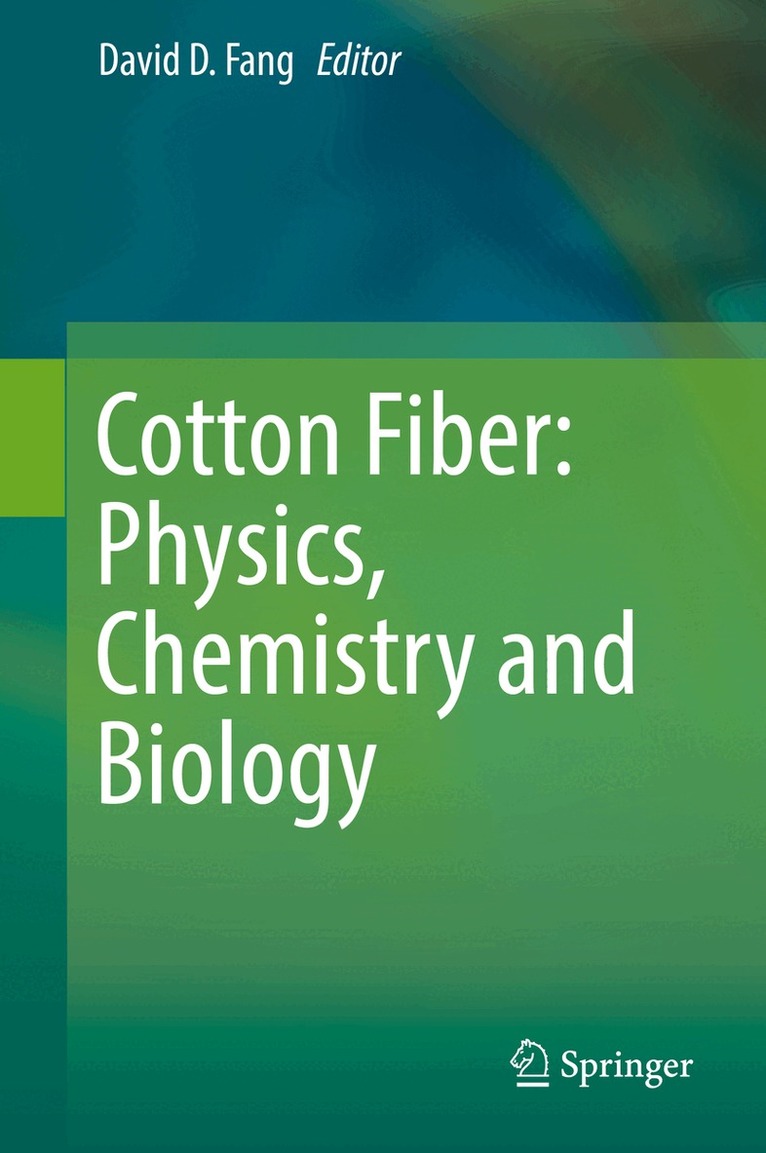
    Cotton Fiber: Physics, Chemistry and Biology

    AvDavid D. Fang

    Inbunden, Engelska, 2018

    1 626 kr

    Beställningsvara. Skickas inom 10-15 vardagar. Fri frakt över 249 kr.

    Beskrivning

    Cotton fiber is the most important natural fiber used in the textile industry. The physical structure and chemical compositions of cotton fibers have been extensively studied. Newer high speed spinning instruments are being deployed around the world that demand longer, stronger and finer fibers.  Consequently, genetic improvement in fiber quality has been stressed. With improvement in fiber quality has come the realization that further fiber improvement will require a better understanding of fiber development and biology. As a consequence, cotton fiber developmental biology, genetics and genomics have become focal points in the cotton research community. As the longest single-celled plant hair, cotton fiber has been used as an experiment model to study trichome initiation and elongation in plants. This book provides a comprehensive update on cotton fiber physics, chemistry and biology that form the three sections of the book. In the physics section, the physical structure of cotton fiber is first illustrated in great detail. Then a suite of fiber properties and their measuring methods are described. The pros and cons of each method are outlined. New methods to measure physical properties of single fiber and young developing fibers are included. In the chemistry section, the chemical compositions of cotton fibers are described in detail. This knowledge is necessary for efficient modification of cotton fibers for better and broader utilization. The advancement in cotton fiber modification using chemical and enzymatic methods opened new ways to utilize cotton fibers. In the biology section, the book first introduces the utilization of naturally occurring color cottons. Color cottons possess unique attributes such as better fire retardant ability. Advancement in understanding fiber color genetics and biochemical pathways and new utilization of color cottons are discussed. Recent technological advancements in molecular biology and genomics have enabled us to study fiber development in great depth. Many genes and quantitative trait loci related to fiber quality attributes have been identified and genetically mapped. Some of these genes and QTLs are being used in breeding. Progresses in cotton fiber improvement using breeding and biotechnology are discussed in the last chapter.  This book serves as a reference for researchers, students, processors, and regulators who either conduct research in cotton fiber improvement or utilize cotton fibers.

    Produktinformation

    • Utgivningsdatum:2018-11-20
    • Mått:155 x 235 x 19 mm
    • Vikt:524 g
    • Format:Inbunden
    • Språk:Engelska
    • Antal sidor:222
    • Förlag:Springer Nature Switzerland AG
    • ISBN:9783030008703

    Utforska kategorier

    • Växtböcker inom Djur och Natur
    • Botanik inom Naturvetenskap och teknik
    • Maskinteknik och material inom Naturvetenskap och teknik

    Mer om författaren

    David Fang is a Supervisory Research Geneticist and Research Leader of the Cotton Fiber Bioscience Research Unit, USDA-ARS Southern Regional Research Center in New Orleans, Louisiana, USA. He leads a team to study cotton fiber development using biochemical, genetic, molecular and genomic methods and technologies. His research interests focus on two aspects: 1) identification of superior fiber alleles and quantitative trait loci based on the analysis of MAGIC populations, and use them in breeding with assistance of DNA markers; 2) elucidation of the molecular mechanisms of fiber development especially elongation and secondary cell wall thickening through comparative analyses of fiber mutants and their respective wild types. Prior to the current position, he was the Molecular Cotton Breeder, and Director of Molecular Cotton Breeding at Delta and Pine Land Company. He obtained his Ph.D. in 1990 from Huazhong Agricultural University, China.

    Recensioner i media

    “Written by leading experts in the field, makes the book a standard work for students entering this fascinating field of research, but also for chemists, biologists, engineers and investors, who are active in cotton industry and research. … good bibliography and offer new perspective and resources for better understanding the field.” (Bogdan Marian Tofanica, Cellulose Chemistry and Technology, Vol. 53 (3 – 4), 2019)

    Innehållsförteckning

    • Preface.- General description of cotton.- Cotton fiber structure.- Physical properties of cotton fiber and their measurement.- Chemical composition and characterization of cotton fibers.- Chemical properties of cotton fiber and their modification.- Color cotton and its utilization in China.- Cotton fiber biosynthesis.-  Cotton fiber genes and stable quantitative trait loci.- Advances in understanding of cotton fiber cell differentiation and elongation.- Cotton fiber improvement through breeding and biotechnology.- Index.