• Fri frakt över 249 kr
  • •
  • Snabba leveranser
  • •
  • Billiga böcker
Kundservice

Du är på sajten för privatpersoner.

Företag, bibliotek eller offentlig verksamhet?

Du handlar på classic.bokus.com, där alla dina funktioner finns intakta.
Till classic.bokus.com
Bokus logotyp. Gå till startsidan.
  • Erbjudanden
  • Nyheter
  • Student
  • Topplistor
  • Barn & ungdom
  • Bokus Play
  • E-böcker
  • Pocketböcker
  • Spel & pussel

10% rabatt på allt med kod: NYSTART10 →

Sidfot

Mina sidor

    Hjälp

    • Kundservice
    • Vanliga frågor och svar
    • Frakt och leverans
    • Retur vid ångerrätt
    • Reklamera vara
    • Betalning
    • Köpvillkor
    • Allmänna villkor
    • Information om webbplatsens tillgänglighet

    Om Bokus

    • Om oss
    • Pressrum
    • För studenter
    • För företag
    • För bibliotek och offentlig verksamhet
    • För leverantörer
    • Hållbarhet

    Populärt

    • Aktuella erbjudanden
    • Presentkort
    • Studentlitteratur
    • Nya böcker
    • Topplistor
    • Signerade böcker
    • Engelska böcker

    Inspiration

    • Boktips
    • BookTok
    • Populära bokserier
    • Barnbokskaraktärer
    • Populära författare
    Logotyp för Bokus
    Följ oss på Facebook (extern länk)Följ oss på Instagram (extern länk)Följ oss på YouTube (extern länk)Följ oss på TikTok (extern länk)
    bokus @ CookiesAnpassa cookiesIntegritetspolicyKöpvillkor
    Till Citymail hemsida (extern länk)Till Budbee hemsida (extern länk)Till Postnord hemsida (extern länk)Till Schenker hemsida (extern länk)Till Early Bird hemsida (extern länk)Till Walleys hemsida (extern länk)
    1. Psykologi och pedagogik
    2. Psykologi
    3. Barnpsykologi och utvecklingspsykologi

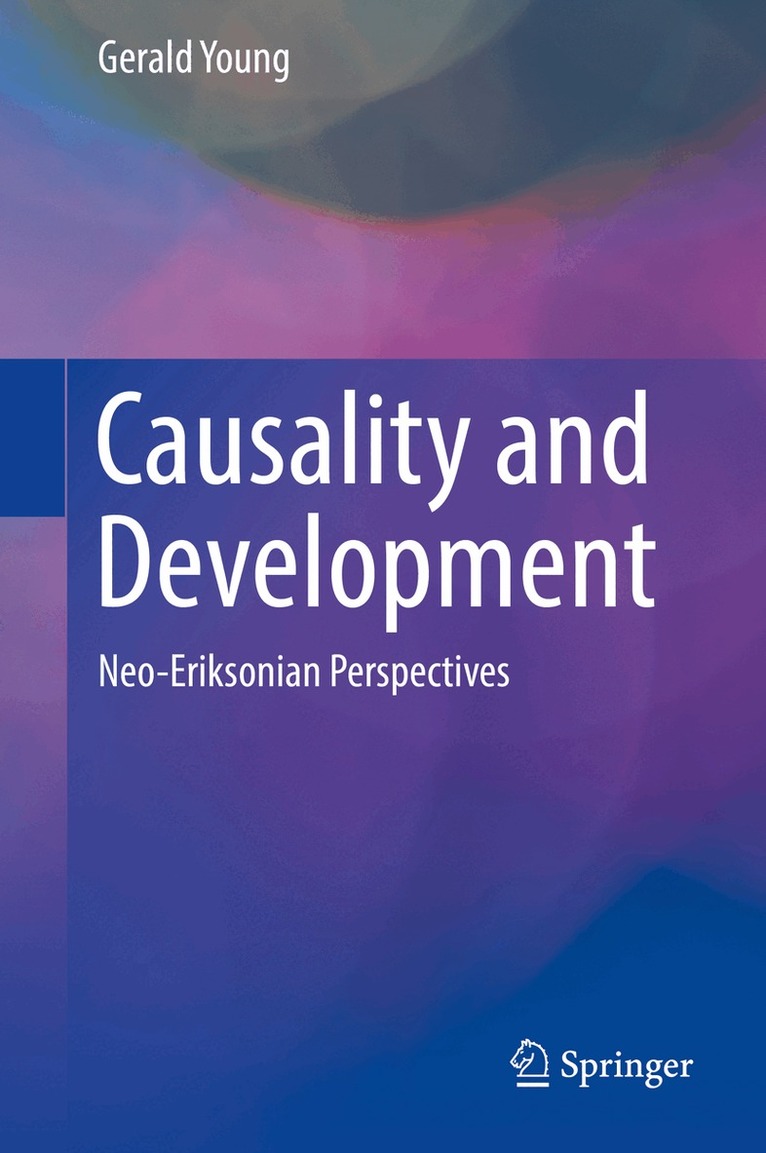
    Causality and Development

    Neo-Eriksonian Perspectives

    AvGerald Young

    Inbunden, Engelska, 2019

    1 056 kr

    Beställningsvara. Skickas inom 10-15 vardagar. Fri frakt över 249 kr.

    Fler format och utgåvor

    E-bok

    1 373 kr

    Beskrivning

    The third book in Young’s unique trilogy on causality and development continues to locate and define the central role of causality in biopsychosocial and network/systems development, and as a unifying concept of psychology itself. As a way of discussing causality, in general, initially, the book focuses on the acquisition of handedness and hemispheric specialization in infancy and childhood, and their relations to the development of cognition, language, and emotion, in particular. The second part of the book elaborates an innovative 25-step Neo-Eriksonian model of development across the life course based on a Neo-Piagetian model covered in the previous books, completing a step-by-step account of development over the lifespan cognitively and socio-emotionally. It builds on the concept of neo-stage, which is network-based. From this conceptual synthesis, the author’s robust theory of development and causality identifies potential areas for psychological problems and pathology at eachdevelopmental step as well as science-based possibilities for their treatment.This elegant volume:Presents a clear picture of the development of handedness and laterality in more depth than has been attempted in the literature to date.Traces the causal concepts of activation-inhibition coordination and networking in the context of development.Describes in depth a novel 25-step Neo-Eriksonian lifespan model of development.Reviews relevant research on Piagetian and Eriksonian theories in development.Emphasizes the clinical utility of the described 25-step Neo-Eriksonian approach to lifespan development.A significant step in understanding this highly nuanced subject and synthesizing a broad knowledge base, Causality and Development will find an interested audience among developmental psychologists, mental health practitioners, academics, and researchers.chers.

    Produktinformation

    • Utgivningsdatum:2019-03-08
    • Mått:155 x 235 x 40 mm
    • Vikt:1 103 g
    • Format:Inbunden
    • Språk:Engelska
    • Antal sidor:608
    • Förlag:Springer Nature Switzerland AG
    • ISBN:9783030024925

    Utforska kategorier

    • Barnpsykologi och utvecklingspsykologi inom Psykologi och pedagogik

    Mer om författaren

    Gerald Young, at Glendon, was awarded Fellowship status in both the Association for Psychological Science (APS) and the American Psychological Association (APA). He has received awards from both the American Psychological Association and the Canadian Psychological Association (CPA). Young is Editor-in-Chief of the journal Psychological Injury and Law, which he founded. He also publishes in psychological, psychiatric, medical, and law journals, including a 3-part series on PTSD in Court (2016-2017). In 2017, he published an invited chapter for APA on evidence law. His most recent book is Revising the APA Ethics Code (Springer, 2017). He has appeared as an expert witness for a case involving the Supreme Court of Canada. His practice covers rehabilitation and families.

    Innehållsförteckning

    • Introduction.- Part I: Causality: Development of Evolution of Handedness, Manual Specialization, and Hemispheric Specialization: Activation-Inhibition Coordination Model.- Introducing Laterality.- Developmental Laterality Research: Infancy.-  Developmental Laterality Research: Childhood.- Other Human Laterality Research.- Multifactorial Causality in Laterality.- Animal Laterality Research.- Standard Laterality Models.- New Laterality Models.- Part II: Development: A 25-step Neo-Piagetian/Neo-Eriksonian Model: Elaborating the Neo-Eriksonian Model and Therapeutic Practice.- Stage and Sub-Stage Models.- Neo-Models, Neo-Stages, Networks.- Introducing the 25-Step Neo-Eriksonian Model.- The Reflex-Based Sub-Stages: Non-Participatory Reflexive Socio-Emotions.- The Sensori-motor-Based Sub-Stages: Pre-Participatory Socio-Affects.- The Peri-Operational-Based Sub-Stages: Peri-Participatory Social Cognition.- The Abstract (Formal Operational) Sub-Stages: Hyper-Participatory Social Mutuality.- The Post-Formal/Collective Intelligence (Super-ordinate Abstract) Sub-Stages: Super-Ordinate Participatory Collective Sociality.- Book Conclusions.- Appendices.