E-bok, Engelska, 2018
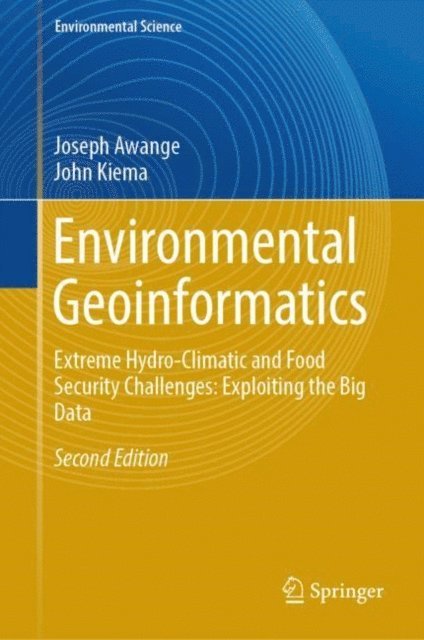
Environmental Geoinformatics
2201 kr
Skickas tisdag 13/10
Beskrivning
This second edition includes updated chapters from the first edition as well as five additional new chapters (Light detection and ranging (LiDAR), CORONA historical de-classified products, Unmanned Aircraft Vehicles (UAVs), GNSS-reflectometry and GNSS applications to climate variability), shifting the main focus from monitoring and management to extreme hydro-climatic and food security challenges and exploiting big data. Since the publication of first edition, much has changed in terms of technology, and the demand for geospatial data has increased with the advent of the big data era. For instance, the use of laser scanning has advanced so much that it is unavoidable in most environmental monitoring tasks, whereas unmanned aircraft vehicles (UAVs)/drones are emerging as efficient tools that address food security issues as well as many other contemporary challenges. Furthermore, global navigation satellite systems (GNSS) are now responding to challenges posed by climate change by unravelling the impacts of teleconnection (e.g., ENSO) as well as advancing the use of reflected signals (GNSS-reflectometry) to monitor, e.g., soil moisture variations. Indeed all these rely on the explosive use of “big data” in many fields of human endeavour.
Moreover, with the ever-increasing global population, intense pressure is being exerted on the Earth’s resources, leading to significant changes in its land cover (e.g., deforestation), diminishing biodiversity and natural habitats, dwindling fresh water supplies, and changing weather and climatic patterns (e.g., global warming, changing sea level). Environmental monitoring techniques that provide information on these are under scrutiny from an increasingly environmentally conscious society that demands the efficient delivery of such information at a minimal cost. Environmental changes vary both spatially and temporally, thereby putting pressure on traditional methods of data acquisition, some of which are highly labour intensive, such as animal tracking for conservation purposes. With these challenges, conventional monitoring techniques, particularly those that record spatial changes call for more sophisticated approaches that deliver the necessary information at an affordable cost. One direction being pursued in the development of such techniques involves environmental geoinformatics, which can act as a stand-alone method or complement traditional methods.
Produktinformation
- Utgivningsdatum: 2018-12-08
- Format: E-bok
- Språk: Engelska
- Förlag: Springer International Publishing
- ISBN: 9783030030179
Utforska kategorier
Betyg & recensioner
0 recensioner
Inga recensioner tillgängliga.