• Fri frakt över 249 kr
  • •
  • Snabba leveranser
  • •
  • Billiga böcker
Kundservice

Du är på sajten för privatpersoner.

Företag, bibliotek eller offentlig verksamhet?

Du handlar på classic.bokus.com, där alla dina funktioner finns intakta.
Till classic.bokus.com
Bokus logotyp. Gå till startsidan.
  • Erbjudanden
  • Nyheter
  • Student
  • Topplistor
  • Barn & ungdom
  • Bokus Play
  • E-böcker
  • Pocketböcker
  • Spel & pussel

Må bättre, för mindre! Upp till 50% rabatt på hälsoböcker

Sidfot

Mina sidor

    Hjälp

    • Kundservice
    • Vanliga frågor och svar
    • Frakt och leverans
    • Retur vid ångerrätt
    • Reklamera vara
    • Betalning
    • Köpvillkor
    • Allmänna villkor
    • Information om webbplatsens tillgänglighet

    Om Bokus

    • Om oss
    • Pressrum
    • För studenter
    • För företag
    • För bibliotek och offentlig verksamhet
    • För leverantörer
    • Hållbarhet

    Populärt

    • Aktuella erbjudanden
    • Presentkort
    • Studentlitteratur
    • Nya böcker
    • Topplistor
    • Signerade böcker
    • Engelska böcker

    Inspiration

    • Boktips
    • BookTok
    • Populära bokserier
    • Barnbokskaraktärer
    • Populära författare
    Logotyp för Bokus
    Följ oss på Facebook (extern länk)Följ oss på Instagram (extern länk)Följ oss på YouTube (extern länk)Följ oss på TikTok (extern länk)
    bokus @ CookiesAnpassa cookiesIntegritetspolicyKöpvillkor
    Till Citymail hemsida (extern länk)Till Budbee hemsida (extern länk)Till Postnord hemsida (extern länk)Till Schenker hemsida (extern länk)Till Early Bird hemsida (extern länk)Till Walleys hemsida (extern länk)
    1. Medicin
    2. Omvårdnad och medicinska stödfunktioner

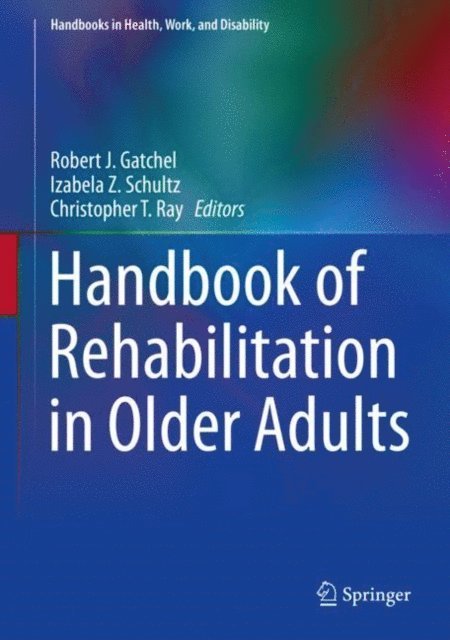
    Handbook of Rehabilitation in Older Adults

    AvRobert J. Gatchel,Izabela Z. Schultz

    Inbunden, Engelska, 2019

    Del i serien Handbooks in Health, Work, and Disability

    2 230 kr

    Beställningsvara. Skickas inom 10-15 vardagar. Fri frakt över 249 kr.

    Beskrivning

    This book discusses the state of the research and cutting-edge practice with regard to chronic illnesses and rehabilitation in older adults. It emphasizes biopsychosocial and culturally appropriate rehabilitation approaches to reduce the degree of disability and maximize independence in the activities of daily living among the burgeoning aging population. Organized in four sections—Introduction and Overview, Major Illnesses and Problems in Aging Populations, Evaluation of Functional Rehabilitation Approaches for Aging Populations, and Future Clinical Research Needs—the book includes chapters on the “graying” of the West with implications for increased chronic illnesses and disabilities; a review of biopsychosocial rehabilitation approaches; important “aging” issues such as slips-and-falls, musculoskeletal pain, chronic disabling conditions such as cancer and cardiovascular disease, and work-related factors to maintain work engagement in older workers. TheUS Census Bureau projects that by the year 2030, about 20% of the U.S. population will be 65 or older, contributing to the increased concern about healthcare and rehabilitation issues among older adults. This work will be of interest to healthcare, rehabilitation, vocational, human resource and disability management professionals, policy makers as well as researchers in areas of aging, gerontology, chronic illness, disability, rehabilitation, social work, medicine and psychology.

    Produktinformation

    • Utgivningsdatum:2019-03-08
    • Mått:178 x 254 x 37 mm
    • Vikt:1 320 g
    • Format:Inbunden
    • Språk:Engelska
    • Serie:Handbooks in Health, Work, and Disability
    • Antal sidor:583
    • Upplaga:19001
    • Förlag:Springer Nature Switzerland AG
    • ISBN:9783030039158

    Utforska kategorier

    • Omvårdnad och medicinska stödfunktioner inom Medicin
    • Geriatrik inom Medicin
    • Folkhälsa och hälsopedagogik inom Medicin

    Mer om författaren

    Dr. Robert Gatchel is the Nancy P. & John G. Penson Endowed Professor of Clinical Health Psychology and the chairman of the department of psychology, College of Science at the University of Texas at Arlington. He also holds two other positions: clinical research director at the Eugene McDermott Center for Pain Management at the University of Southwestern Medical Center at Dallas, and director of biopsychosocial research at the University of North Texas Health Science Center. He received a prestigious Research Scientist Award from NIH and has been honored with awards from various organizations such as the American Psychological Association, the American Pain Society, the American Academy of Pain Management, the International Association for Dental Research, the International Society for the Study of the Lumbar Spine, the North American Spine Society, to name a few.Dr. Izabela Z. Schultz is Professor of Rehabilitation Psychology and Director of Graduate Program in VocationalRehabilitation Counseling in the Department of Educational and Counseling and Special Education at the University of British Columbia. Dr. Schultz is doubly board certified as diplomate in clinical psychology, American Board of Professional Psychology and as diplomate of the American Board of Vocational Experts. She has received international awards for her innovative research on prediction of occupational disability and professional leadership awards for major contributions to medico-legal aspects of rehabilitation psychology. She has been leading development of best-evidence-informed practice guidelines in early musculoskeletal pain interventions, in work accommodation and retention in mental health, and in assessment and treatment of persons with disabilities.Dr. Christopher Ray is the founding director of the Center for Healthy Living and Longevity at the University of Texas Arlington and the associate dean of research for the College of Nursing and Health Innovation. Dr.Ray's research focuses on the development of innovative rehabilitation programs aimed at reducing falls in older adults.  Dr. Ray has numerous current projects determining the effectiveness of cognitive-motor interventions to improve divided attention in older adults.

    Innehållsförteckning

    • Chapter1: Epidemiology of Chronic Illnesses: Associations with the Aging Population and Future Socioeconomic Implications.-Chapter2: Modifiability of Longevity and Quality of Life Predictors of Older Adults.-Chapter3: Biopsychosocial Rehabilitation Approaches for Older Adults.-Chapter4: Productive Aging and Work.-Chapter5: Measurement of Gait and Postural Control in Aging.-Chapter6: Musculoskeletal Pain and Disability Disorders.-Chapter7:Aging with Spinal Cord Injury.-Chapter8: Aging with Parkinson’s Disease.- Chapter9: Cardiovascular Aging.-Chapter10: Cancer Rehabilitation in Geriatric Patients.-Chapter11: Aging with Brain Injuries.-Chapter12: Mental Health Disorders with Focus on Depression in Adult Populations.-Chapter13: The Mismanagement of Multiple Medications in the Older Adult Population.-Chapter14. Employment Strategies for Older Adults.- Chapter15. Work and Aging: A Review from the Employer’s Perspective.- Chapter16. Interdisciplinary Pain and Disability Programs for Older Adults.- Chapter17. Other Pain Management Techniques for Older Adults.- Chapter18. Cardiovascular Rehabilitation.- Chapter19. Exercise Rehabilitation for Older Breast Cancer Survivors.- Chapter20. Rehabilitation after Brain Injuries.- Chapter21. Medication Management in Older Adults: How to Avoid Opioid Abuse.- Chapter22. Non-Pharmacological Management of Symptoms of Dementias and their Prodromes.- Chapter23. Assessment of Competence in Older Adults.- Chapter24. Management of End-of-Life Issues.- Chapter25. Prolonging Independence versus Effects of Institutionalization .- Chapter26. Health and Wellness Programs for Older Adults.- Chapter27. Maintaining Cognitive “Fitness” in Older Adults.- Chapter28. Sex, Gender and Cultural Considerations for Rehabilitation Research with Older Adults.- Chapter29. What Is AARP and Other Non-Profit Organizations That Can Help Older Adults?.- Chapter30. Functional Rehabilitation in Older Adults: Where are We Now and Where Should We be Going?.