• Fri frakt över 249 kr
  • •
  • Snabba leveranser
  • •
  • Billiga böcker
Kundservice

Du är på sajten för privatpersoner.

Företag, bibliotek eller offentlig verksamhet?

Du handlar på classic.bokus.com, där alla dina funktioner finns intakta.
Till classic.bokus.com
Bokus logotyp. Gå till startsidan.
  • Erbjudanden
  • Student
  • Topplistor
  • Barn & ungdom
  • Bokus Play
  • E-böcker
  • Ljudböcker
  • Pocketböcker
  • Spel och pussel

Pocketfynda! Hundratals böcker för 49 kr/st →

Sidfot

Mina sidor

    Hjälp

    • Kundservice
    • Vanliga frågor och svar
    • Frakt och leverans
    • Retur vid ångerrätt
    • Reklamera vara
    • Betalning
    • Köpvillkor
    • Allmänna villkor
    • Information om webbplatsens tillgänglighet

    Om Bokus

    • Om oss
    • Pressrum
    • För studenter
    • För företag
    • För bibliotek och offentlig verksamhet
    • För leverantörer
    • Hållbarhet

    Populärt

    • Aktuella erbjudanden
    • Presentkort
    • Studentlitteratur
    • Nya böcker
    • Topplistor
    • Signerade böcker
    • Engelska böcker

    Inspiration

    • Boktips
    • BookTok
    • Barnbokskaraktärer
    • Populära författare
    Logotyp för Bokus
    Följ oss på Facebook (extern länk)Följ oss på Instagram (extern länk)Följ oss på YouTube (extern länk)Följ oss på TikTok (extern länk)
    bokus @ CookiesAnpassa cookiesIntegritetspolicyKöpvillkor
    Till Citymail hemsida (extern länk)Till Budbee hemsida (extern länk)Till Postnord hemsida (extern länk)Till Schenker hemsida (extern länk)Till Early Bird hemsida (extern länk)Till Walleys hemsida (extern länk)
    1. Juridik
    2. Internationell rätt

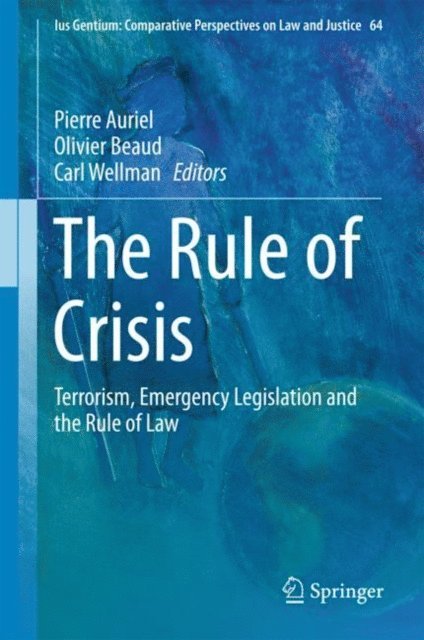
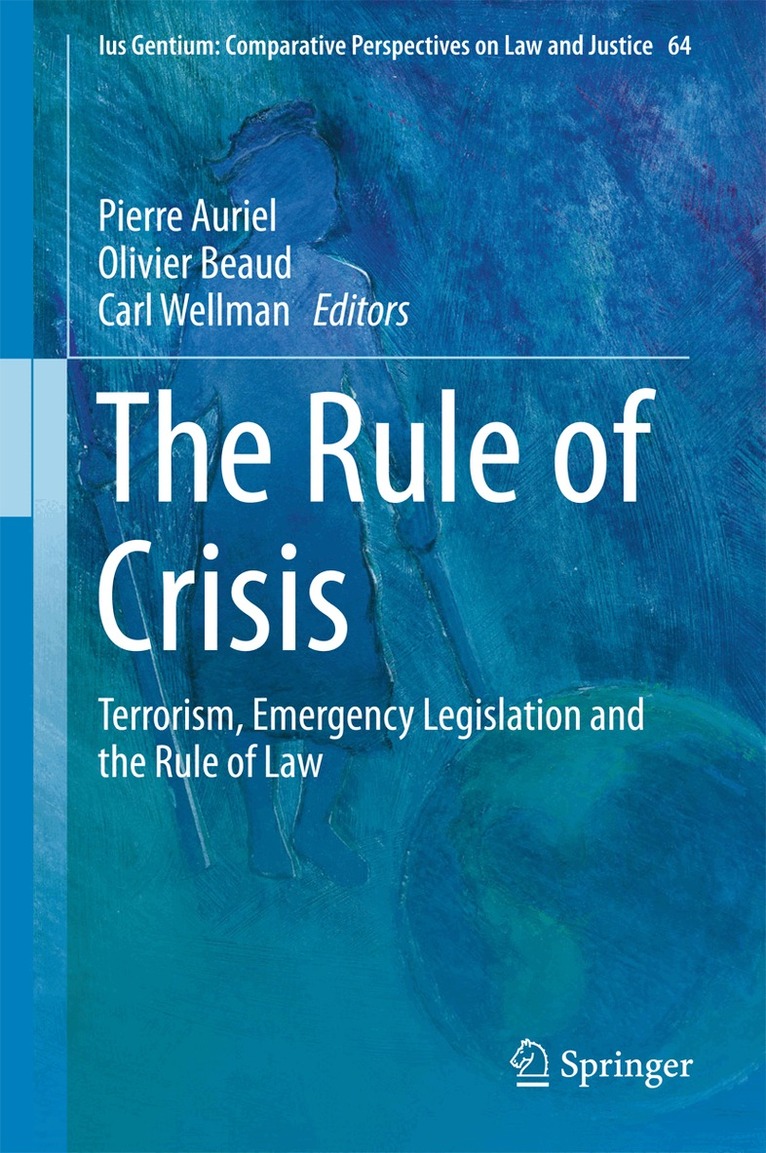
    Rule of Crisis

    Terrorism, Emergency Legislation and the Rule of Law

    AvPierre Auriel,Olivier Beaud

    Häftad, Engelska, 2019

    Del 64 i serien Ius Gentium: Comparative Perspectives on Law and Justice

    992 kr

    Beställningsvara. Skickas inom 10-15 vardagar. Fri frakt över 249 kr.

    Beskrivning

    This book analyzes emergency legislations formed in response to terrorism. In recognition that different countries, with different legal traditions, have different solutions, it adopts a comparative point of view. The countries profiled include America, France, Israel, Poland, Germany and United Kingdom. The goal is not to offer judgment on one response or the other. Rather, the contributors offer a comprehensive and thoughtful examination of the entire concept. In the process, they draw attention to the inadaptability of traditional legal and philosophical categories in a new and changing political world. The contributors first criticize the idea of these legislations. They then go on to develop different models to respond to these crises. They build a general analytical framework by answering such questions as: What is an emergency legislation? What kinds of emergencies justify laws of this nature? Why is contemporary terrorism such a specific emergency justifying new laws? Using legal and philosophical reflections, this study looks at how we are changing society. Coverage also provides historical experiences of emergency legislations to further illustrate this point. In the end, readers will gain insight into the long-term consequences of these legislations and how they modify the very work of the rule of law.

    Produktinformation

    • Utgivningsdatum:2019-01-05
    • Mått:155 x 235 x 15 mm
    • Vikt:400 g
    • Format:Häftad
    • Språk:Engelska
    • Serie:Ius Gentium: Comparative Perspectives on Law and Justice
    • Antal sidor:251
    • Förlag:Springer Nature Switzerland AG
    • ISBN:9783030090005

    Utforska kategorier

    • Internationell rätt inom Juridik
    • Straffrätt: process och brott inom Juridik
    • Författningsrätt och förvaltningsrätt inom Juridik

    Mer om författaren

    Pierre Auriel has been a Ph.D candidate at the University Paris-II Panthéon-Assas since 2014. He is a member of the Michel Villey Institute for legal culture and philosophy of law and the European Law Centre. He won the Guy Carcassonne Prize for the best article on constitutional law (2015). His work mainly focuses on constitutional theory, European law, and the theory of fundamental rights.Olivier Beaud was a professor of public law (State Professorship) at the University of Lille from 1990 to 1998. He was then elected to the University of Paris-II Panthéon-Assas (2008–). He has twice been a member of the University Institute of France, as a junior (1993–1998) and as a senior (2012–2017). He work currently focuses on constitutional law, constitutional theory, and legal theory, particularly comparisons between the French and German legal doctrines. Carl Wellman is an Emeritus Hortense and Tobias Lewin Distinguished Professor in the humanities at Washington University in Saint Louis. He was born in 1926, graduated from the University of Arizona in 1949, and received his doctorate from the Harvard University in 1954. He taught at the Lawrence College from 1953 until 1968 and then at Washington University from 1968 until 1999. His major publications are Welfare Rights, 1982; A Theory of Rights, Persons Under Laws, Institutions, and Morals, 1985; Real Rights, 1995; An Approach to Rights, 1997; The Proliferation of Rights, Moral Progress or Empty Rhetoric, 1999; Medical Law and Moral Rights, 2009; The Moral Dimensions of Human Rights, 2011, and Terrorism and Counterterrorism – A Moral Assessment, 2013; Constitutional Rights: What They Are and What They Ought to Be, 2016.

    Innehållsförteckning

    • Chapter 1. Introduction.- Chapter 2. Conceptual Analysis and Emergency Legislation.- Part I: Concepts and Justification of Emergency Legislations.- Chapter 3. Emergencies in Sober Hobbesianism.- Chapter 4. The State of Exception and the Terrorist Threat – An Obsolete Combination.- Chapter 5. The Continued Exceptionalism of the American Response to Daesh.- Chapter 6. Dignity, Emergency, Exception.- Part II: Risk and Failure of Emergency Legislations.- Chapter 7. Reconciling International Human Rights Law with Executive Non-Trial-Based Counter-Terror Measures: The Case of UK Temporary Exclusion Orders.- Chapter 8. Polish Martial Law on the Docket – Judging the Past and the Clash of Judicial Narratives.- Chapter 9. Emergency as a State of Mind – The Case of Israel.- Chapter 10. The French Case or the Hidden Dangers of a Long Term State of Emergency.- Chapter 11. Anything Goes: How does French Law Deal with the State of Emergency (1955–2015)?.- Chapter 12. The German Reticence vis-à-vis the State of Emergency.