Inbunden, Engelska, 2019
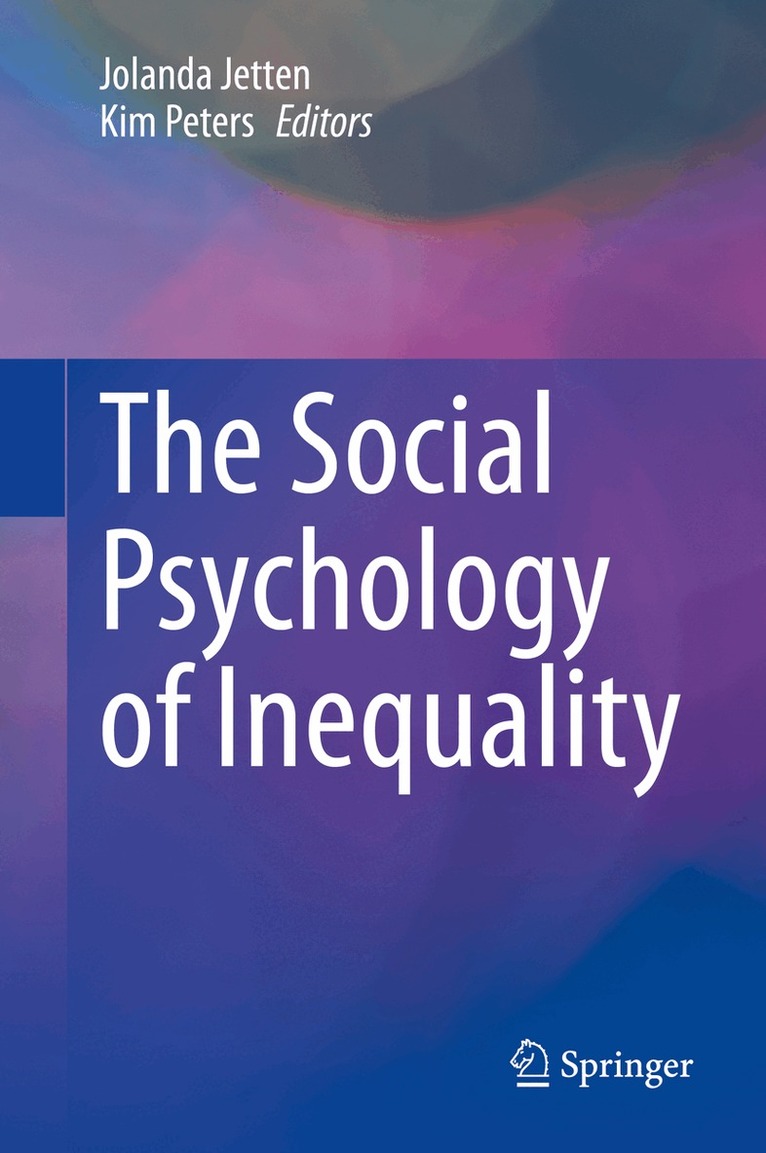
Social Psychology of Inequality
1699 kr
Beställningsvara. Skickas inom 10-15 vardagar. Fri frakt över 249 kr.
Beskrivning
Economic inequality has been of considerable interest to academics, citizens, and politicians worldwide for the past decade–and while economic inequality has attracted a considerable amount of research attention, it is only more recently that researchers have considered that economic inequality may have broader societal implications. However, while there is an increasingly clear picture of the varied ways in which economic inequality harms the fabric of society, there is a relatively poor understanding of the social psychological processes that are at work in unequal societies. This edited book aims to build on this emerging area of research by bringing together researchers who are at the forefront of this development and who can therefore provide timely insight to academics and practitioners who are grappling with the impact of economic inequality. This book will address questions relating to perceptions of inequality, mechanisms underlying effects of inequality, various consequences of inequality and the factors that contribute to the maintenance of inequality. The target audiences are students at advanced undergraduate or graduate level, as well as scholars and professionals in the field. The book fills a niche of both applied and practical relevance, strongly emphasizing theory and integration of different perspectives in social psychology. Given the broad interest in inequality within the social sciences, the book will be accessible to sociologists and political scientists as well as social, organizational, and developmental psychologists. The insights brought together in The Social Psychology of Inequality will contribute to a broader understanding of the far-reaching costs of inequality for the social health of a society and its citizens."This edited volume brings together cutting-edge social psychological research addressing one of the most pressing issues of our times – economic inequality. Collectively, the chapters illuminate why inequality has negative effects on individuals and societies, when and for whom these negative effects are most likely to emerge, and the psychological mechanisms that maintain inequality. This comprehensive volume is an essential read for those interested in understanding and ameliorating inequality."-Brenda Major, Distinguished Professor, Department of Psychological and Brain Sciences, University of California “This invaluable volume demonstrates the indispensable and powerful contribution that social psychologists can make to our understanding of societal inequality. For those outside of social psychology it provides a unique and comprehensive overview of what social psychology has to offer, and for social psychologists it is exemplary in demonstrating how to make a systematic contribution to the understanding of a hotly debated real-world issue. Scholars and students alikeand from various disciplines will gain much from reading this fascinating and inspiring social psychological journey.”-Maykel Verkuyten, Professor in Interdisciplinary Social Science, University of Utrecht“The Social Psychology of Inequality offers a superb and timely social-psychological analysis of the causes and consequence of increasing wealth and income gaps. With its refreshingly international authorship, this volume offers profound insights into the cognitive and social mechanisms that help maintain, but potentially also to overcome, an economy that is rigged in favor of the wealthy. A new and stimulating voice, illustrating science in the service of a fairer and more democratic society.”-Anne Maass, Professor of Social Psychology, University of Padova“This volume assembles an impressive list of leading international scholars to address a timely and important issue, the causes and consequences of economic inequality. The approach to the topic is social psychological, but the editors and chapters make valuable connections to related literatures on socio-structural influences in allied disciplines, such as economics, political science, and sociology. The Social Psychology of Inequality offers cutting-edge insights into the psychological dynamics of inequality and novel synthesis of structural- and individual-level influences and outcomes of inequality. It should attract a wide audience and will set the agenda for research on economic inequality well into the future.”-John F. Dovidio, Carl Iver Hovland Professor of Psychology and Public Health, Yale University
Produktinformation
- Utgivningsdatum: 2019-11-13
- Mått: 155 x 235 x 28 mm
- Vikt: 736 g
- Format: Inbunden
- Språk: Engelska
- Antal sidor: 405
- Förlag: Springer Nature Switzerland AG
- ISBN: 9783030288556
Utforska kategorier
Betyg & recensioner
0 recensioner
Inga recensioner tillgängliga.