• Fri frakt över 249 kr
  • •
  • Snabba leveranser
  • •
  • Billiga böcker
Kundservice

Du är på sajten för privatpersoner.

Företag, bibliotek eller offentlig verksamhet?

Du handlar på classic.bokus.com, där alla dina funktioner finns intakta.
Till classic.bokus.com
Bokus logotyp. Gå till startsidan.
  • Erbjudanden
  • Nyheter
  • Student
  • Topplistor
  • Barn & ungdom
  • Bokus Play
  • E-böcker
  • Pocketböcker
  • Spel & pussel

Må bättre, för mindre! Upp till 50% rabatt på hälsoböcker

Sidfot

Mina sidor

    Hjälp

    • Kundservice
    • Vanliga frågor och svar
    • Frakt och leverans
    • Retur vid ångerrätt
    • Reklamera vara
    • Betalning
    • Köpvillkor
    • Allmänna villkor
    • Information om webbplatsens tillgänglighet

    Om Bokus

    • Om oss
    • Pressrum
    • För studenter
    • För företag
    • För bibliotek och offentlig verksamhet
    • För leverantörer
    • Hållbarhet

    Populärt

    • Aktuella erbjudanden
    • Presentkort
    • Studentlitteratur
    • Nya böcker
    • Topplistor
    • Signerade böcker
    • Engelska böcker

    Inspiration

    • Boktips
    • BookTok
    • Populära bokserier
    • Barnbokskaraktärer
    • Populära författare
    Logotyp för Bokus
    Följ oss på Facebook (extern länk)Följ oss på Instagram (extern länk)Följ oss på YouTube (extern länk)Följ oss på TikTok (extern länk)
    bokus @ CookiesAnpassa cookiesIntegritetspolicyKöpvillkor
    Till Citymail hemsida (extern länk)Till Budbee hemsida (extern länk)Till Postnord hemsida (extern länk)Till Schenker hemsida (extern länk)Till Early Bird hemsida (extern länk)Till Walleys hemsida (extern länk)
    1. Juridik
    2. Internationell rätt

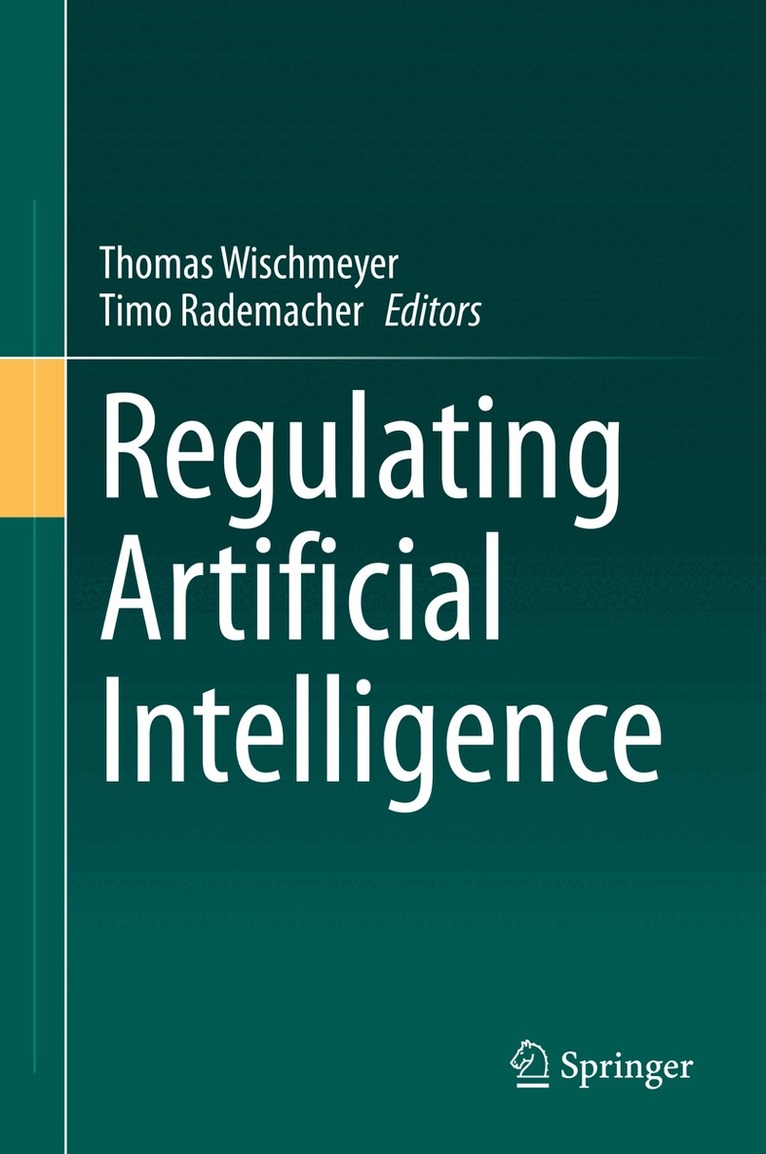
    Regulating Artificial Intelligence

    AvThomas Wischmeyer,Timo Rademacher

    Inbunden, Engelska, 2019

    1 396 kr

    Beställningsvara. Skickas inom 10-15 vardagar. Fri frakt över 249 kr.

    Beskrivning

    This book assesses the normative and practical challenges for artificial intelligence (AI) regulation, offers comprehensive information on the laws that currently shape or restrict the design or use of AI, and develops policy recommendations for those areas in which regulation is most urgently needed. By gathering contributions from scholars who are experts in their respective fields of legal research, it demonstrates that AI regulation is not a specialized sub-discipline, but affects the entire legal system and thus concerns all lawyers. Machine learning-based technology, which lies at the heart of what is commonly referred to as AI, is increasingly being employed to make policy and business decisions with broad social impacts, and therefore runs the risk of causing wide-scale damage. At the same time, AI technology is becoming more and more complex and difficult to understand, making it harder to determine whether or not it is being used in accordance with the law. Inlight of this situation, even tech enthusiasts are calling for stricter regulation of AI. Legislators, too, are stepping in and have begun to pass AI laws, including the prohibition of automated decision-making systems in Article 22 of the General Data Protection Regulation, the New York City AI transparency bill, and the 2017 amendments to the German Cartel Act and German Administrative Procedure Act. While the belief that something needs to be done is widely shared, there is far less clarity about what exactly can or should be done, or what effective regulation might look like.  The book is divided into two major parts, the first of which focuses on features common to most AI systems, and explores how they relate to the legal framework for data-driven technologies, which already exists in the form of (national and supra-national) constitutional law, EU data protection and competition law, and anti-discrimination law. In the second part, the book examines in detaila number of relevant sectors in which AI is increasingly shaping decision-making processes, ranging from the notorious social media and the legal, financial and healthcare industries, to fields like law enforcement and tax law, in which we can observe how regulation by AI is becoming a reality.

    Produktinformation

    • Utgivningsdatum:2019-12-10
    • Mått:155 x 235 x 29 mm
    • Vikt:772 g
    • Format:Inbunden
    • Språk:Engelska
    • Antal sidor:388
    • Förlag:Springer Nature Switzerland AG
    • ISBN:9783030323608

    Utforska kategorier

    • Internationell rätt inom Juridik
    • Informationsteknik: allmänt inom Data och IT
    • Artificiell intelligens inom Data och IT

    Mer om författaren

    Thomas Wischmeyer is an assistant professor for public law and information law at the University of Bielefeld. He has been an academic visitor to several law schools, including Yale Law School and the Jean Monnet Center of New York University School of Law. Thomas Wischmeyer publishes and teaches on European and German constitutional law, administrative law and legal theory. His current research focuses on IT security and the role of law in the information society. Timo Rademacher is Assistant Professor of Public Law and New Technologies at the University of Hannover. He has obtained his degrees – inter alia – from the Universities of Heidelberg (Dr. iur.) and Oxford (MJur). In Hannover, he publishes on and teaches European and German constitutional and information law. His current research aims at the development of a regulatory framework for the use of Big Data analytics by State and EU public bodies.

    Recensioner i media

    “The review of this volume offers an articulated view of an extremely topical subject that is far from having been thoroughly dealt with at both European and national level, in a constant pendulum, swinging between the improvement of human activities and risks of pathological drifts of the phenomenon of AI. Regulating or complying with regulations on artificial intelligence is a need that can no longer be postponed, in terms of a global problem that goes well beyond … .” (Vinicio Brigante, European Review of Digital Administration & Law, Vol. 2 (1), 2021)

    Innehållsförteckning

    • Artificial Intelligence as a Challenge for Law and Regulation.- Part I.- Foundations of Artificial Intelligence Regulation.- Artificial Intelligence and the Fundamental Right to Data Protection: Opening the Door for Technological Innovation and Innovative Protection.- Artificial Intelligence and Autonomy: Self-Determination in the Age of Automated Systems.- Artificial Intelligence and Transparency: Opening the Black Box.- Artificial Intelligence and Discrimination: Discriminating Against Discriminatory Systems.- Artificial Intelligence and Legal Personality: Introducing “Teilrechtsfähigkeit”: A Partial Legal Status Made in Germany.- Part II.- Governance of and Through Artificial Intelligence.- Artificial Intelligence and Social Media.- Artificial Intelligence and Legal Tech: Challenges to the Rule of Law.- Artificial Intelligence and Administrative Decisions Under Uncertainty.- Artificial Intelligenceand Law Enforcement.- Artificial Intelligence and the Financial Markets: Business as Usual?.- Artificial Intelligence and Public Governance: Normative Guidelines for Artificial Intelligence in Government and Public Administration.- Artificial Intelligence and Taxation: Risk Management in Fully Automated Taxation Procedures.- Artificial Intelligence and Healthcare: Products and Procedures.- Artificial Intelligence in Healthcare: Doctors, Patients and Liabilities.- Artificial Intelligence and Competition Law.