• Fri frakt över 249 kr
  • •
  • Snabba leveranser
  • •
  • Billiga böcker
Kundservice

Du är på sajten för privatpersoner.

Företag, bibliotek eller offentlig verksamhet?

Du handlar på classic.bokus.com, där alla dina funktioner finns intakta.
Till classic.bokus.com
Bokus logotyp. Gå till startsidan.
  • Erbjudanden
  • Nyheter
  • Student
  • Topplistor
  • Barn & ungdom
  • Bokus Play
  • E-böcker
  • Pocketböcker
  • Spel & pussel

10% studentrabatt med kod TERM26

Sidfot

Mina sidor

    Hjälp

    • Kundservice
    • Vanliga frågor och svar
    • Frakt och leverans
    • Retur vid ångerrätt
    • Reklamera vara
    • Betalning
    • Köpvillkor
    • Allmänna villkor
    • Information om webbplatsens tillgänglighet

    Om Bokus

    • Om oss
    • Pressrum
    • För studenter
    • För företag
    • För bibliotek och offentlig verksamhet
    • För leverantörer
    • Hållbarhet

    Populärt

    • Aktuella erbjudanden
    • Presentkort
    • Studentlitteratur
    • Nya böcker
    • Topplistor
    • Signerade böcker
    • Engelska böcker

    Inspiration

    • Boktips
    • BookTok
    • Populära bokserier
    • Barnbokskaraktärer
    • Populära författare
    Logotyp för Bokus
    Följ oss på Facebook (extern länk)Följ oss på Instagram (extern länk)Följ oss på YouTube (extern länk)Följ oss på TikTok (extern länk)
    bokus @ CookiesAnpassa cookiesIntegritetspolicyKöpvillkor
    Till Citymail hemsida (extern länk)Till Budbee hemsida (extern länk)Till Postnord hemsida (extern länk)Till Schenker hemsida (extern länk)Till Early Bird hemsida (extern länk)Till Walleys hemsida (extern länk)
    1. Skönlitteratur
    2. Litteraturvetenskap
    3. Litteraturvetenskap

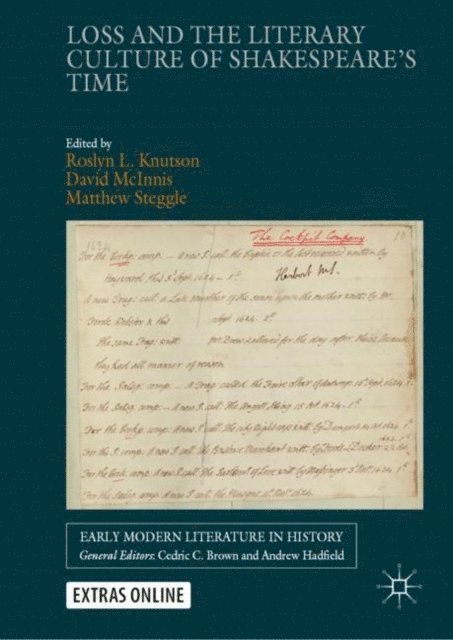
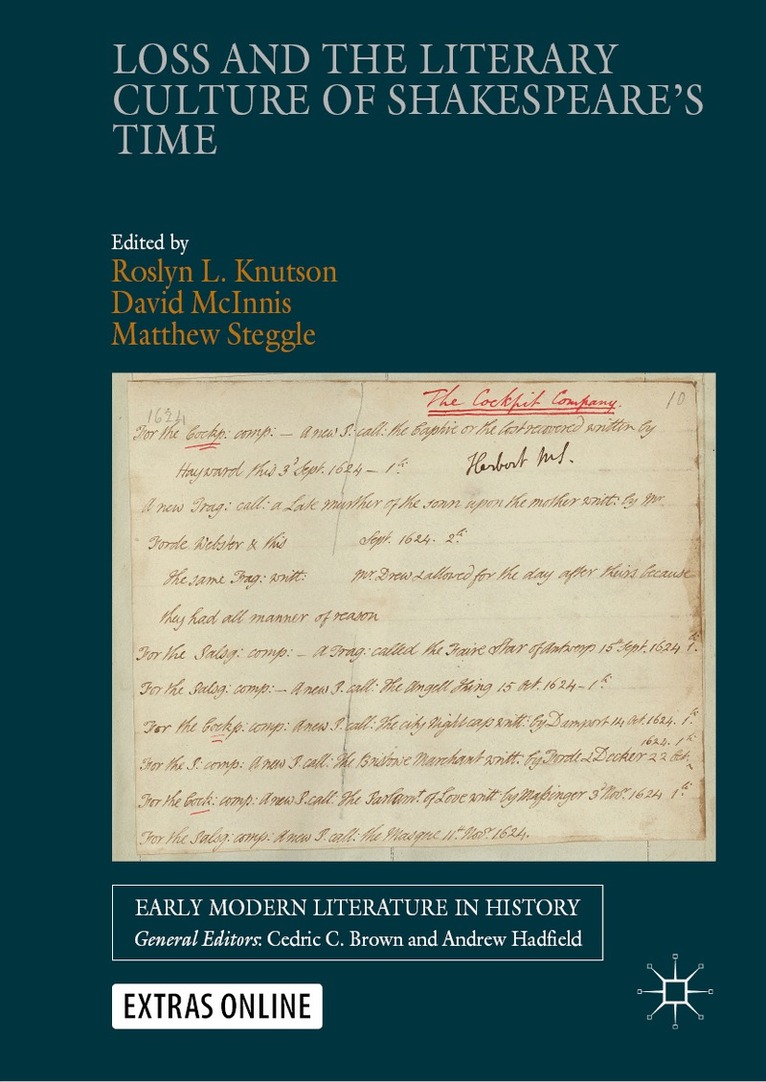
    Loss and the Literary Culture of Shakespeare’s Time

    AvRoslyn L. Knutson,David McInnis

    Häftad, Engelska, 2021

    Del i serien Early Modern Literature in History

    1 315 kr

    Beställningsvara. Skickas inom 10-15 vardagar. Fri frakt över 249 kr.

    Beskrivning

    As early modernists with an interest in the literary culture of Shakespeare’s time, we work in a field that contains many significant losses: of texts, of contextual information, of other forms of cultural activity. No account of early modern literary culture is complete without acknowledgment of these lacunae, and although lost drama has become a topic of increasing interest in Shakespeare studies, it is important to recognize that loss is not restricted to play-texts alone. Loss and the Literary Culture of Shakespeare’s Time broadens the scope of the scholarly conversation about loss beyond drama and beyond London. It aims to develop further models and techniques for thinking about lost plays, but also of other kinds of lost early modern works, and even lost persons associated with literary and theatrical circles. Chapters examine textual corruption, oral preservation, quantitative analysis, translation, and experiments in “verbatim theater”, plus much more.

    Produktinformation

    • Utgivningsdatum:2021-03-27
    • Mått:148 x 210 x 16 mm
    • Vikt:371 g
    • Format:Häftad
    • Språk:Engelska
    • Serie:Early Modern Literature in History
    • Antal sidor:266
    • Förlag:Springer Nature Switzerland AG
    • ISBN:9783030368692

    Utforska kategorier

    • Litteraturvetenskap inom Skönlitteratur
    • Teater inom Kultur

    Mer om författaren

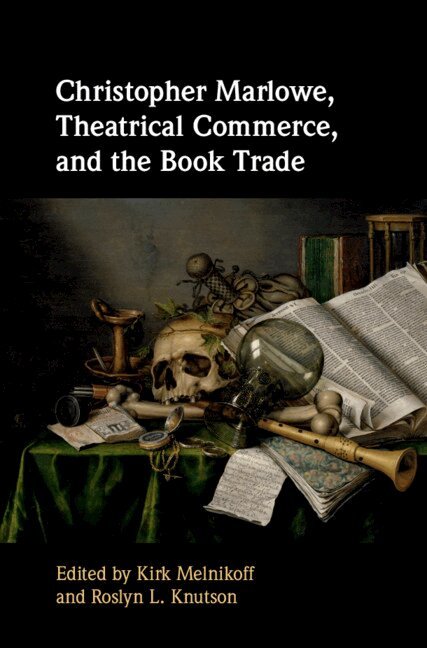
    Roslyn L. Knutson, Professor Emerita at the University of Arkansas at Little Rock, is the author of The Repertory of Shakespeare's Company, 1594-1613 (U of Ark P 1991), author of Playing Companies and Commerce in Shakespeare’s Time (CUP 2001), and co-editor with Kirk Melnikoff of Christopher Marlowe, Theatrical Commerce, and the Book Trade (CUP 2018). With David McInnis and Matthew Steggle, she is founder and co-editor of the Lost Plays Database.David McInnis (University of Melbourne) is author of Mind-Travelling and Voyage Drama in Early Modern England (Palgrave, 2013), co-editor (with Claire Jowitt) of Travel and Drama in Early Modern England: The Journeying Play (Cambridge UP, 2018), and editor of Dekker’s Old Fortunatus for the Revels Plays series (Manchester UP, 2019). With Matthew Steggle, he edited Lost Plays in Shakespeare’s England (Palgrave, 2014). With Roslyn L. Knutsonand Matthew Steggle, he is founder and co-editor of the Lost Plays Database.Matthew Steggle is Professor of Early Modern English Literature at the University of Bristol. His publications include editions of early modern plays for Richard Brome Online (2010); The Cambridge Works of Ben Jonson (2012); and The Norton Shakespeare, 3rd edition (2015). His most recent book is Digital Humanities and the Lost Drama of Early Modern England: Ten Case Studies (2015). With Martin Butler, he is co-editor of the forthcoming Oxford Works of John Marston (forthcoming, 2021) for which he is editing Jack Drum’s Entertainment, and he is co-editor, with Roslyn L. Knutson and David McInnis, of the Lost Plays Database.

    Innehållsförteckning

    • 1. Introduction: “Coping with Loss”; Roslyn L. Knutson, David McInnis, and Matthew Steggle.- 2. Shakespeare’s Ruined Quires; Misha Teramura.- 3.Lost Playhouse Manuscripts; Paul Werstine.- 4. Richard Edwards’ “Palamon and Arcyte” and the Semi-Textual Basis of Playing; Jeanne H. McCarthy.- 5. “I haue lost it”: Apologies, Appeals, and Justifications for Misplacing The Wild-Goose Chase and Other Plays; Kara J. Northway.- 6. Like a Virgin: Lost and Reborn Ballads; Kris McAbee.- 7. Rediscovering Lost Literature in the Stationers’ Company Register; Alexandra Hill.- 8. Lost Plays and Other Lost Things: Ways of Being Lost; William Ingram.- 9. Ludwig Becker’s Shakespeare; Ian Donaldson.- 10. William Smith, “The Freeman’s Honour,” and the Lord Chamberlain’s Men; David Kathman.- 11. They are all Fossils: A Palaeontology of Early Modern Drama; Matthew Steggle.- 12. “Histories out of the scriptures”: Biblical Drama in the Repertory of the Admiral’s Men, 1594-1603; Paul Whitfield White.- 13. MagicMirrors, Moors, and Marriage: A Lost English Play Surviving in German; David McInnis.- 14. Making Early Modern “Verbatim Theater,” or, “Keep the Widow Waking”; Lucy Munro and Emma Whipday