• Fri frakt över 249 kr
  • •
  • Snabba leveranser
  • •
  • Billiga böcker
Kundservice

Du är på sajten för privatpersoner.

Företag, bibliotek eller offentlig verksamhet?

Du handlar på classic.bokus.com, där alla dina funktioner finns intakta.
Till classic.bokus.com
Bokus logotyp. Gå till startsidan.
  • Erbjudanden
  • Nyheter
  • Student
  • Topplistor
  • Barn & ungdom
  • Bokus Play
  • E-böcker
  • Pocketböcker
  • Spel & pussel

10% rabatt på allt med kod NYSTART10 →

Sidfot

Mina sidor

    Hjälp

    • Kundservice
    • Vanliga frågor och svar
    • Frakt och leverans
    • Retur vid ångerrätt
    • Reklamera vara
    • Betalning
    • Köpvillkor
    • Allmänna villkor
    • Information om webbplatsens tillgänglighet

    Om Bokus

    • Om oss
    • Pressrum
    • För studenter
    • För företag
    • För bibliotek och offentlig verksamhet
    • För leverantörer
    • Hållbarhet

    Populärt

    • Aktuella erbjudanden
    • Presentkort
    • Studentlitteratur
    • Nya böcker
    • Topplistor
    • Signerade böcker
    • Engelska böcker

    Inspiration

    • Boktips
    • BookTok
    • Populära bokserier
    • Barnbokskaraktärer
    • Populära författare
    Logotyp för Bokus
    Följ oss på Facebook (extern länk)Följ oss på Instagram (extern länk)Följ oss på YouTube (extern länk)Följ oss på TikTok (extern länk)
    bokus @ CookiesAnpassa cookiesIntegritetspolicyKöpvillkor
    Till Citymail hemsida (extern länk)Till Budbee hemsida (extern länk)Till Postnord hemsida (extern länk)Till Schenker hemsida (extern länk)Till Early Bird hemsida (extern länk)Till Walleys hemsida (extern länk)
    1. Naturvetenskap och teknik
    2. Teknik och industri
    3. Elektronik och kommunikationer

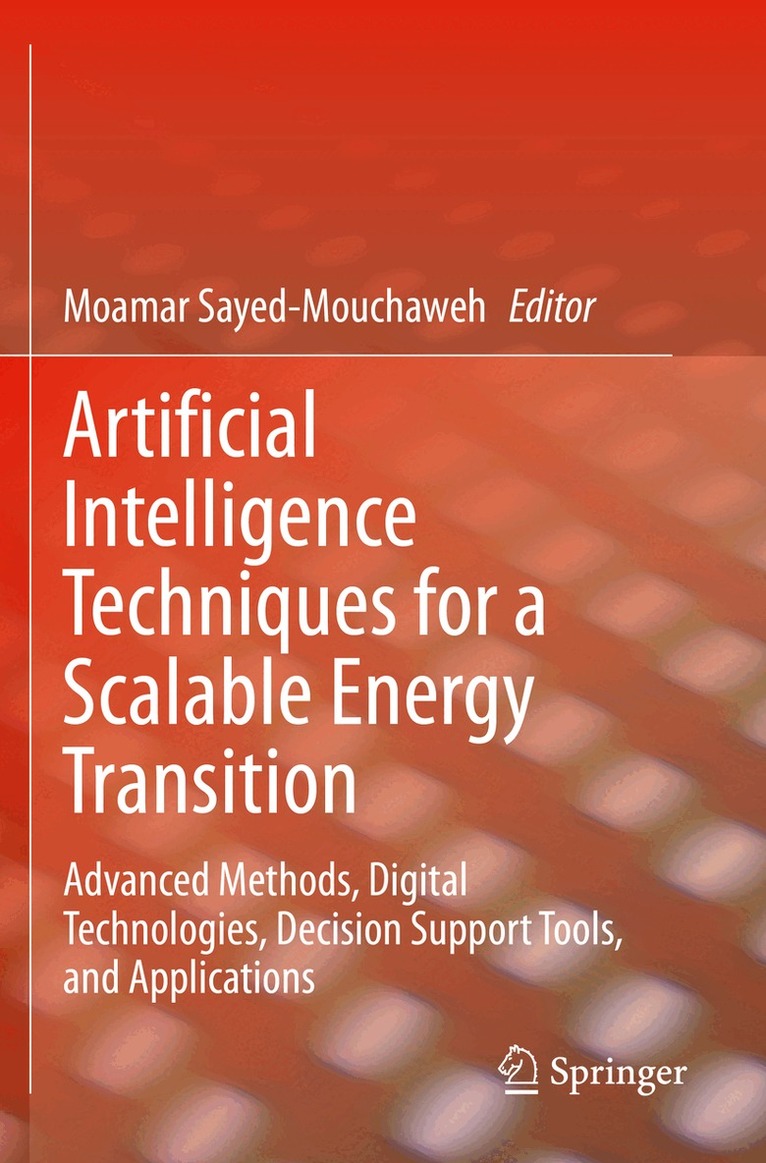
    Artificial Intelligence Techniques for a Scalable Energy Transition

    Advanced Methods, Digital Technologies, Decision Support Tools, and Applications

    AvMoamar Sayed-Mouchaweh

    Häftad, Engelska, 2021

    1 300 kr

    Beställningsvara. Skickas inom 10-15 vardagar. Fri frakt över 249 kr.

    Beskrivning

    This book presents research in artificial techniques using intelligence for energy transition, outlining several applications including production systems, energy production, energy distribution, energy management, renewable energy production, cyber security, industry 4.0 and internet of things etc. The book goes beyond standard application by placing a specific focus on the use of AI techniques to address the challenges related to the different applications and topics of energy transition. The contributions are classified according to the market and actor interactions (service providers, manufacturers, customers, integrators, utilities etc.), to the SG architecture model (physical layer, infrastructure layer, and business layer), to the digital twin of SG (business model, operational model, fault/transient model, and asset model), and to the application domain (demand side management, load monitoring, micro grids, energy consulting (residents, utilities), energy saving, dynamic pricing revenue management and smart meters, etc.).

    Produktinformation

    • Utgivningsdatum:2021-06-21
    • Mått:155 x 235 x 22 mm
    • Vikt:593 g
    • Format:Häftad
    • Språk:Engelska
    • Antal sidor:382
    • Förlag:Springer Nature Switzerland AG
    • ISBN:9783030427283

    Utforska kategorier

    • Elektronik och kommunikationer inom Naturvetenskap och teknik
    • Databaser inom Data och IT
    • Artificiell intelligens inom Data och IT

    Mer om författaren

    Moamar Sayed-Mouchaweh received his Master degree from the University of Technology of Compiegne-France in 1999. Then, he received his PhD degree from the University of Reims-France in December 2002. He was working as Associated Professor in Computer Science, Control and Signal processing at the University of Reims-France in the Research center in Sciences and Technology of the Information and the Communication (CReSTIC). In December 2008, he obtained the Habilitation to Direct Researches (HDR) in Computer science, Control and Signal processing. Since September 2011, he is working as a Full Professor in the High National Engineering School of Mines “Ecole Nationale Supérieure des Mines de Douai” at the Department of Computer Science and Automatic Control (Informatique & Automatique). He edited the Springer book ‘Learning in Non-Stationary Environments: Methods and Applications ‘, in April 2012 and wrote two Brief Springer books in Electrical and Computer Engineering: ‘Discrete Event Systems: Diagnosis and Diagnosability’, and ‘Learning from Data Streams in Dynamic Environments’. He was a guest editor of several special issues of international journals. He was IPC Chair of the 12th IEEE International Conference on Machine Learning and Applications (ICMLA'13), the Conference Chair and IPC Chair of IEEE International Conference on Evolving and Adaptive Intelligent Systems (EAIS2015), and the IPC Chair of the 15th IEEE International Conference on Machine Learning and Applications (ICMLA'16). He is working as a member of the Editorial Board of Elsevier Journal “Applied Soft Computing” and Springer Journals “Evolving systems” and “Intelligent Industrial Systems”.

    Innehållsförteckning

    • Introduction.- Definition, motivation and impact of digitalization in energy transition.- Definition of a general scheme (layers) of a digitalized system in energy transition.- Challenges of digitalization in energy transition.- Artificial Intelligence for energy transition.- General principals and classification of Artificial Intelligence techniques for energy transition.- Artificial Intelligence for Smart Energy Management.- Smart energy management (intrusive and non-intrusive load monitoring).- Artificial Intelligence for Cyber Security and Privacy.- Artificial Intelligence for Mobility and Electrical Vehicles.- Mobility and electrical vehicles.- Artificial Intelligence for Micro Grid Operations and Dynamic Pricing Revenue Management.- Micro Grid operations and Dynamic Pricing Revenue Management.- Artificial Intelligence for Renewable Energy Penetration and Demand Side Management.- Renewable Energy Penetration and Demand Side Management.- Emerging Trends, Open problems, and Future Challenges.- Conclusion.