Inbunden, Engelska, 2020
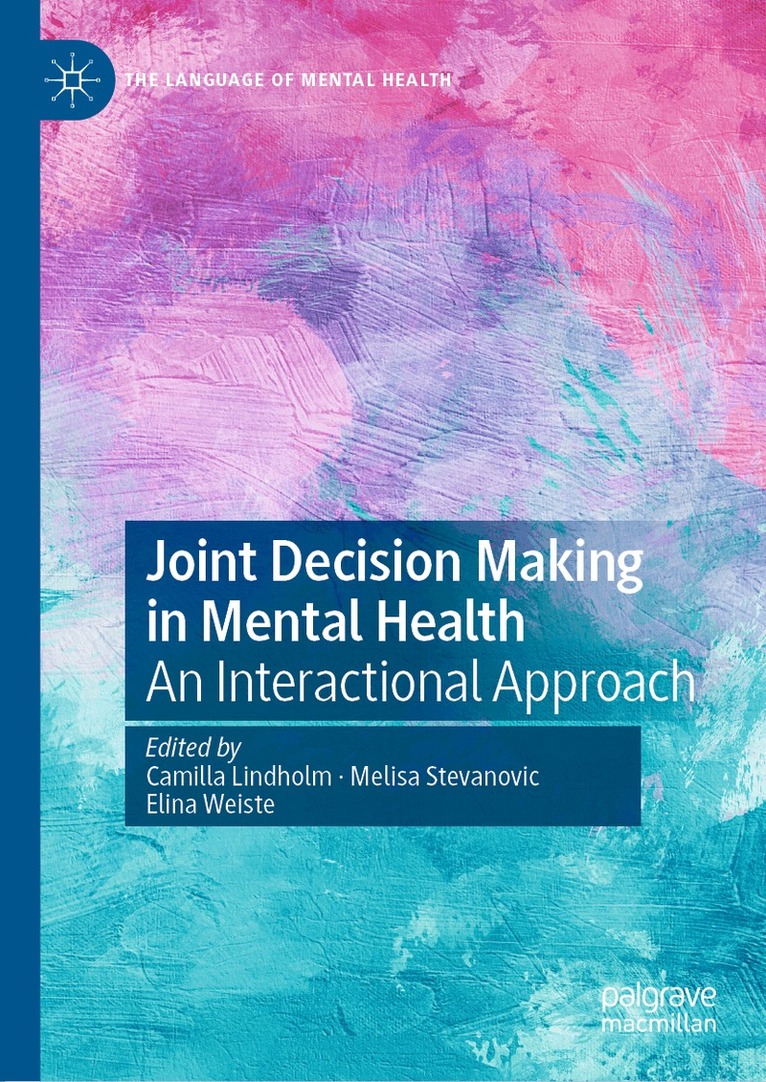
Joint Decision Making in Mental Health
Av Camilla Lindholm, Melisa Stevanovic, Elina Weiste
1690 kr
Beställningsvara. Skickas inom 10-15 vardagar. Fri frakt över 249 kr.
Beskrivning
This volume studies joint decision making in mental health care contexts through an in-depth examination of the negotiations of power and authority at the level of turn-by-turn sequential unfolding of interaction. Bringing together research at the intersection of mental health, discourse and conversation analysis it examines a wide range of settings including chronic psychiatric visits, rehabilitation meetings, occupational therapy encounters and cognitive behavioral therapy appointments. It presents a series of studies which reveal in close detail the joint decision-making processes in these critical encounters by using naturally occurring video-recorded interactions from a range of health service settings as data. In so doing, it sheds light on the interactional practices of health care workers that may facilitate or discourage client participation in joint decision-making processes. The book will provide important insights for academics and practitioners working in the fields of psychology, psychotherapy, applied linguistics, nursing, social work and rehabilitation; and in particular for those specializing in psychiatry and mental health.
Produktinformation
- Utgivningsdatum: 2020-06-22
- Mått: 148 x 210 x 24 mm
- Vikt: 542 g
- Format: Inbunden
- Språk: Engelska
- Serie: Language of Mental Health
- Antal sidor: 310
- Upplaga: 20001
- Förlag: Springer Nature Switzerland AG
- ISBN: 9783030435301
Utforska kategorier
Betyg & recensioner
0 recensioner
Inga recensioner tillgängliga.