• Fri frakt över 249 kr
  • •
  • Snabba leveranser
  • •
  • Billiga böcker
Kundservice

Du är på sajten för privatpersoner.

Företag, bibliotek eller offentlig verksamhet?

Du handlar på classic.bokus.com, där alla dina funktioner finns intakta.
Till classic.bokus.com
Bokus logotyp. Gå till startsidan.
  • Erbjudanden
  • Nyheter
  • Student
  • Topplistor
  • Barn & ungdom
  • Bokus Play
  • E-böcker
  • Pocketböcker
  • Spel & pussel

10% rabatt på allt med kod: NYSTART10 →

Sidfot

Mina sidor

    Hjälp

    • Kundservice
    • Vanliga frågor och svar
    • Frakt och leverans
    • Retur vid ångerrätt
    • Reklamera vara
    • Betalning
    • Köpvillkor
    • Allmänna villkor
    • Information om webbplatsens tillgänglighet

    Om Bokus

    • Om oss
    • Pressrum
    • För studenter
    • För företag
    • För bibliotek och offentlig verksamhet
    • För leverantörer
    • Hållbarhet

    Populärt

    • Aktuella erbjudanden
    • Presentkort
    • Studentlitteratur
    • Nya böcker
    • Topplistor
    • Signerade böcker
    • Engelska böcker

    Inspiration

    • Boktips
    • BookTok
    • Populära bokserier
    • Barnbokskaraktärer
    • Populära författare
    Logotyp för Bokus
    Följ oss på Facebook (extern länk)Följ oss på Instagram (extern länk)Följ oss på YouTube (extern länk)Följ oss på TikTok (extern länk)
    bokus @ CookiesAnpassa cookiesIntegritetspolicyKöpvillkor
    Till Citymail hemsida (extern länk)Till Budbee hemsida (extern länk)Till Postnord hemsida (extern länk)Till Schenker hemsida (extern länk)Till Early Bird hemsida (extern länk)Till Walleys hemsida (extern länk)
    1. Historia och arkeologi
    2. Historia
    3. Historia: särskilda händelser och ämnen
    4. Kolonialism och imperialism

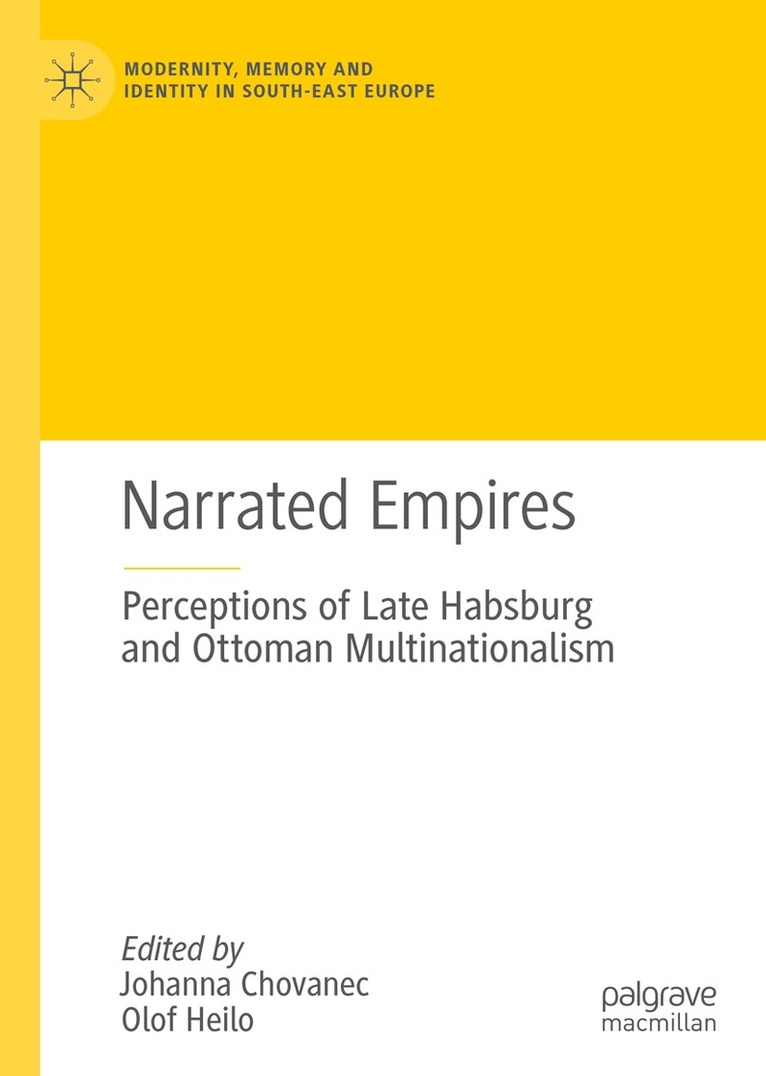
    Narrated Empires

    Perceptions of Late Habsburg and Ottoman Multinationalism

    AvJohanna Chovanec,Olof Heilo

    Inbunden, Engelska, 2021

    Del i serien Modernity, Memory and Identity in South-East Europe

    1 452 kr

    Beställningsvara. Skickas inom 10-15 vardagar. Fri frakt över 249 kr.

    Beskrivning

    This book examines the role of imperial narratives of multinationalism as alternative ideologies to nationalism in Central and Eastern Europe, the Balkans, and the Middle East from the revolutions of 1848 up to the defeat and subsequent downfall of the Habsburg and Ottoman empires in 1918. During this period, both empires struggled against a rising tide of nationalism to legitimise their own diversity of ethnicities, languages and religions. Contributors scrutinise the various narratives of identity that they developed, supported, encouraged or unwittingly created and left behind for posterity as they tried to keep up with the changing political realities of modernity. Beyond simplified notions of enforced harmony or dynamic dissonance, this book aims at a more polyphonic analysis of the various voices of Habsburg and Ottoman multinationalism: from the imperial centres and in the closest proximity to sovereigns, to provinces and minorities, among intellectuals and state servants, through novels and newspapers. Combining insights from history, literary studies and political sciences, it further explores the lasting legacy of the empires in post-imperial narratives of loss, nostalgia, hope and redemption. It shows why the two dynasties keep haunting the twenty-first century with fears and promises of conflict, coexistence, and reborn greatness.

    Produktinformation

    • Utgivningsdatum:2021-02-06
    • Mått:148 x 210 x 28 mm
    • Vikt:673 g
    • Format:Inbunden
    • Språk:Engelska
    • Serie:Modernity, Memory and Identity in South-East Europe
    • Antal sidor:416
    • Förlag:Springer Nature Switzerland AG
    • ISBN:9783030551988

    Utforska kategorier

    • Kolonialism och imperialism inom Historia och arkeologi
    • Europas historia inom Historia och arkeologi
    • Övriga länders och regioners historia inom Historia och arkeologi

    Mer om författaren

    Johanna Chovanec is a doctoral fellow of the Austrian Academy of Sciences and the German Academic Scholarship Foundation at the Department of Comparative Literature, University of Vienna, Austria. Olof Heilo is Deputy Director at the Swedish Research Institute in Istanbul, Turkey, and a visiting lecturer at the Centre for Middle Eastern Studies in Lund, Sweden.

    Innehållsförteckning

    • Part I Introduction.- 1. Narrating Empires: Between National and Multinational Visions of Belonging.- 2. Making Sense in a World That is Falling Apart: Imperial Narratives of State, Diversity, and Modernity.- Part II Ottomanism Revisited: An Imperial Narrative of Many Voices.- 3. Ottomanism and Varieties of Official Nationalism.- 4. Ottomanism in History and Historiography: Fortunes of a Concept.- 5. Unruly Children of the Homeland: Ottomanism’s Non-Muslim Authors.- 6. Arab Perspectives on the Late Ottoman Empire.- Part III Empires of Diversity and States of Change: Nations and Identities Between Centers and Frontiers.- 7. Zrinski-Myths: A Vehicle for Imperial and National Narratives.- 8. Ottoman Reform, Non-Muslim Subjects, and Constitutive Legislation: The Reform Edict of 1856 and the Greek General Regulations of 1862.- 9. Ottoman Albanians in an Era of Transition: An Engagement with a Fluid Modern World.- 10. Unraveling Multinational Legacies: National Affiliations of Government Employees in Post-Habsburg Austria.- Part IV Habsburg Press(ure): Reading Between the Lines of A Many-Tongued Journalism.- 11. Pester Lloyd and the German-Speaking Upper Classes of Hungary: A Budapest Newspaper in the Context of Increasing Magyarization.- 12. A "Roman Affair:" A Croatian Priest College in the Habsburg Press Debate of 1901.- 13. Narratives of Modernization in Periodicals: On the German-Language Agramer Tagblatt in 1918.- Part V Echoes from an Inner Void: The Post-Imperial Novel Between Melancholy and Memory.- 14. Theory of Empire, Mythology and the Power of the Narrative.- 15. The Ottoman Myth in Turkish Literature.- 16. The Hotel as a Non-Place of Habsburg Multinationalism. Hotel Savoy (1924) by Joseph Roth.- Part VI Afterword.- 17. Remembering Empires: Between Civilizational Nationalism and Post-National Pluralism.