• Fri frakt över 249 kr
  • •
  • Snabba leveranser
  • •
  • Billiga böcker
Kundservice

Du är på sajten för privatpersoner.

Företag, bibliotek eller offentlig verksamhet?

Du handlar på classic.bokus.com, där alla dina funktioner finns intakta.
Till classic.bokus.com
Bokus logotyp. Gå till startsidan.
  • Erbjudanden
  • Nyheter
  • Student
  • Topplistor
  • Barn & ungdom
  • Bokus Play
  • E-böcker
  • Pocketböcker
  • Spel & pussel

10% rabatt på allt med kod: NYSTART10 →

Sidfot

Mina sidor

    Hjälp

    • Kundservice
    • Vanliga frågor och svar
    • Frakt och leverans
    • Retur vid ångerrätt
    • Reklamera vara
    • Betalning
    • Köpvillkor
    • Allmänna villkor
    • Information om webbplatsens tillgänglighet

    Om Bokus

    • Om oss
    • Pressrum
    • För studenter
    • För företag
    • För bibliotek och offentlig verksamhet
    • För leverantörer
    • Hållbarhet

    Populärt

    • Aktuella erbjudanden
    • Presentkort
    • Studentlitteratur
    • Nya böcker
    • Topplistor
    • Signerade böcker
    • Engelska böcker

    Inspiration

    • Boktips
    • BookTok
    • Populära bokserier
    • Barnbokskaraktärer
    • Populära författare
    Logotyp för Bokus
    Följ oss på Facebook (extern länk)Följ oss på Instagram (extern länk)Följ oss på YouTube (extern länk)Följ oss på TikTok (extern länk)
    bokus @ CookiesAnpassa cookiesIntegritetspolicyKöpvillkor
    Till Citymail hemsida (extern länk)Till Budbee hemsida (extern länk)Till Postnord hemsida (extern länk)Till Schenker hemsida (extern länk)Till Early Bird hemsida (extern länk)Till Walleys hemsida (extern länk)
    1. Data och IT
    2. Systemvetenskap och AI

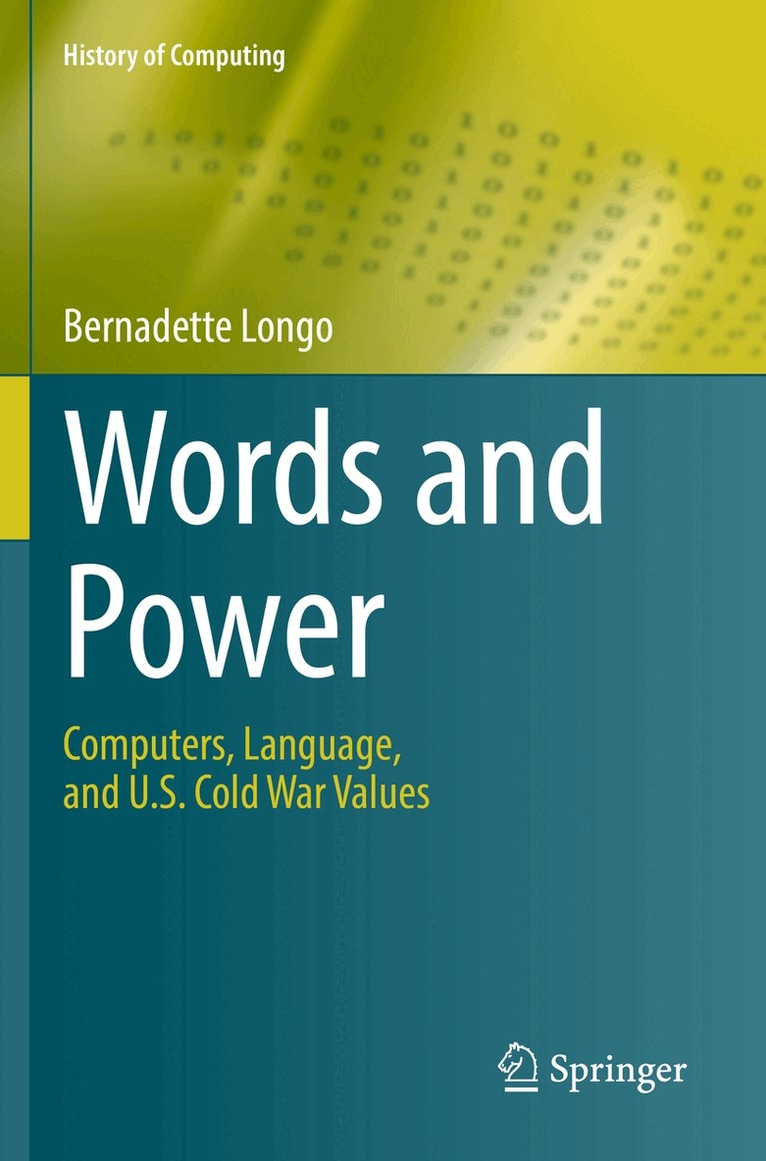
    Words and Power

    Computers, Language, and U.S. Cold War Values

    AvBernadette Longo

    Häftad, Engelska, 2022

    Del i serien History of Computing

    385 kr

    Beställningsvara. Skickas inom 10-15 vardagar. Fri frakt över 249 kr.

    Fler format och utgåvor

    Inbunden

    385 kr

    E-bok

    488 kr

    Beskrivning

    When viewed through a political lens, the act of defining terms in natural language arguably transforms knowledge into values. This unique volume explores how corporate, military, academic, and professional values shaped efforts to define computer terminology and establish an information engineering profession as a precursor to what would become computer science.As the Cold War heated up, U.S. federal agencies increasingly funded university researchers and labs to develop technologies, like the computer, that would ensure that the U.S. maintained economic prosperity and military dominance over the Soviet Union. At the same time, private corporations saw opportunities for partnering with university labs and military agencies to generate profits as they strengthened their business positions in civilian sectors. They needed a common vocabulary and principles of streamlined communication to underpin the technology development that would ensure national prosperity and military dominance.  investigates how language standardization contributed to the professionalization of computer science as separate from mathematics, electrical engineering, and physicsexamines traditions of language standardization in earlier eras of rapid technology development around electricity and radiohighlights the importance of the analogy of “the computer is like a human” to early explanations of computer design and logictraces design and development of electronic computers within political and economic contextsforegrounds the importance of human relationships in decisions about computer designThis in-depth humanistic study argues for the importance of natural language in shaping what people come to think of as possible and impossible relationships between computers and humans. The work is a key reference in the history of technology and serves as a source textbook on the human-level history of computing. In addition, it addresses those with interests in sociolinguistic questions around technology studies, as well as technology development at the nexus of politics, business, and human relations.

    Produktinformation

    • Utgivningsdatum:2022-07-28
    • Mått:155 x 235 x 9 mm
    • Vikt:248 g
    • Format:Häftad
    • Språk:Engelska
    • Serie:History of Computing
    • Antal sidor:143
    • Förlag:Springer Nature Switzerland AG
    • ISBN:9783030703752

    Utforska kategorier

    • Systemvetenskap och AI inom Data och IT
    • Nätverk och kommunikation inom Data och IT
    • Teknik: allmänt inom Naturvetenskap och teknik

    Mer om författaren

    Bernadette Longo is an Associate Professor in the Department of Humanities at New Jersey Institute of Technology. She is also the author of the books Edmund Berkeley and the Social Responsibility of Computer Professionals (2015), Spurious Coin: Science, Management, and a History of Technical Writing (2000), and the IEEE Guide to Writing in the Engineering and Technical Fields (2017). Among her other publications, she is co-editor of Critical Power Tools: Technical Communication and Cultural Studies (2006) and Transnational Research in Technical Communication: Realities and Reflections (forthcoming). Dr. Longo is a senior member of the Institute of Electrical and Electronics Engineers (IEEE) and serves on the Association for Computing Machinery (ACM) History Committee.

    Recensioner i media

    “Longo’s genealogical history of computing vocabularies and the field of computer science’s formation provides an important insight into both computer science’s  technical origins as well as its culture, one that valorizes looking to a tomorrow linearly constructed from today’s technologies.” (Kendall Giles, Technology and Culture, Vol. 65 (2), April, 2024)

    Innehållsförteckning

    • 1. Introduction.- 2. From Hot War to Cold Peace.- 3. Who Will Control Atomic Power.- 4. Sharing Information (or Not) for Computer Development.- 5. Defining Relationships among Computers, People, and Information.- 6. Technology Development Strains Standardization of Human Communication.- 7. Defining Terms and Establishing Priorities.- 8. Establishing the Field of Computer Science.