Bernadette Longo - Böcker
Visar alla böcker från författaren Bernadette Longo. Handla med fri frakt och snabb leverans.
11 produkter
11 produkter
1 042 kr
Tillfälligt slut
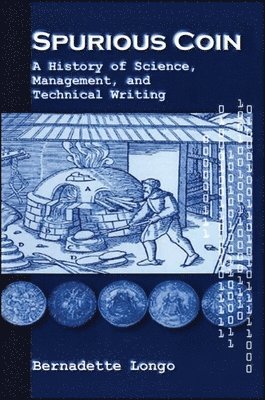
Offers a narrative history of technical writing as a cultural practice and the system of scientific knowledge it controls.Spurious Coin constructs a cultural history of technical writing in the United States and the system of scientific knowledge and power it controls. Embedded in this history are tensions between scientific and liberal arts knowledge-making that render technical writing both the genuine and counterfeit coin of scientific knowledge within our culture. When scientific knowledge is made by scientists and engineers, it can circulate as genuine currency in an economy where communication makes knowledge. When scientific knowledge is made by liberal-arts trained technical writers, however, it circulates as spurious currency and threatens the purity of the knowledge economy. Because the stability of the scientific knowledge economy is at stake, scientists and technical writers often find themselves at odds over the value of scientific knowledge minted by non-scientists.Longo constructs this cultural history around a framework of five intellectual trends: the use of clear, correct English; maximum efficiency of production and operation; the need to contribute to a general fund of scientific knowledge for the betterment of the human condition; the tension between the role of science and art within a culture; and a redemptive urge to purify language and standardize practice. She also explores the role of mechanical engineers in designing management systems which rely on technical writing to control operations and profits.
377 kr
Tillfälligt slut
Offers a narrative history of technical writing as a cultural practice and the system of scientific knowledge it controls.Spurious Coin constructs a cultural history of technical writing in the United States and the system of scientific knowledge and power it controls. Embedded in this history are tensions between scientific and liberal arts knowledge-making that render technical writing both the genuine and counterfeit coin of scientific knowledge within our culture. When scientific knowledge is made by scientists and engineers, it can circulate as genuine currency in an economy where communication makes knowledge. When scientific knowledge is made by liberal-arts trained technical writers, however, it circulates as spurious currency and threatens the purity of the knowledge economy. Because the stability of the scientific knowledge economy is at stake, scientists and technical writers often find themselves at odds over the value of scientific knowledge minted by non-scientists.Longo constructs this cultural history around a framework of five intellectual trends: the use of clear, correct English; maximum efficiency of production and operation; the need to contribute to a general fund of scientific knowledge for the betterment of the human condition; the tension between the role of science and art within a culture; and a redemptive urge to purify language and standardize practice. She also explores the role of mechanical engineers in designing management systems which rely on technical writing to control operations and profits.
1 057 kr
Tillfälligt slut
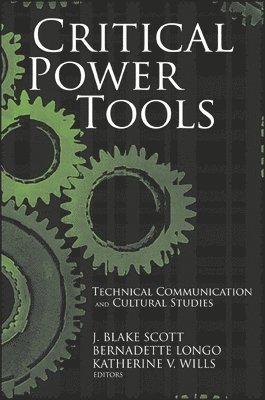
The first sourcebook for rethinking technical communication theory, practice, pedagogy, and research through a cultural studies lens.Winner of the 2007 National Council of Teachers of English (NCTE) Award for Best Collection of Essays on Technical and Scientific Communication The first book to focus on the intersection of cultural studies and technical communication, Critical Power Tools draws on various traditions of cultural studies to develop new or expanded theoretical, methodological, and pedagogical approaches to technical communication. Offered as a sourcebook for the field, the book is organized into three parts. The first section, emphasizing theory building, reconceptualizes key concepts or practices, such as usability, through a cultural studies lens. The second section illustrates alternative research methods through several case studies. The third section offers critical and productive pedagogical approaches, including specific assignments, applicable to both undergraduate and graduate courses.
478 kr
Skickas inom 5-8 vardagar
The first sourcebook for rethinking technical communication theory, practice, pedagogy, and research through a cultural studies lens.Winner of the 2007 National Council of Teachers of English (NCTE) Award for Best Collection of Essays on Technical and Scientific Communication The first book to focus on the intersection of cultural studies and technical communication, Critical Power Tools draws on various traditions of cultural studies to develop new or expanded theoretical, methodological, and pedagogical approaches to technical communication. Offered as a sourcebook for the field, the book is organized into three parts. The first section, emphasizing theory building, reconceptualizes key concepts or practices, such as usability, through a cultural studies lens. The second section illustrates alternative research methods through several case studies. The third section offers critical and productive pedagogical approaches, including specific assignments, applicable to both undergraduate and graduate courses.
796 kr
Skickas inom 7-10 vardagar
Helps both engineers and students improve their writing skills by learning to analyze target audience, tone, and purpose in order to effectively write technical documentsThis book introduces students and practicing engineers to all the components of writing in the workplace. It teaches readers how considerations of audience and purpose govern the structure of their documents within particular work settings. The IEEE Guide to Writing in the Engineering and Technical Fields is broken up into two sections: “Writing in Engineering Organizations” and “What Can You Do With Writing?” The first section helps readers approach their writing in a logical and persuasive way as well as analyze their purpose for writing. The second section demonstrates how to distinguish rhetorical situations and the generic forms to inform, train, persuade, and collaborate.The emergence of the global workplace has brought with it an increasingly important role for effective technical communication. Engineers more often need to work in cross-functional teams with people in different disciplines, in different countries, and in different parts of the world. Engineers must know how to communicate in a rapidly evolving global environment, as both practitioners of global English and developers of technical documents. Effective communication is critical in these settings.The IEEE Guide to Writing in the Engineering and Technical Fields Addresses the increasing demand for technical writing courses geared toward engineersAllows readers to perfect their writing skills in order to present knowledge and ideas to clients, government, and general publicCovers topics most important to the working engineer, and includes sample documentsIncludes a companion website that offers engineering documents based on real projectsThe IEEE Guide to Engineering Communication is a handbook developed specifically for engineers and engineering students. Using an argumentation framework, the handbook presents information about forms of engineering communication in a clear and accessible format. This book introduces both forms that are characteristic of the engineering workplace and principles of logic and rhetoric that underlie these forms. As a result, students and practicing engineers can improve their writing in any situation they encounter, because they can use these principles to analyze audience, purpose, tone, and form.
Transnational Research in Technical Communication
Stories, Realities, and Reflections
Häftad, Engelska, 2023
566 kr
Skickas inom 3-6 vardagar
Offers unique story-based insights into the complexities and challenges of transnational and intercultural research.Transnational Research in Technical Communication considers the complexities of intercultural projects from a compelling perspective: first-hand narrative reflections. Readers go behind the scenes as scholars share their experiences crossing a variety of borders in their efforts to engage in knowledge-making endeavors. Interwoven through each chapter are stories of how projects were designed, adapted, and sometimes even failed. The collection begins with an introduction situating it at the intersection of recent scholarship in storywork, intercultural research, and technical and professional communication's social justice turn. Each chapter concludes with discussion questions and recommendations for further reading. The closing chapter reveals a nascent "ethic of transnational and intercultural research" growing out of contributors' lessons learned and generous reflections. Anyone interested in or planning to undertake a transnational or intercultural project can benefit from these storied case studies, and as a result, this collection contributes to moving the field forward as it strives to promote more ethically aware and responsive research.
Transnational Research in Technical Communication
Stories, Realities, and Reflections
Inbunden, Engelska, 2022
990 kr
Skickas
Offers unique story-based insights into the complexities and challenges of transnational and intercultural research.Transnational Research in Technical Communication considers the complexities of intercultural projects from a compelling perspective: first-hand narrative reflections. Readers go behind the scenes as scholars share their experiences crossing a variety of borders in their efforts to engage in knowledge-making endeavors. Interwoven through each chapter are stories of how projects were designed, adapted, and sometimes even failed. The collection begins with an introduction situating it at the intersection of recent scholarship in storywork, intercultural research, and technical and professional communication's social justice turn. Each chapter concludes with discussion questions and recommendations for further reading. The closing chapter reveals a nascent "ethic of transnational and intercultural research" growing out of contributors' lessons learned and generous reflections. Anyone interested in or planning to undertake a transnational or intercultural project can benefit from these storied case studies, and as a result, this collection contributes to moving the field forward as it strives to promote more ethically aware and responsive research.
849 kr
Skickas inom 7-10 vardagar
1 059 kr
Skickas inom 7-10 vardagar
377 kr
Skickas inom 10-15 vardagar
When viewed through a political lens, the act of defining terms in natural language arguably transforms knowledge into values. This unique volume explores how corporate, military, academic, and professional values shaped efforts to define computer terminology and establish an information engineering profession as a precursor to what would become computer science.As the Cold War heated up, U.S. federal agencies increasingly funded university researchers and labs to develop technologies, like the computer, that would ensure that the U.S. maintained economic prosperity and military dominance over the Soviet Union. At the same time, private corporations saw opportunities for partnering with university labs and military agencies to generate profits as they strengthened their business positions in civilian sectors. They needed a common vocabulary and principles of streamlined communication to underpin the technology development that would ensure national prosperity and military dominance. investigates how language standardization contributed to the professionalization of computer science as separate from mathematics, electrical engineering, and physicsexamines traditions of language standardization in earlier eras of rapid technology development around electricity and radiohighlights the importance of the analogy of “the computer is like a human” to early explanations of computer design and logictraces design and development of electronic computers within political and economic contextsforegrounds the importance of human relationships in decisions about computer designThis in-depth humanistic study argues for the importance of natural language in shaping what people come to think of as possible and impossible relationships between computers and humans. The work is a key reference in the history of technology and serves as a source textbook on the human-level history of computing. In addition, it addresses those with interests in sociolinguistic questions around technology studies, as well as technology development at the nexus of politics, business, and human relations.
377 kr
Skickas inom 10-15 vardagar
When viewed through a political lens, the act of defining terms in natural language arguably transforms knowledge into values. This unique volume explores how corporate, military, academic, and professional values shaped efforts to define computer terminology and establish an information engineering profession as a precursor to what would become computer science.As the Cold War heated up, U.S. federal agencies increasingly funded university researchers and labs to develop technologies, like the computer, that would ensure that the U.S. maintained economic prosperity and military dominance over the Soviet Union. At the same time, private corporations saw opportunities for partnering with university labs and military agencies to generate profits as they strengthened their business positions in civilian sectors. They needed a common vocabulary and principles of streamlined communication to underpin the technology development that would ensure national prosperity and military dominance. investigates how language standardization contributed to the professionalization of computer science as separate from mathematics, electrical engineering, and physicsexamines traditions of language standardization in earlier eras of rapid technology development around electricity and radiohighlights the importance of the analogy of “the computer is like a human” to early explanations of computer design and logictraces design and development of electronic computers within political and economic contextsforegrounds the importance of human relationships in decisions about computer designThis in-depth humanistic study argues for the importance of natural language in shaping what people come to think of as possible and impossible relationships between computers and humans. The work is a key reference in the history of technology and serves as a source textbook on the human-level history of computing. In addition, it addresses those with interests in sociolinguistic questions around technology studies, as well as technology development at the nexus of politics, business, and human relations.