• Fri frakt över 249 kr
  • •
  • Snabba leveranser
  • •
  • Billiga böcker
Kundservice

Du är på sajten för privatpersoner.

Företag, bibliotek eller offentlig verksamhet?

Du handlar på classic.bokus.com, där alla dina funktioner finns intakta.
Till classic.bokus.com
Bokus logotyp. Gå till startsidan.
  • Erbjudanden
  • Nyheter
  • Student
  • Topplistor
  • Barn & ungdom
  • Bokus Play
  • E-böcker
  • Pocketböcker
  • Spel & pussel

10% rabatt på allt med kod: NYSTART10 →

Sidfot

Mina sidor

    Hjälp

    • Kundservice
    • Vanliga frågor och svar
    • Frakt och leverans
    • Retur vid ångerrätt
    • Reklamera vara
    • Betalning
    • Köpvillkor
    • Allmänna villkor
    • Information om webbplatsens tillgänglighet

    Om Bokus

    • Om oss
    • Pressrum
    • För studenter
    • För företag
    • För bibliotek och offentlig verksamhet
    • För leverantörer
    • Hållbarhet

    Populärt

    • Aktuella erbjudanden
    • Presentkort
    • Studentlitteratur
    • Nya böcker
    • Topplistor
    • Signerade böcker
    • Engelska böcker

    Inspiration

    • Boktips
    • BookTok
    • Populära bokserier
    • Barnbokskaraktärer
    • Populära författare
    Logotyp för Bokus
    Följ oss på Facebook (extern länk)Följ oss på Instagram (extern länk)Följ oss på YouTube (extern länk)Följ oss på TikTok (extern länk)
    bokus @ CookiesAnpassa cookiesIntegritetspolicyKöpvillkor
    Till Citymail hemsida (extern länk)Till Budbee hemsida (extern länk)Till Postnord hemsida (extern länk)Till Schenker hemsida (extern länk)Till Early Bird hemsida (extern länk)Till Walleys hemsida (extern länk)
    1. Historia och arkeologi
    2. Arkeologi

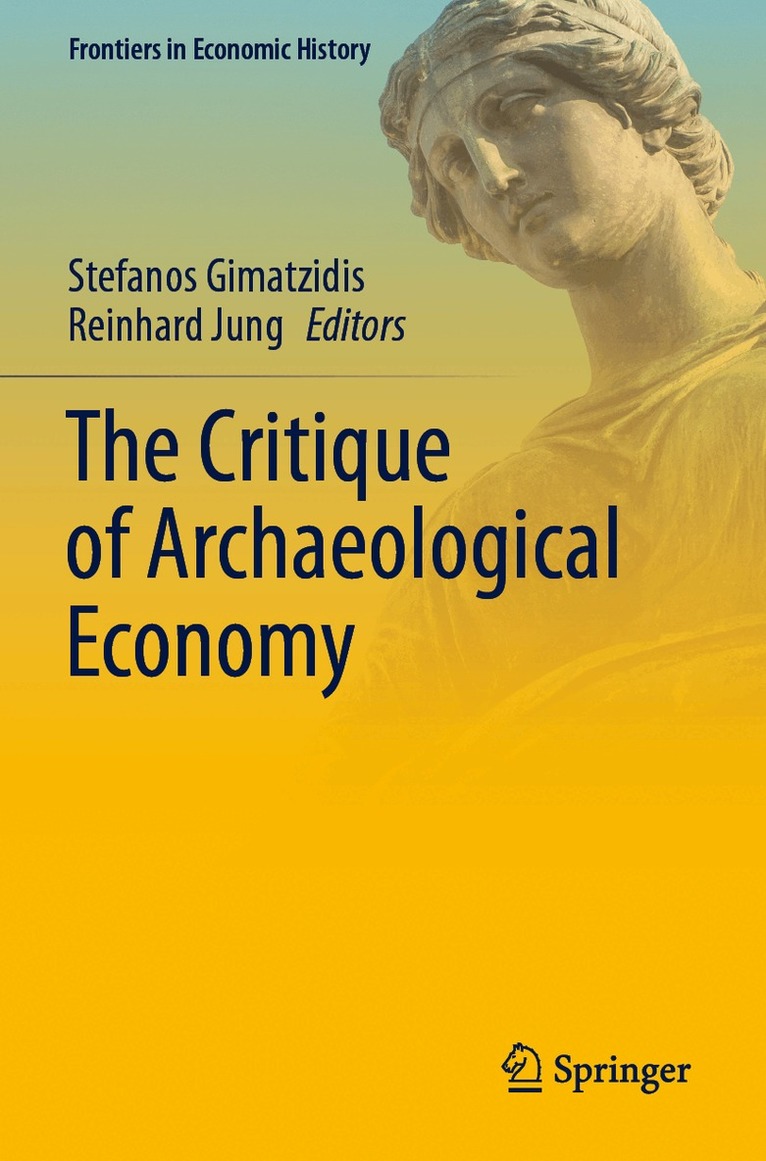
    Critique of Archaeological Economy

    AvStefanos Gimatzidis,Reinhard Jung

    Häftad, Engelska, 2022

    Del i serien Frontiers in Economic History

    2 017 kr

    Beställningsvara. Skickas inom 10-15 vardagar. Fri frakt över 249 kr.

    Beskrivning

    This book studies past economics from anthropological, archaeological, historical and sociological perspectives. By analyzing archeological and other evidence, it examines economic behavior and institutions in ancient societies. Adopting an interdisciplinary perspective, it critically discusses dominant economic models that have influenced the study of past economic relations in various disciplines, while at the same time highlighting alternative theoretical trajectories. In this regard, the book’s goal is not only to test theoretical models under scrutiny, but also to present evidence against the rationalization of past economic behavior according to the rules of modern markets. The contributing authors cover various topics, such as trade in the classical Greek world, concepts of commodity and value, and management of economic affluence.

    Produktinformation

    • Utgivningsdatum:2022-06-16
    • Mått:155 x 235 x 14 mm
    • Vikt:371 g
    • Format:Häftad
    • Språk:Engelska
    • Serie:Frontiers in Economic History
    • Antal sidor:234
    • Förlag:Springer Nature Switzerland AG
    • ISBN:9783030725419

    Utforska kategorier

    • Arkeologi inom Historia och arkeologi
    • Socialhistoria och kulturhistoria inom Historia och arkeologi
    • Ekonomisk historia inom Ekonomi och Ledarskap

    Mer om författaren

    Stefanos Gimatzidis received his B.A. and M.A. degrees in Classical Archaeology from the Aristotle University Thessaloniki, Greece, and his Ph.D. from the Institute for Prehistoric Archaeology of the Freie Universität Berlin, Germany, in 2007. He specializes in the Early Iron Age archaeology of the Mediterranean, Archaic and Classical periods with a focus on the Aegean, Balkans and the Levant. From 2005 to 2011, he was employed at the Ministry of Culture of Greece. Starting in 2011, he has led various international research projects as senior researcher at the Austrian Academy of Sciences in Vienna and worked extensively in Greece, the central Balkans, Italy, Turkey and Lebanon. In 2015, he began lecturing at the University of Vienna’s Institute for Classical Archaeology, and since December 2017, he has been employed as project director at the Austrian Archaeological Institute. Reinhard Jung is an archaeologist and a specialist for the Bronze and Early Iron Age in southern Europe and the Near East. He received his Ph.D. degree from the Institute for Prehistoric Archaeology of the Freie Universität Berlin, Germany, in 1999, and his postdoctoral degree (venia legendi) in pre- and protohistory from the University of Tübingen, Germany, in 2013. From 2002 to 2013, he directed research projects at the Austrian Academy of Sciences, the DAI Athens, Greece, and the University of Salzburg, Austria. From 2013 to 2015, he co-directed excavations at the Bronze Age settlement site of Punta di Zambrone in Calabria, Italy. Since 2013, he has been a senior researcher at the Austrian Academy of Sciences’ Institute for Oriental and European Archaeology, and since 2015 he is head of the research group “Mediterranean Economies.” In addition, he teaches at the University of Tübingen, Germany.

    Innehållsförteckning

    • Chapter 1 - An Introduction to the Critique of Archaeological Economy (Reinhard Jung, Stefanos Gimatzidis).- Chapter 2 - Writing the Deep History of Human Economy (Randall McGuire).- Chapter 3 - Wealth, Women's Labor, and Forms of Value: Thinking From the Study of Ancestral Central America (Rosemary A. Joyce).- Chapter 4 - “The Economy has no surplus”: Harry W. Pearson’s contribution revisited, 60 years later (Svend Hansen).- Chapter 5 - Crafting Values in Chalcolithic Cyprus and Anatolia (Bleda S. Düring).- Chapter 6 - The Bornhöck burial mound and the political economy of an Únětice ruler (Roberto Risch, Harald Meller, Selina Delgado-Raack, and Torsten Schunke).- Chapter 7 - Property and markets: the uses of land in pharaonic Egypt beyond redistributive and neoliberal approaches (Juan Carlos Moreno García).- Chapter 8 - Uneven and Combined: Product Exchange in the Mediterranean 3rd to 2nd Millennium BCE) (Reinhard Jung).- Chapter 9 - Tripod Dedication: Gift and Commodity Exchange inAncient Greece (Stefanos Gimatzidis).- Chapter 10 - Happily connected? The interconnectivity paradigm and the debate about the ancient economy (Jan Paul Crielaard).- Chapter 11 - Aegean Transport Amphoras (6th to 1st centuries BCE): Exploring Social Tension in a Path Dependency Model (Mark L. Lawall).- Chapter 12 - Modelling trade in Athenian pottery in the archaic and classical period (Robin Osborne).