• Fri frakt över 249 kr
  • •
  • Snabba leveranser
  • •
  • Billiga böcker
Kundservice

Du är på sajten för privatpersoner.

Företag, bibliotek eller offentlig verksamhet?

Du handlar på classic.bokus.com, där alla dina funktioner finns intakta.
Till classic.bokus.com
Bokus logotyp. Gå till startsidan.
  • Erbjudanden
  • Nyheter
  • Student
  • Topplistor
  • Barn & ungdom
  • Bokus Play
  • E-böcker
  • Pocketböcker
  • Spel & pussel

10% rabatt på allt med kod NYSTART10 →

Sidfot

Mina sidor

    Hjälp

    • Kundservice
    • Vanliga frågor och svar
    • Frakt och leverans
    • Retur vid ångerrätt
    • Reklamera vara
    • Betalning
    • Köpvillkor
    • Allmänna villkor
    • Information om webbplatsens tillgänglighet

    Om Bokus

    • Om oss
    • Pressrum
    • För studenter
    • För företag
    • För bibliotek och offentlig verksamhet
    • För leverantörer
    • Hållbarhet

    Populärt

    • Aktuella erbjudanden
    • Presentkort
    • Studentlitteratur
    • Nya böcker
    • Topplistor
    • Signerade böcker
    • Engelska böcker

    Inspiration

    • Boktips
    • BookTok
    • Populära bokserier
    • Barnbokskaraktärer
    • Populära författare
    Logotyp för Bokus
    Följ oss på Facebook (extern länk)Följ oss på Instagram (extern länk)Följ oss på YouTube (extern länk)Följ oss på TikTok (extern länk)
    bokus @ CookiesAnpassa cookiesIntegritetspolicyKöpvillkor
    Till Citymail hemsida (extern länk)Till Budbee hemsida (extern länk)Till Postnord hemsida (extern länk)Till Schenker hemsida (extern länk)Till Early Bird hemsida (extern länk)Till Walleys hemsida (extern länk)
    1. Naturvetenskap och teknik
    2. Teknik och industri
    3. Biokemisk teknik

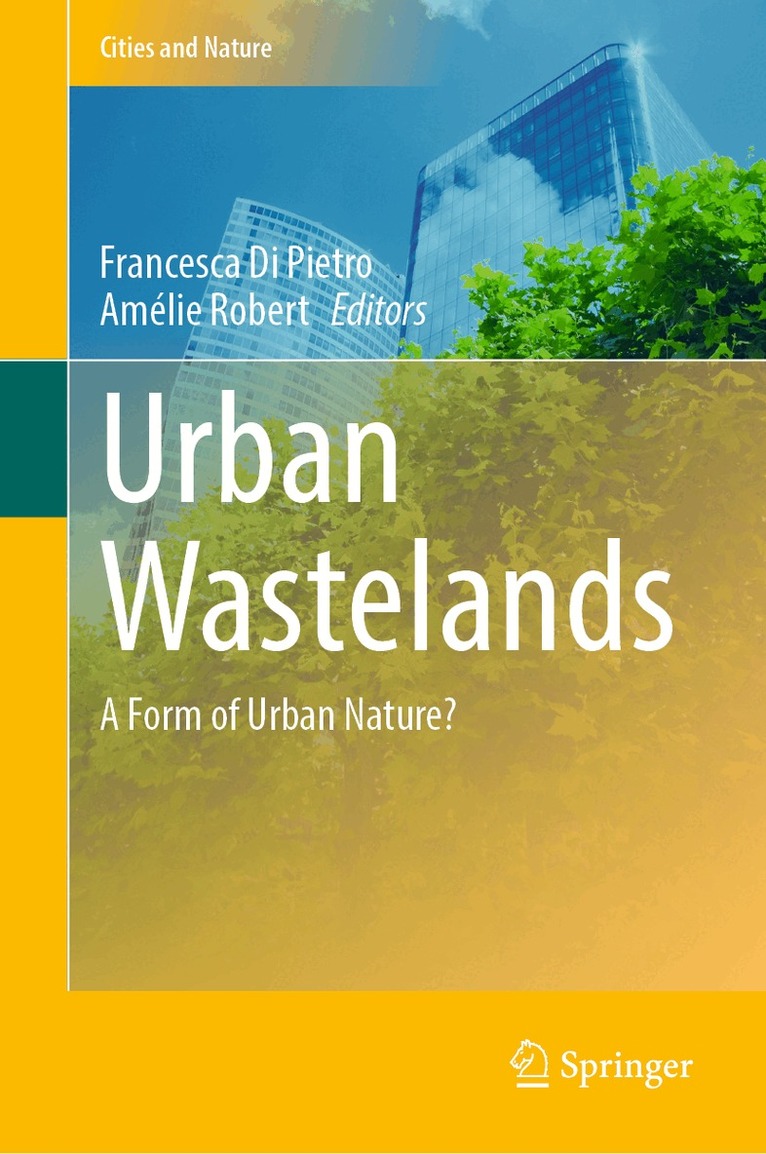
    Urban Wastelands

    A Form of Urban Nature?

    AvFrancesca Di Pietro,Amélie Robert

    Inbunden, Engelska, 2021

    Del i serien Cities and Nature

    1 516 kr

    Beställningsvara. Skickas inom 10-15 vardagar. Fri frakt över 249 kr.

    Beskrivning

    Faced with the growing demand for nature in cities, informal greenspaces are gaining the interest of various stakeholders - residents, associations, public authorities - as well as scientists. This book provides a cross-sectorial overview of the advantages and disadvantages of urban wastelands in meeting this social demand of urban nature, spanning from the social sciences and urban planning to ecology and soil sciences. It shows the potential of urban wastelands with respect to city dwellers’ well-being, environmental education, urban biodiversity and urban green networks as well as concerns regarding urban wastelands’ in relation to conflicts, and urban marketing. The authors provide a global insight through case studies in nine countries, mainly located in Europe, Asia and America, thus offering a broad perspective.

    Produktinformation

    • Utgivningsdatum:2021-10-19
    • Mått:155 x 235 x 21 mm
    • Vikt:823 g
    • Format:Inbunden
    • Språk:Engelska
    • Serie:Cities and Nature
    • Antal sidor:37
    • Förlag:Springer Nature Switzerland AG
    • ISBN:9783030748814

    Utforska kategorier

    • Biokemisk teknik inom Naturvetenskap och teknik
    • Biovetenskap inom Naturvetenskap och teknik
    • Regional planering inom Naturvetenskap och teknik

    Mer om författaren

    As Associate Professor of Environmental Geography at the University of Tours (France), in the Planning & Environment Department, Francesca Di Pietro works on plant biodiversity in anthropogenic environments, at first in agricultural landscapes, later in urban ones. Her research focuses on plant communities of urban habitats such as public green spaces, urban wastelands, roadsides, community and individual gardens. Since 2011 she has worked on urban wastelands, coordinating work on their plant communities, informal uses, and how they are perceived.Amélie Robert is currently a contract researcher and part-time lecturer at the University of Tours. Her research focuses on landscape dynamics, the identification of their drivers and ecosystem services, from a geohistorical perspective. More generally, she questions the interrelationships between societies and their environments in different contexts. She pays special attention to novel ecosystems, particularly in urban contexts, having contributed to several research programs in this field.

    Innehållsförteckning

    • PART I: Uses, rules and conflicts about nature in urban wastelands.- Chapter 1. The urban wasteland, spatial expression of a transition of uses: cross-media contributions art, ecology and geography (Cieslik).- Chapter 2. Recent developments in the legal framework of urban wastelands: to better take into account nature in the city (Chapouton).- Chapter 3. Dwelling in urban wastelands: a disputed nature (Mattoug).- Chapter 4. Between privatization and publicising, which place for nature in the frame of urban wastelands' reconversion? (Lotz).- Chapter 5. Long-standing wastelands: transactions, publicising Vs privatising and green settings on two urban wastelands in Tirana and Istanbul (Dorso & Muci).- PART II: Contaminated soils in urban wastelands.- Chapter 6. Ecological restoration of contaminated brownfield sites in urban areas: what perspectives in the context of European policies and national regulatory contexts? (Limasset).- Chapter 7. Social representations of nature regarding (soil-)contaminated brownfields in France (Tendero).- Chapter 8. Brownfield gardens and contaminated soils (Petit-Berghem).- PART III: Urban wastelands and waterfronts.- Chapter 9. Wastelands at city-port interfaces: the search of water spaces to evade urban tumults (Mazy).- Chapter 10. The requalification of urban riversides: environmental and social issues at stake (Carrière).- Chapter 11. Becoming wastelands: the captation areas of the traditional water management system of Tamil Nadu (India) (Verdelli).- PART IV: Wastelands in the urban green network.- Chapter 12. The conditions that make urban wastelands reservoirs of biodiversity for cities (Machon).- Chapter 13. Vacant lots' urban landscape and legacies: which influence on plant communities? (Brun).- Chapter 14. Generalised and temporary greening on deconstructed urban wastelands: an opportunity for biodiversity (Lemoine).- Chapter 15. Approaches to develop urban wastelands as elements of green infrastructure including the perception and use by residents (Mathey).- Chapter 16. How informal open spaces contribute to the metropolitan park system? The case of Brussels and its semi-naturals spaces (Vanbutsele).