• Fri frakt över 249 kr
  • •
  • Snabba leveranser
  • •
  • Billiga böcker
Kundservice

Du är på sajten för privatpersoner.

Företag, bibliotek eller offentlig verksamhet?

Du handlar på classic.bokus.com, där alla dina funktioner finns intakta.
Till classic.bokus.com
Bokus logotyp. Gå till startsidan.
  • Erbjudanden
  • Nyheter
  • Student
  • Topplistor
  • Barn & ungdom
  • Bokus Play
  • E-böcker
  • Pocketböcker
  • Spel & pussel

10% rabatt på allt med kod NYSTART10 →

Sidfot

Mina sidor

    Hjälp

    • Kundservice
    • Vanliga frågor och svar
    • Frakt och leverans
    • Retur vid ångerrätt
    • Reklamera vara
    • Betalning
    • Köpvillkor
    • Allmänna villkor
    • Information om webbplatsens tillgänglighet

    Om Bokus

    • Om oss
    • Pressrum
    • För studenter
    • För företag
    • För bibliotek och offentlig verksamhet
    • För leverantörer
    • Hållbarhet

    Populärt

    • Aktuella erbjudanden
    • Presentkort
    • Studentlitteratur
    • Nya böcker
    • Topplistor
    • Signerade böcker
    • Engelska böcker

    Inspiration

    • Boktips
    • BookTok
    • Populära bokserier
    • Barnbokskaraktärer
    • Populära författare
    Logotyp för Bokus
    Följ oss på Facebook (extern länk)Följ oss på Instagram (extern länk)Följ oss på YouTube (extern länk)Följ oss på TikTok (extern länk)
    bokus @ CookiesAnpassa cookiesIntegritetspolicyKöpvillkor
    Till Citymail hemsida (extern länk)Till Budbee hemsida (extern länk)Till Postnord hemsida (extern länk)Till Schenker hemsida (extern länk)Till Early Bird hemsida (extern länk)Till Walleys hemsida (extern länk)
    1. Psykologi och pedagogik
    2. Pedagogik
    3. Material och digital teknik i undervisningen

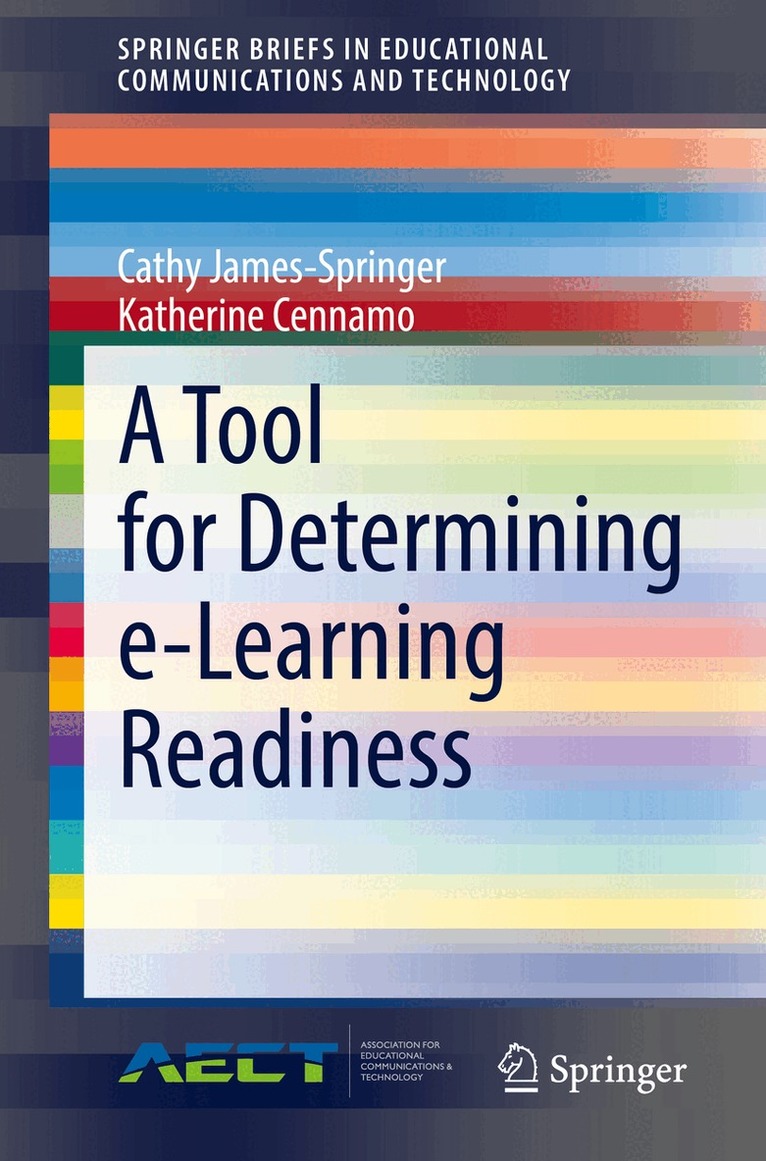
    Tool for Determining e-Learning Readiness

    AvCathy James-Springer,Katherine Cennamo

    Häftad, Engelska, 2021

    Del i serien SpringerBriefs in Educational Communications and Technology

    635 kr

    Beställningsvara. Skickas inom 10-15 vardagar. Fri frakt över 249 kr.

    Beskrivning

    This book presents a tool to determine e-learning readiness in workplace organizations. It offers a case study of the design and development process and outlines factors to be taken into account to determine e-learning readiness. It details the four objectives of this tool: to highlight specific parameters for determining e-learning readiness, to provide a systematic process to determine the readiness of an organization, to enable flexibility for the environmental context, and to capture the interrelatedness of the many areas in the organization. Next, it discusses the main element of the tool: surveys that are used to facilitate collection of data on organizational, learner and technology readiness. The book concludes with a look at practical ways of using the information gathered from the data produced.

    Produktinformation

    • Utgivningsdatum:2021-08-14
    • Mått:155 x 235 x 8 mm
    • Vikt:201 g
    • Format:Häftad
    • Språk:Engelska
    • Serie:SpringerBriefs in Educational Communications and Technology
    • Antal sidor:112
    • Förlag:Springer Nature Switzerland AG
    • ISBN:9783030769932

    Utforska kategorier

    • Material och digital teknik i undervisningen inom Psykologi och pedagogik
    • Pedagogisk metodik inom Psykologi och pedagogik

    Mer om författaren

    Cathy James-Springer is currently the Manager, Institutional Effectiveness and Transformation at the Sir Arthur Lewis Community College, in St. Lucia, West Indies. She completed her Doctorate in Instructional Design and Technology at Virginia Tech in 2016 as a Fulbright Scholar from the island of St. Lucia in the Caribbean. She holds a Master of Science Degree in Science Education from Montana State University (Bozeman) and a Bachelor of Science in Biology and Chemistry from the University of the West Indies, Cave Hill Campus. Dr. James-Springer began her career in education as a Science Teacher at secondary school level. Her career continued as a Lecturer in Chemistry at tertiary level until she proceeded to complete her Doctoral degree. Her interest in instructional design began by exploring ways of making science instruction relatable and applicable to the real world. This led to the discovery of a field which has developed a variety of 21st century relevant skills and interests. With the emergence of new technological tools, she continues play an active role in the implementation and quality assurance of both onsite and online learning systems. Currently, she is focused on developing solutions to establishing and building resilient frameworks that can sustain learning. Katherine Cennamo is a Professor of Instructional Design and Technology at Virginia Tech. She has a Bachelor’s degree in Elementary Education from Virginia Tech, a Master’s degree in Educational Media from the University of Arizona, and a Ph.D. in Instructional Technology from the University of Texas at Austin. Throughout her career, Dr. Cennamo’s work has focused on the application of learning theories to the design of technology-based instructional materials.  Through numerous funded projects, publications, presentations, instructional materials, and teaching activities, she has disseminated knowledge of instructional strategies based on established of theories of learning, illuminated the nature of instructional design practice so that scholars and designers alike better understand their work, and applied this knowledge to the preparation of future instructional design professionals. She has synthesized much of this work in her textbooks, Real World Instructional Design, co-authored with Debby Kalk, and Integrating Technology for Meaningful Classroom Use, co-authored with John Ross and Peggy Ertmer. Currently, her research and service activities focus on developing and sustaining a classroom culture that fosters critical and creative thinking skills in K-12 and higher education environments.

    Innehållsförteckning

    • Chapter 1. Introduction.- Chapter 2. E-learning Readiness.- Chapter 3. Tool Design.- Chapter 4. Structure of the Tool.- Chapter 5. Organizational Environment Readiness.- Chapter 6. Human Resource and Capacity Readiness.- Chapter 7. Technology and Practice Readiness.- Chapter 8. Learner Readiness.- Chapter 9. How to use the E-learning Readiness Tool.- Chapter 10. Implications of using the Tool.- Chapter 11. Challenges and Future Opportunities.