Inbunden, Engelska, 2027
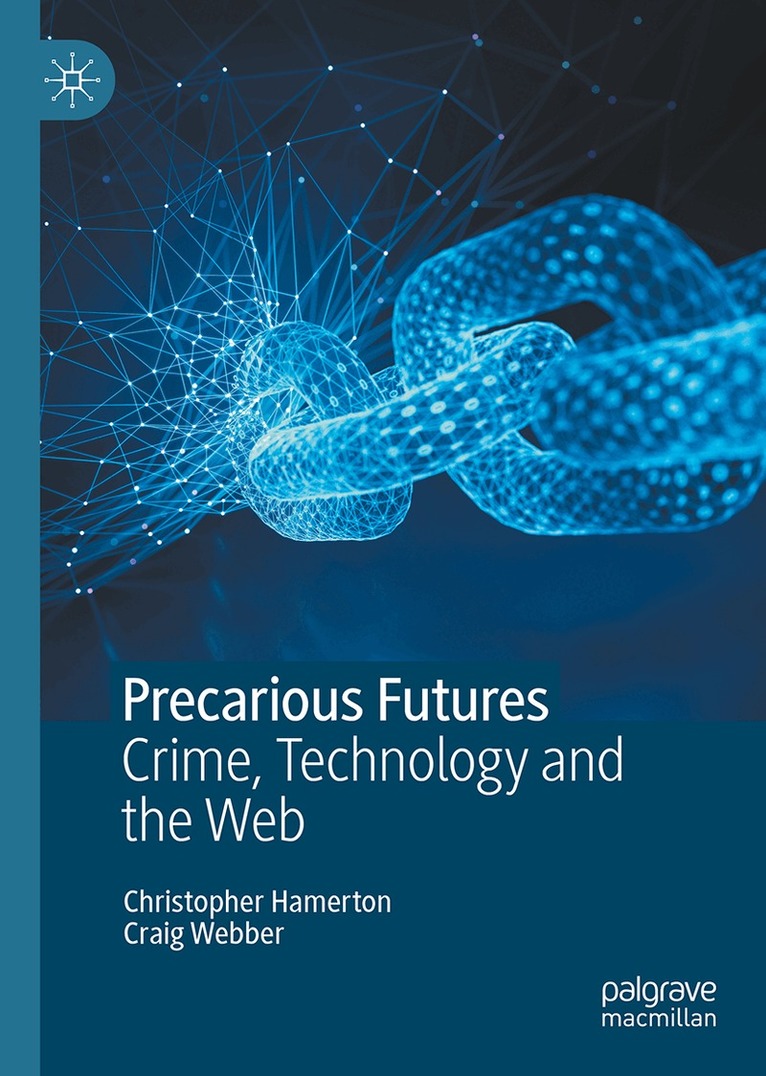
Precarious Futures
Av Christopher Hamerton, Craig Webber
1851 kr
Kommande
Beskrivning
Precarious Futures: Crime, Technology and the Web explores rapidly changing social relationships within an increasingly interconnected digital world. Challenging conventional understandings of cybercrime and questioning the continued adequacy of established criminological frameworks, it argues, inter alia, that relative deprivation, reworked as a form of post-industrial precarity, provides a powerful foundation for understanding crime and deviance in a hyper-connected, hyper-commercial neoliberal society. Drawing on empirical research, social theory, and contemporary debates on artificial intelligence, big data, surveillance, hacktivism, and digital power, the book examines how the Web has transformed opportunities for crime while reshaping the practices of governance and prediction. In doing so, Hamerton and Webber advance new theoretical models: temporal relative deprivation; the metaopticon; techniques of normalisation; and the precariousness of predictive systems, to explain the dynamics of crime and social control in an age of pervasive surveillance and artificial general intelligence. Precarious Futures advances a transdisciplinary critical digital criminology for understanding the uncertainties of the digital age. It will be essential reading for scholars and students of criminology and sociology, as well as researchers and practitioners in cyber security, computer science, artificial intelligence studies, and related fields.
Produktinformation
- Utgivningsdatum: 2027-02-24
- Mått: 148 x 210 x undefined mm
- Format: Inbunden
- Språk: Engelska
- Antal sidor: 300
- Förlag: Springer Nature Switzerland AG
- ISBN: 9783030868604
Utforska kategorier
Betyg & recensioner
0 recensioner
Inga recensioner tillgängliga.