• Fri frakt över 249 kr
  • •
  • Snabba leveranser
  • •
  • Billiga böcker
Kundservice

Du är på sajten för privatpersoner.

Företag, bibliotek eller offentlig verksamhet?

Du handlar på classic.bokus.com, där alla dina funktioner finns intakta.
Till classic.bokus.com
Bokus logotyp. Gå till startsidan.
  • Erbjudanden
  • Nyheter
  • Student
  • Topplistor
  • Barn & ungdom
  • Bokus Play
  • E-böcker
  • Pocketböcker
  • Spel & pussel

10% rabatt på allt med kod: NYSTART10 →

Sidfot

Mina sidor

    Hjälp

    • Kundservice
    • Vanliga frågor och svar
    • Frakt och leverans
    • Retur vid ångerrätt
    • Reklamera vara
    • Betalning
    • Köpvillkor
    • Allmänna villkor
    • Information om webbplatsens tillgänglighet

    Om Bokus

    • Om oss
    • Pressrum
    • För studenter
    • För företag
    • För bibliotek och offentlig verksamhet
    • För leverantörer
    • Hållbarhet

    Populärt

    • Aktuella erbjudanden
    • Presentkort
    • Studentlitteratur
    • Nya böcker
    • Topplistor
    • Signerade böcker
    • Engelska böcker

    Inspiration

    • Boktips
    • BookTok
    • Populära bokserier
    • Barnbokskaraktärer
    • Populära författare
    Logotyp för Bokus
    Följ oss på Facebook (extern länk)Följ oss på Instagram (extern länk)Följ oss på YouTube (extern länk)Följ oss på TikTok (extern länk)
    bokus @ CookiesAnpassa cookiesIntegritetspolicyKöpvillkor
    Till Citymail hemsida (extern länk)Till Budbee hemsida (extern länk)Till Postnord hemsida (extern länk)Till Schenker hemsida (extern länk)Till Early Bird hemsida (extern länk)Till Walleys hemsida (extern länk)
    1. Data och IT
    2. Nätverk och kommunikation

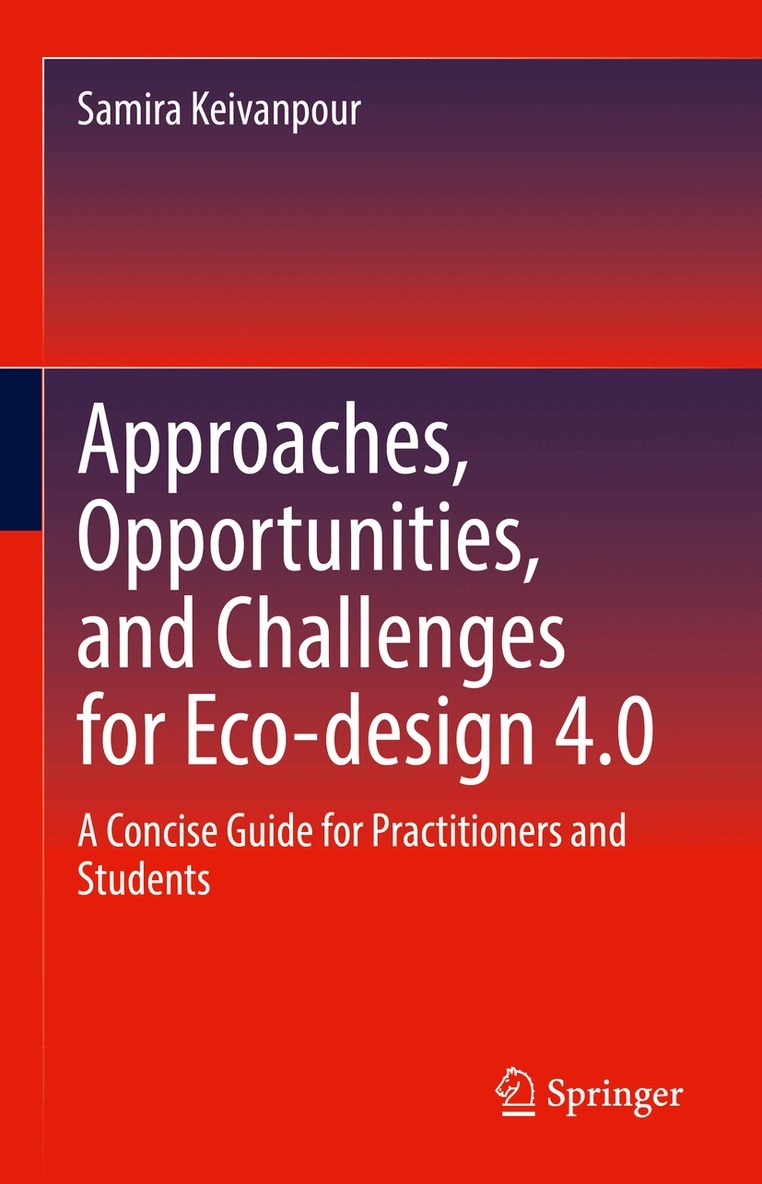
    Approaches, Opportunities, and Challenges for Eco-design 4.0

    A Concise Guide for Practitioners and Students

    AvSamira Keivanpour

    Inbunden, Engelska, 2021

    1 410 kr

    Beställningsvara. Skickas inom 10-15 vardagar. Fri frakt över 249 kr.

    Fler format och utgåvor

    E-bok

    1 255 kr

    Häftad

    978 kr

    Beskrivning

    This book addresses the implications of the Industry 4.0 paradigm in design for the environment. We examine the opportunities for, and challenges of, the implications of cyber-physical systems, big data analytics, Internet of things, additive manufacturing, and simulation in a range of areas in an eco-design context. These include selecting low impact materials, choosing manufacturing processes with environmental considerations, end of life strategies, applying design approaches for disassembly, integrating economic and social components into environmental studies, and stakeholder’s involvement. This volume takes a step toward this journey to explore how the three pillars of technology, sustainability, and evolving consumers could shape the future of the product’s design.

    Produktinformation

    • Utgivningsdatum:2021-11-04
    • Mått:155 x 235 x 12 mm
    • Vikt:342 g
    • Format:Inbunden
    • Språk:Engelska
    • Antal sidor:92
    • Förlag:Springer Nature Switzerland AG
    • ISBN:9783030873707

    Utforska kategorier

    • Nätverk och kommunikation inom Data och IT
    • Teknik: allmänt inom Naturvetenskap och teknik
    • Databaser inom Data och IT

    Mer om författaren

    Dr. Samira Keivanpour is Assistant Professor in the Department of Mathematical and Industrial Engineering of Polytechnique Montréal, Montreal, Québec, Canada. Her research interests include Sustainable solutions in supply chain and logistics, end of life products treatment, digital supply chain, and industry 4.0.

    Innehållsförteckning

    • Introduction.- The Design for environment in consumer-centric paradigm .- Industry 4.0 impacts on Sustainable Product, process and material.- Sustainable Manufacturing in Industry 4.0 Era: A new taxonomy for insight into ecodesign.- Design for End of life 4.0.- Design for disassembly 4.0: New Tools and approaches.- Integrating sustainability measures in products’ design and Implication of Industry 4.0.- Eco-design strategy and stakeholders value network: Advanced simulation techniques  for robust sustainability .- Conclusion.