• Fri frakt över 249 kr
  • •
  • Snabba leveranser
  • •
  • Billiga böcker
Kundservice

Du är på sajten för privatpersoner.

Företag, bibliotek eller offentlig verksamhet?

Du handlar på classic.bokus.com, där alla dina funktioner finns intakta.
Till classic.bokus.com
Bokus logotyp. Gå till startsidan.
  • Erbjudanden
  • Nyheter
  • Student
  • Topplistor
  • Barn & ungdom
  • Bokus Play
  • E-böcker
  • Pocketböcker
  • Spel & pussel

10% rabatt på allt med kod NYSTART10 →

Sidfot

Mina sidor

    Hjälp

    • Kundservice
    • Vanliga frågor och svar
    • Frakt och leverans
    • Retur vid ångerrätt
    • Reklamera vara
    • Betalning
    • Köpvillkor
    • Allmänna villkor
    • Information om webbplatsens tillgänglighet

    Om Bokus

    • Om oss
    • Pressrum
    • För studenter
    • För företag
    • För bibliotek och offentlig verksamhet
    • För leverantörer
    • Hållbarhet

    Populärt

    • Aktuella erbjudanden
    • Presentkort
    • Studentlitteratur
    • Nya böcker
    • Topplistor
    • Signerade böcker
    • Engelska böcker

    Inspiration

    • Boktips
    • BookTok
    • Populära bokserier
    • Barnbokskaraktärer
    • Populära författare
    Logotyp för Bokus
    Följ oss på Facebook (extern länk)Följ oss på Instagram (extern länk)Följ oss på YouTube (extern länk)Följ oss på TikTok (extern länk)
    bokus @ CookiesAnpassa cookiesIntegritetspolicyKöpvillkor
    Till Citymail hemsida (extern länk)Till Budbee hemsida (extern länk)Till Postnord hemsida (extern länk)Till Schenker hemsida (extern länk)Till Early Bird hemsida (extern länk)Till Walleys hemsida (extern länk)
    1. Naturvetenskap och teknik
    2. Geovetenskap
    3. Miljövetenskap och miljöpolitik

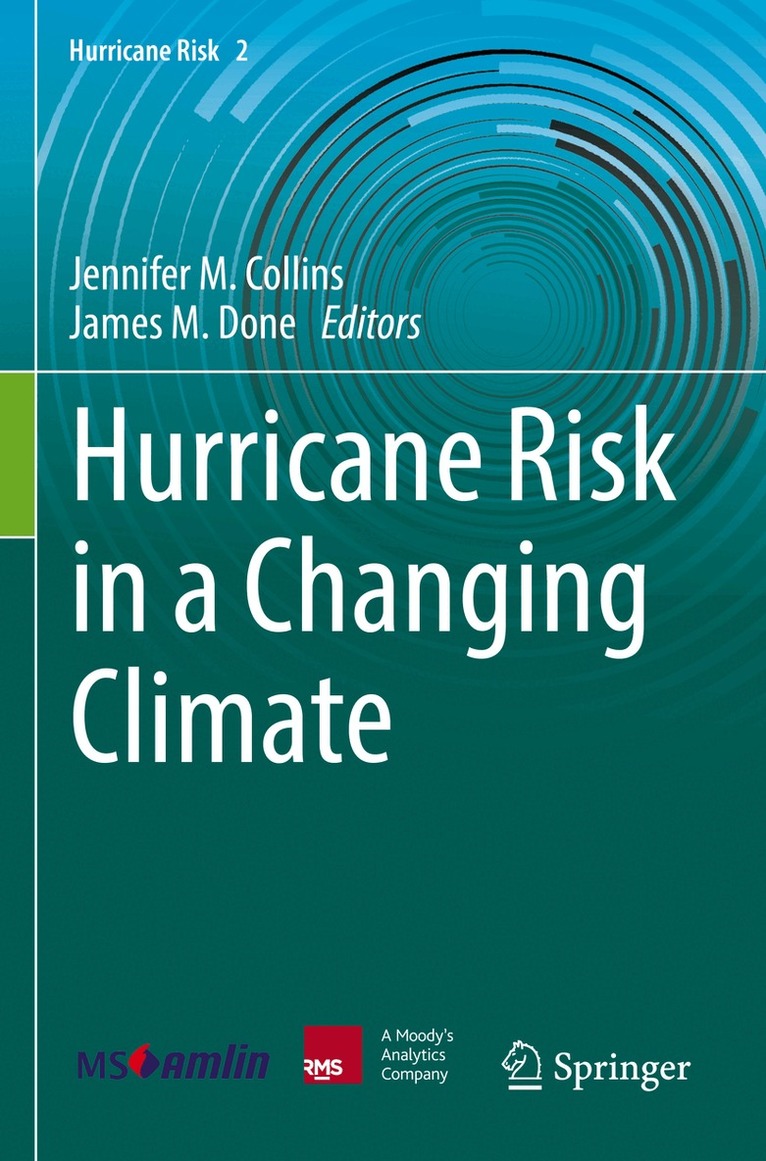
    Hurricane Risk in a Changing Climate

    AvJennifer M. Collins,James M. Done

    Häftad, Engelska, 2023

    Del 2 i serien Hurricane Risk

    456 kr

    Beställningsvara. Skickas inom 5-8 vardagar. Fri frakt över 249 kr.

    Beskrivning

    How is a changing climate affecting hurricanes, and how are these changes intersecting with our changing exposure and vulnerability in ways that affect tropical cyclone risk? Crucially, how should this understanding be incorporated into risk management practice? This book takes a cross-sectoral look at how damaging tropical cyclone characteristics are changing and presents novel approaches to integrate science with risk assessment. In this new era of tropical cyclone impacts, understanding effective risk management practice in a changing climate is more important than ever.This book details the outcomes of new research focusing on climate risk related to hurricanes in a changing climate. Topics include characteristics of tropical cyclone risk, perspectives on hurricane risk management strategies in the built environment, and implications for commercial risk. Inspired by the Symposium on Hurricane Risk in a Changing Climate, this book brings together leading international academics and researchers, and provides a source reference for both risk managers and climate scientists for research on the interface between tropical cyclones, climate, and risk.8 chapters are available open access under a Creative Commons Attribution 4.0 International License via link.springer.com.

    Produktinformation

    • Utgivningsdatum:2023-09-17
    • Mått:155 x 235 x 20 mm
    • Vikt:552 g
    • Format:Häftad
    • Språk:Engelska
    • Serie:Hurricane Risk
    • Antal sidor:347
    • Förlag:Springer International Publishing AG
    • ISBN:9783031085703

    Utforska kategorier

    • Miljövetenskap och miljöpolitik inom Naturvetenskap och teknik
    • Meteorologi och klimatologi inom Naturvetenskap och teknik
    • Biovetenskap inom Naturvetenskap och teknik

    Mer om författaren

    Jennifer Collins is a Professor in the School of Geosciences at the University of South Florida. Her research focuses on weather and climate. As a hurricane researcher, Dr. Collins is interested in the interaction between large scale climatic patterns such as the El Niño – Southern Oscillation (ENSO) and the Madden – Julian Oscillation and seasonal and intraseasonal patterns of tropical cyclone activity in multiple oceanic basins. She is currently studying the environmental factors influencing the interannual and intraseasonal variation of hurricane activity in the eastern North Pacific and Atlantic oceans. As well as her work in the physical sciences, she also works in the social sciences as she examines human behavior relating to hurricane evacuation, with recent papers on Hurricane Matthew and Irma. In addition to her hurricane work, Dr. Collins works in other areas related to weather, climate and hazards. She works closely on projects with the National Weather Service involving tornadoes and fog. In addition, she collaborates with international researchers and works in the area of climate change. Dr. Collins is the President of the West Central Florida Chapter of the American Meteorological Society, recently elected National Councilor of the American Association of Geographers , and former Chair of the Climate Specialty Group of the American Association of Geographers.Dr. James Done is Deputy Director of the Capacity Center for Climate and Weather Extremes at the National Center for Atmospheric Research. He is also Senior Academic Fellow of the Willis Research Network. His climate research extends across a range of extreme weather and climate phenomena. His focus is on understanding the multi-scale physical processes and predictability of extreme events. His strong connections with risk managers in the reinsurance and water sectors enriches his science and ensuressocietal relevance. In recognition of his reputation as a leader in the field, he was recently invited to testify before the U.S. Congress on extreme weather in a changing climate. Dr. Done received his PhD in Meteorology from the University of Reading, UK in 2003.

    Innehållsförteckning

    • Chapter 1.  Characteristics of Risk (Jan Kleinn et al).- Chapter 2. Climate Change Impacts to Hurricane-Induced Wind and Storm Surge Losses for Three Major Metropolitan Regions in the U.S. (Peter Sousounis et al.).- Chapter 3. Development of an Open-source Hurricane Wind Risk Model for Bermuda (Pinelopi Loizou et al.).- Chapter 4. Downwards Counterfactual Analysis in Insurance Tropical Cyclone Models: A Miami Case Study (Cameron Rye et al.).- Chapter 5. Estimating Tropical Cyclone Vulnerability: A Review of Different Open-Source Approaches (Katy Wilson and Jane Baldwin).- Chapter 6. Geohome: Affordable, Resilient Housing for Climate Hazard Mitigation (George Elvin).- Chapter 7. Identifying Limitations when Deriving Probabilistic Views of North Atlantic Hurricane Hazard from Counterfactual Ensemble NWP Re-forecasts (Tom Philp).- Chapter 8. Perspective on Hurricane Risk Management Strategies in the Built Environment (Kelly Hereid).- Chapter 9. The Response of Hurricane Inland Penetration to the Nearshore Translation Speed (Yi-Jie Zhu and Jennifer Collins),