• Fri frakt över 249 kr
  • •
  • Snabba leveranser
  • •
  • Billiga böcker
Kundservice

Du är på sajten för privatpersoner.

Företag, bibliotek eller offentlig verksamhet?

Du handlar på classic.bokus.com, där alla dina funktioner finns intakta.
Till classic.bokus.com
Bokus logotyp. Gå till startsidan.
  • Erbjudanden
  • Nyheter
  • Student
  • Topplistor
  • Barn & ungdom
  • Bokus Play
  • E-böcker
  • Pocketböcker
  • Spel & pussel

Må bättre, för mindre! Upp till 50% rabatt på hälsoböcker

Sidfot

Mina sidor

    Hjälp

    • Kundservice
    • Vanliga frågor och svar
    • Frakt och leverans
    • Retur vid ångerrätt
    • Reklamera vara
    • Betalning
    • Köpvillkor
    • Allmänna villkor
    • Information om webbplatsens tillgänglighet

    Om Bokus

    • Om oss
    • Pressrum
    • För studenter
    • För företag
    • För bibliotek och offentlig verksamhet
    • För leverantörer
    • Hållbarhet

    Populärt

    • Aktuella erbjudanden
    • Presentkort
    • Studentlitteratur
    • Nya böcker
    • Topplistor
    • Signerade böcker
    • Engelska böcker

    Inspiration

    • Boktips
    • BookTok
    • Populära bokserier
    • Barnbokskaraktärer
    • Populära författare
    Logotyp för Bokus
    Följ oss på Facebook (extern länk)Följ oss på Instagram (extern länk)Följ oss på YouTube (extern länk)Följ oss på TikTok (extern länk)
    bokus @ CookiesAnpassa cookiesIntegritetspolicyKöpvillkor
    Till Citymail hemsida (extern länk)Till Budbee hemsida (extern länk)Till Postnord hemsida (extern länk)Till Schenker hemsida (extern länk)Till Early Bird hemsida (extern länk)Till Walleys hemsida (extern länk)
    1. Samhälle och politik
    2. Samhälle och kultur
    3. Sociala och etiska frågor

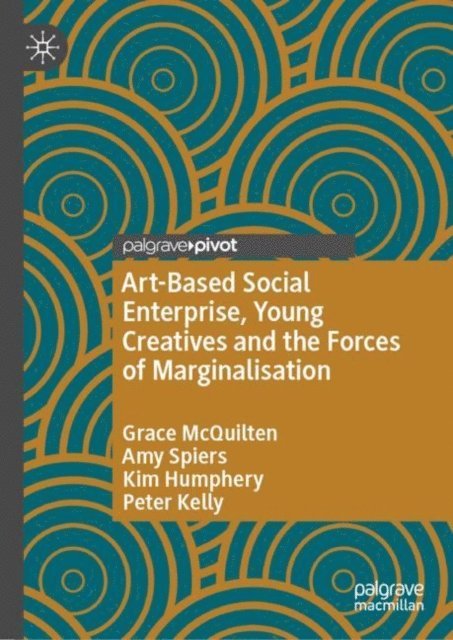
    Art-Based Social Enterprise, Young Creatives and the Forces of Marginalisation

    AvGrace McQuilten,Amy Spiers

    Inbunden, Engelska, 2022

    352 kr

    Skickas . Fri frakt över 249 kr.

    Beskrivning

    This book analyses the challenges and opportunities faced by art-based social enterprises (ASEs) engaging young creatives in education and training and supporting their pathways to the creative industries. In doing so, it addresses the complex intersecting issues of marginality and entrepreneurship, particularly in relation to young creatives from socially, economically and culturally diverse backgrounds. Drawing on extensive fieldwork and interviews with twelve key organisations, and three in-depth case studies in Australia, the book offers a detailed analysis of using enterprise to engage with the structural challenges of marginality. The book explores the local and global contexts through which art-based social enterprises (ASEs) operate and within which they attempt – often successfully – to improve access to education and work for emerging creatives. It also attends to the findings generated through engaging with the lived experiences of the staff and young creatives involved in our ASE case studies, in order to understand both the challenges and impacts of the ASE model on young people’s education, training, and employment pathways. The book focuses on three broad themes; precarious youth and digital futures, material practice and sustainable economies, and cultural citizenship in the urban fringe. In exploring these themes, the book contributes to debates about the limits, possibilities and challenges that attach to, and emerge from, an ASE model and highlights the ways in which these models can contribute to young people’s well-being, engagement, education and training, and work pathways. More broadly, it examines the possibilities of art as a means of social and cultural engagement. In the context of the precarious future of the creative industries, this book emphasise the ways in which young artists are building alternative economic and cultural models that support both individual pathways and collective change. This bookwill move the field forward with a critical lens that engages closely with experience and the lived realities of juggling multiple priorities of social, economic and artistic goals.

    Produktinformation

    • Utgivningsdatum:2022-09-16
    • Mått:148 x 210 x 18 mm
    • Vikt:372 g
    • Format:Inbunden
    • Språk:Engelska
    • Antal sidor:160
    • Förlag:Springer International Publishing AG
    • ISBN:9783031109249

    Utforska kategorier

    • Sociala och etiska frågor inom Samhälle och politik
    • Pedagogik inom Psykologi och pedagogik
    • Utbildningsstrategier och utbildningspolitik inom Psykologi och pedagogik

    Mer om författaren

    Grace McQuilten is an art historian, curator and writer, and Associate Professor in the School of Art at RMIT University, Australia. She has worked extensively in social enterprise and community development alongside her academic career.. Amy Spiers is an artist, curator, writer and researcher. She is a Vice Chancellor’s Postdoctorate Fellow at the School of Art at RMIT University, Australia, where she is engaged in research that explores the critical capacities of public and socially engaged art, and its potential to prompt discussion about difficult histories and social inequalities that are overlooked or smoothed over.Kim Humphery is Convenor of the Research Training Unit in the School of Global, Urban and Social Studies at RMIT University, Australia. She is best known for her work in the history and sociology of consumption, and has published extensively on ethical consumption and enterprise. Peter Kelly is Professor in the School of Education at Deakin University, Australia. He is a sociologist of youth, education and work who has published extensively on young people, globalization, education and work.

    Innehållsförteckning

    • Chapter 1: Introduction: Artistic practice and social outcomes in a market-driven landscape.- Chapter 2: Precarious youth and digital futures.- Chapter 3: The Youthworx model: Disengaged young people and creative digital training.- Chapter 4: Fashioning a future: Material practice, creativity and sustainable economies.- Chapter 5: The Social Studio: Hope and pragmatic ambition.- Chapter 6: Creative practice, cultural citizenship and the urban fringe.- Chapter 7: Outer Urban Projects: Community building versus mainstreaming.- Chapter 8: Conclusion.