• Fri frakt över 249 kr
  • •
  • Snabba leveranser
  • •
  • Billiga böcker
Kundservice

Du är på sajten för privatpersoner.

Företag, bibliotek eller offentlig verksamhet?

Du handlar på classic.bokus.com, där alla dina funktioner finns intakta.
Till classic.bokus.com
Bokus logotyp. Gå till startsidan.
  • Erbjudanden
  • Nyheter
  • Student
  • Topplistor
  • Barn & ungdom
  • Bokus Play
  • E-böcker
  • Pocketböcker
  • Spel & pussel

Må bättre, för mindre! Upp till 50% rabatt på hälsoböcker

Sidfot

Mina sidor

    Hjälp

    • Kundservice
    • Vanliga frågor och svar
    • Frakt och leverans
    • Retur vid ångerrätt
    • Reklamera vara
    • Betalning
    • Köpvillkor
    • Allmänna villkor
    • Information om webbplatsens tillgänglighet

    Om Bokus

    • Om oss
    • Pressrum
    • För studenter
    • För företag
    • För bibliotek och offentlig verksamhet
    • För leverantörer
    • Hållbarhet

    Populärt

    • Aktuella erbjudanden
    • Presentkort
    • Studentlitteratur
    • Nya böcker
    • Topplistor
    • Signerade böcker
    • Engelska böcker

    Inspiration

    • Boktips
    • BookTok
    • Populära bokserier
    • Barnbokskaraktärer
    • Populära författare
    Logotyp för Bokus
    Följ oss på Facebook (extern länk)Följ oss på Instagram (extern länk)Följ oss på YouTube (extern länk)Följ oss på TikTok (extern länk)
    bokus @ CookiesAnpassa cookiesIntegritetspolicyKöpvillkor
    Till Citymail hemsida (extern länk)Till Budbee hemsida (extern länk)Till Postnord hemsida (extern länk)Till Schenker hemsida (extern länk)Till Early Bird hemsida (extern länk)Till Walleys hemsida (extern länk)
    1. Språk och ordböcker
    2. Språk: referensverk och allmänt

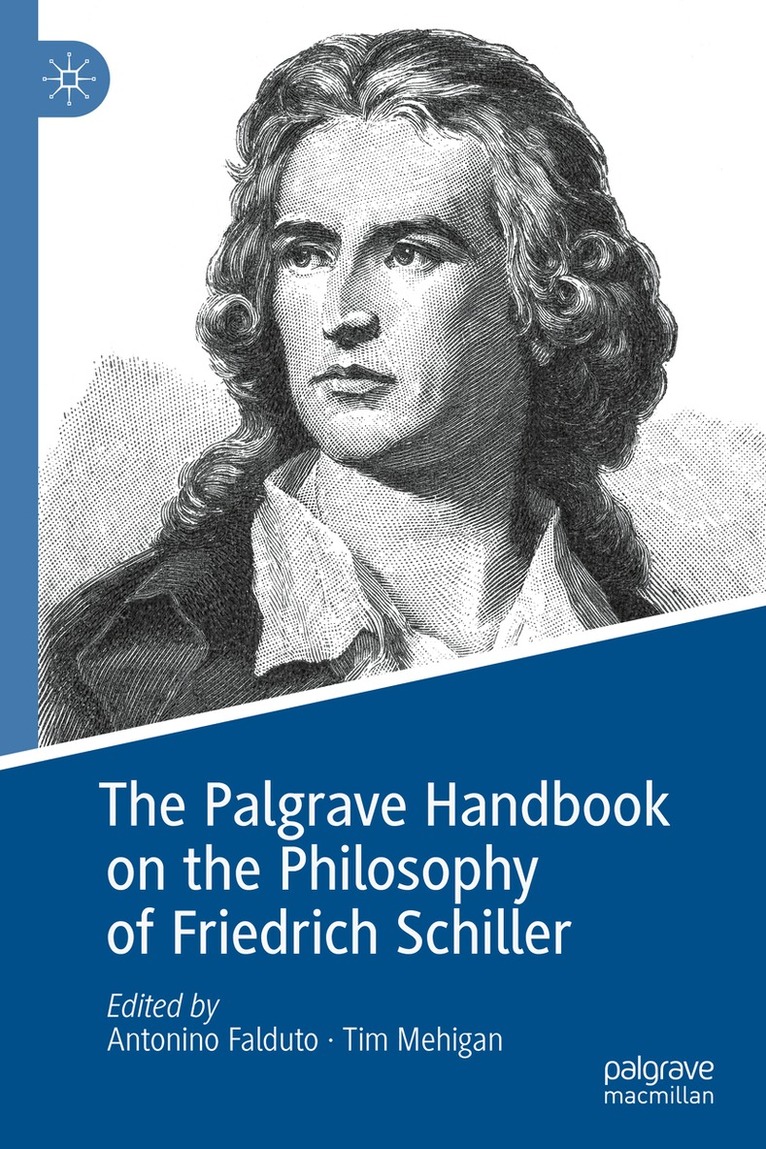
    Palgrave Handbook on the Philosophy of Friedrich Schiller

    AvAntonino Falduto,Tim Mehigan

    Inbunden, Engelska, 2023

    2 371 kr

    Beställningsvara. Skickas inom 10-15 vardagar. Fri frakt över 249 kr.

    Beskrivning

    Friedrich Schiller is justly celebrated for his dramas and poetry. Yet, above all, he was a polymath, whose writings enriched a range of fields including history and philosophy. Until now, no comprehensive accounting of this philosophy has been undertaken. The Palgrave Handbook on the Philosophy of Friedrich Schiller makes good this desideratum, treating Schiller's poetry, prose, and dramatic work alongside his philosophical writings and reviewing his thought not only in connection with those who influenced him, such as Kant, Reinhold, and Fichte, but also those he anticipated, such as Hegel, Marx, and the Neo-Kantians. Topics treated in this volume include Schiller's philosophical background, his theoretical writings, Schiller's philosophical writing in light of his entire oeuvre, and Schiller's philosophical legacy. The Handbook also includes an overview of the main topics Schiller addressed in his philosophical writings including philosophical anthropology, aesthetics, moral philosophy, politics and political theory, the philosophy of history, and the philosophy of education. Bringing together the latest research on Schiller and his thought by leading scholars in the field, the Handbook draws attention to Schiller's undiminished importance for philosophical debates today.

    Produktinformation

    • Utgivningsdatum:2023-01-02
    • Mått:155 x 235 x 43 mm
    • Vikt:1 191 g
    • Format:Inbunden
    • Språk:Engelska
    • Antal sidor:663
    • Förlag:Springer International Publishing AG
    • ISBN:9783031167973

    Utforska kategorier

    • Språk: referensverk och allmänt inom Språk och ordböcker
    • Filosofiska discipliner inom Filosofi och religion
    • Litteraturvetenskap inom Skönlitteratur

    Mer om författaren

    Antonino Falduto is Lecturer (tenured Associate Professor) in Philosophy at the University of Ferrara, Italy. He is the author and editor of numerous works on the philosophy of Enlightenment (including The Faculties of the Human Mind and the Case of Moral Feeling in Kant’s Philosophy, Berlin/Boston 2014).Tim Mehigan is Professor of German in the School of Languages and Cultures at the University of Queensland, Australia, and Fellow of the Australian Academy of Humanities. He is the author of Heinrich von Kleist: Writing after Kant (2011), Robert Musil and the Question of Science (2020) and co-translator of K.L. Reinhold's New Theory of the Human Capacity for Representation (2011).

    Innehållsförteckning

    • 1. J. Chr. Fr. Schiller: A Life as Mensch of Letters.- 2. Schiller and His Philosophical Context: Pleasure, Form and Freedom.- 3. The Development of Schiller’s Philosophical Attitude: Schiller’s Philosophical Education.- 4. Writings from Schiller’s time at the Karlsschule in Stuttgart (1773-1780).- 5. What Effect Can a Good Permanent Theatre Actually Achieve? (1785).- 6. Philosophical Letters (1786).- 7. On the Cause of the Pleasure We Derive from Tragic Objects (1792).- 8. On the Art of Tragedy (1792).- 9. Kallias, or Concerning Beauty (1793).- 10. On Grace and Dignity (1793).-  11. Concerning the Sublime (1793) / On the Pathetic (1801).- 12. Detached Reflections on Different Questions of Aesthetics (1793).- 13. Letters on the Aesthetic Education (1795).- 14. Concerning the Necessary Limits in the Use of Beautiful Forms (1795).- 15. On Naïve and Sentimental Poetry (1795/96).- 16. On the Sublime (1801).- 17. Schiller and Philosophical Anthropology.- 18. Schiller’s Aesthetics: Beauty is Freedom.- 19. Schiller on Morals.- 20. Schiller on Politics and Political Theory.-  21. Schiller’s Philosophy of History.- 22. “Upward to Freedom”: Schiller on the Nature and Goals of Aesthetic Education.- 23. The Role of Philosophy in Schiller’s Plays.- 24. The Role of Philosophy in Schiller’s Poetry.- 25. The Role of Philosophy in Schiller’s Prose.- 26. Schiller and Kant on Grace and Beauty.- 27. Karl Leonhard Reinhold’s Influence on Schiller’s Reception of Kant.- 28. The Controversy between Schiller and Johann Gottlieb Fichte.-    29. Schiller on the Aesthetics of Morals and 20th century Kant Scholarship and Philosophy.-        30. Schiller and the Birth of German Idealism.- 31. Schiller and Early German Romantics (Kleist, Hölderlin, Goethe).- 32. The Neo-Kantians and Schiller’s Transcendental Idealism.- 33. Schiller’s Horen, Humboldt’s Rhodian Genius, and the Development of Physiological Ideas in Mythical Form.- 34. Friedrich Schiller and Georg Wilhelm Friedrich Hegel.- 35. Schiller and Marx on Alienation.- 36. Schiller and Critical Theory