• Fri frakt över 249 kr
  • •
  • Snabba leveranser
  • •
  • Billiga böcker
Kundservice

Du är på sajten för privatpersoner.

Företag, bibliotek eller offentlig verksamhet?

Du handlar på classic.bokus.com, där alla dina funktioner finns intakta.
Till classic.bokus.com
Bokus logotyp. Gå till startsidan.
  • Erbjudanden
  • Nyheter
  • Student
  • Topplistor
  • Barn & ungdom
  • Bokus Play
  • E-böcker
  • Pocketböcker
  • Spel & pussel

10% rabatt på allt med kod: NYSTART10 →

Sidfot

Mina sidor

    Hjälp

    • Kundservice
    • Vanliga frågor och svar
    • Frakt och leverans
    • Retur vid ångerrätt
    • Reklamera vara
    • Betalning
    • Köpvillkor
    • Allmänna villkor
    • Information om webbplatsens tillgänglighet

    Om Bokus

    • Om oss
    • Pressrum
    • För studenter
    • För företag
    • För bibliotek och offentlig verksamhet
    • För leverantörer
    • Hållbarhet

    Populärt

    • Aktuella erbjudanden
    • Presentkort
    • Studentlitteratur
    • Nya böcker
    • Topplistor
    • Signerade böcker
    • Engelska böcker

    Inspiration

    • Boktips
    • BookTok
    • Populära bokserier
    • Barnbokskaraktärer
    • Populära författare
    Logotyp för Bokus
    Följ oss på Facebook (extern länk)Följ oss på Instagram (extern länk)Följ oss på YouTube (extern länk)Följ oss på TikTok (extern länk)
    bokus @ CookiesAnpassa cookiesIntegritetspolicyKöpvillkor
    Till Citymail hemsida (extern länk)Till Budbee hemsida (extern länk)Till Postnord hemsida (extern länk)Till Schenker hemsida (extern länk)Till Early Bird hemsida (extern länk)Till Walleys hemsida (extern länk)
    1. Psykologi och pedagogik
    2. Psykologi
    3. Genuspsykologi

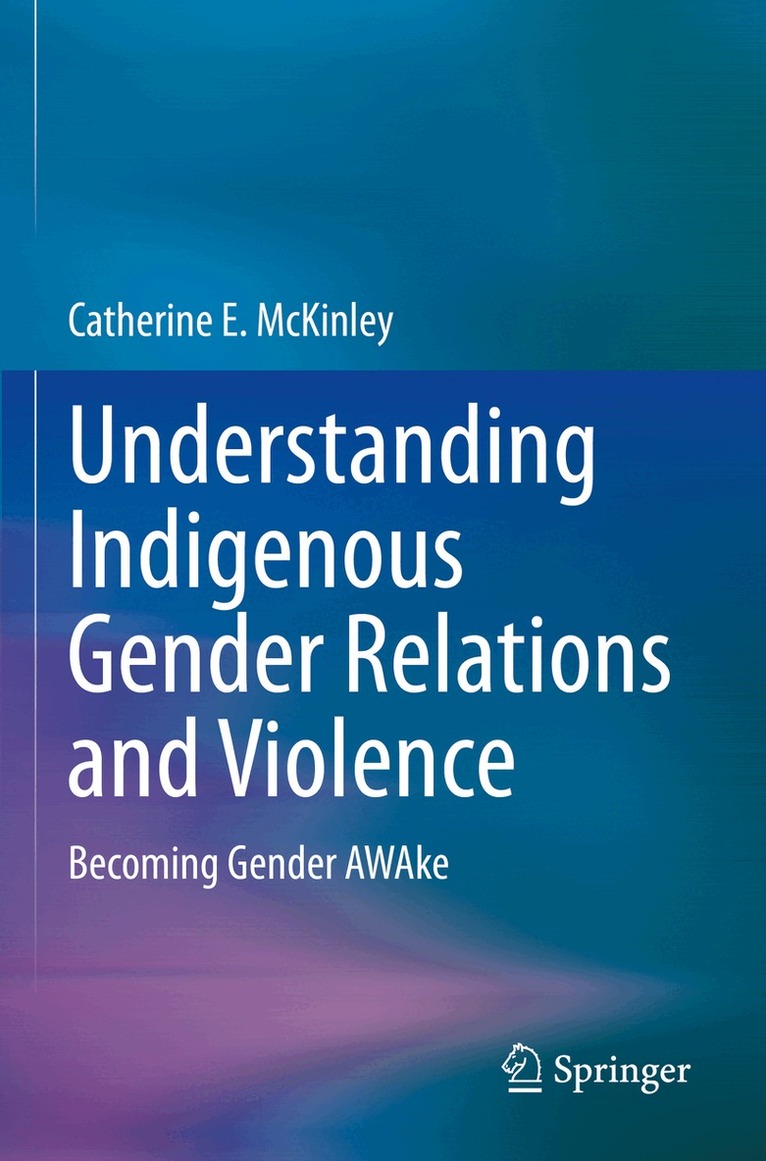
    Understanding Indigenous Gender Relations and Violence

    Becoming Gender AWAke

    AvCatherine E. McKinley

    Häftad, Engelska, 2024

    1 579 kr

    Beställningsvara. Skickas inom 10-15 vardagar. Fri frakt över 249 kr.

    Fler format och utgåvor

    Inbunden

    1 579 kr

    E-bok

    1 986 kr

    Beskrivning

    This book focuses on the inequities that are persistently and disproportionately severe for Indigenous peoples. Gender and racial based inequities span from the home life to Indigenous women’s wellness—including physical, mental, and social health. The conundrum of how and why Indigenous women—many of whom historically held respected and even held sacred status in many matrilineal and female-centered communities—now experience the highest rates of gendered based violence is focal to this work. Unlike Western European and colonial contexts, Indigenous societies tended to be organized in fundamentally distinct ways that were woman-centered and where gender roles and values were reportedly more egalitarian, fluid, flexible, inclusive, complementary, and harmonious. Understanding how Indigenous gender relations were targeted as a tool of patriarchal settler colonization and how this relates to women more broadly can be a key to unlocking gender liberation—a catalyst for readers tobecome ‘gender AWAke.’ Living gender AWAke encompasses living in alignment with agility (AWA) with clear awareness of how gender and other sociostructural factors affect daily life, as well as how to navigate such factors. To live in alignment, is to live from ones’ center and in accordance with one’s authentic self, with agility, by nimbly responding to life’s constantly shifting situations. This empirically grounded work extends and deepens the Indigenist framework of historical oppression, resilience, and transcendence (FHORT) by delving deep into the resilience, transcendence, and wellness components of FHORT while centering gender. Understanding the changing gender roles for Indigenous peoples over time fosters decolonization more broadly by enabling greater understanding of how sexism and misogyny hurt people across personal and political spheres. This understanding can foster the process of becoming gender AWAke by identifying and dismantling of sexism and by becoming decolonized from prescriptive gender roles that inhibit living in alignment with one’s true or authentic self. Readers will gain:a research-based approach linking historical oppression, gender-based inequities, and violence against Indigenous womenunderstanding of how patriarchal colonialism undermines all genders a tool to dismantle sexism more broadlypathways to become Gender AWAke through the understanding of Indigenous women's resilience and transcendence

    Produktinformation

    • Utgivningsdatum:2024-01-11
    • Mått:155 x 235 x 23 mm
    • Vikt:622 g
    • Format:Häftad
    • Språk:Engelska
    • Antal sidor:395
    • Förlag:Springer International Publishing AG
    • ISBN:9783031185854

    Utforska kategorier

    • Genuspsykologi inom Psykologi och pedagogik
    • Genusvetenskap inom Samhälle och politik
    • Etnicitet inom Samhälle och politik

    Mer om författaren

    Dr. McKinley’s funded research focuses on centering sex and gender differences while promoting health equity for Indigenous peoples (American Indian, Alaska Native, and Native Hawaiians). As a lead editor on a special issue and associated book entitled, “Indigenous Health Equity and Wellness,” she is a leader conducting community engaged and culturally grounded health equity research. After a decade of work on violence against Indigenous women and families and associated disparities, her clinical trial research focuses on developing and testing a culturally relevant and family centered intervention (the Weaving Healthy Families, or Chukka Achaffi’ Natana Program). This program promotes health and wellness while preventing the underlying causes of premature mortality and morbidity among Indigenous peoples, namely alcohol and other drug use and violence. Along with examining sex differences related to the effect and uptake of this intervention that incorporates mhealth, sex differences related to social determinants of health related to cardiovascular, cancer, diabetes, and other chronic health problems are focal to this work. She led the development of the Indigenous-based and ecological “Framework of Historical Oppression, Resilience, and Transcendence (FHORT)”, which identifies, and culturally relevant risk and protective factors related to wellness across community, family, and individual levels from a relational perspective. This framework was chosen for inclusion in the edited book, Grand Challenges for Society: Evidence-Based Social Work Practice, and her work has also been highlighted as Best Paper by the Journal of Ethnic and Cultural Diversity in Social Work in 2018, "Indigenous Women and Professionals’ Proposed Solutions to Prevent Intimate Partner Violence in Tribal Communities.”

    Innehållsförteckning

    • Decolonization from Prescriptive Gender Roles and Sexism – Living Gender AWAke.- Patriarchy and Its Handmaid, Sexism.- Introduction and Application of the Framework of Historical Oppression, Resilience, and Transcendence (FHORT) to Gender-Based Violence.- How Did It Happen? A Case Example of the Incremental, Cumulative, and Massive Efforts of Historical Oppression to Reverse Indigenous Women’s Roles and Statuses.- Divides, Disruptions, and Gendered Rearrangements: How Historical Oppression Impairs Communities and Contributes to Violence.- Contemporary Forms of Historical Oppression: Experiences and Consequences of Gendered IPV and Sexual Violence Experiences.- How Historical Oppression Undermines Families and Drives Risk for Violence.- Interlocking Experiences of Violence Across Women’s Life.- How Patriarchal Gender Roles, Early Childbearing (ECB) and Early Marriage (EM) Contribute to IPV.- Understanding Indigenous Women’s Experiences and Barriers to Liberation From Violence.-Patriarchal Gender Roles: Interconnections With Violence, Historical Oppression, and Resilience.- Gender Inequities in Home Life: Moms “Mostly Pulling the Weight”.- Gendered Differences in Experiences of Violence and Violence Perpetration.- Consequences of Violence on Women, Children, and Families.- Tipping the Balance: Violence Across the Life Course and Socioeconomic Strain Posing Risks While Family and Social Support Offsetting Anxiety and Depression.- Understanding Depression as an Embodiment of Historical Oppression and Ways to Transcend.- Land, Loss, and Violence: Contemporary Manifestations of Historical Oppression.- Family and Culture as Structures for Resilience, Resistance, and Transcendence From Violence.- Bending But Not Breaking: Resilience of Women Survivors of Violence.- What to Do Now? Listening and Learning From Survivors and Professionals Affected by Violence.- Understanding Gender and Connections Between Mental, Physical, Social, and Community, Cultural Health.- We Never Go Hungry There Cause My Mom Uses the Resource of the Land”: Returning to Sacred Roots of Subsistence to Promote Wellness and Resilience.- Understanding Interconnections and Factors Driving Gendered Mental Health Inequities.- Cultural, Community, Familial, and Individual Factors Related to Wellness Among Youth.- Family Resilience: Resisting and Offsetting Historical Oppression While Transcending.- Decolonizing Family Connectedness Enhancing Family Resilience.- “Your Kids Come First”: Plugged in and Protective Parenting Practices Promoting Resilience.- “Trust Us Enough to Come to Us”: Communication as a Building Block of Family Resilience.- “He Had Rules and He Had Guidelines”: Establishing Family Accountability and Structure Love: A Decolonizing Act of Rebellion to Promote Family Resilience and Reduce Alcohol Use.- “They Called [Great Grandmother] the Famous Storyteller Around Here”: Elders Transcending Historical Oppression Through Language, Story, and Culture.- “She Always KnowsWhat to Do”: Mothers Maintaining Central Roles in Family.- “We’ve Kind of Always Come Together”: Humanizing, Complementary, Fluid, Balanced, and Transcendent Gender Roles to Move Forward.- Tying It All Together: Living Gender AWAke.