
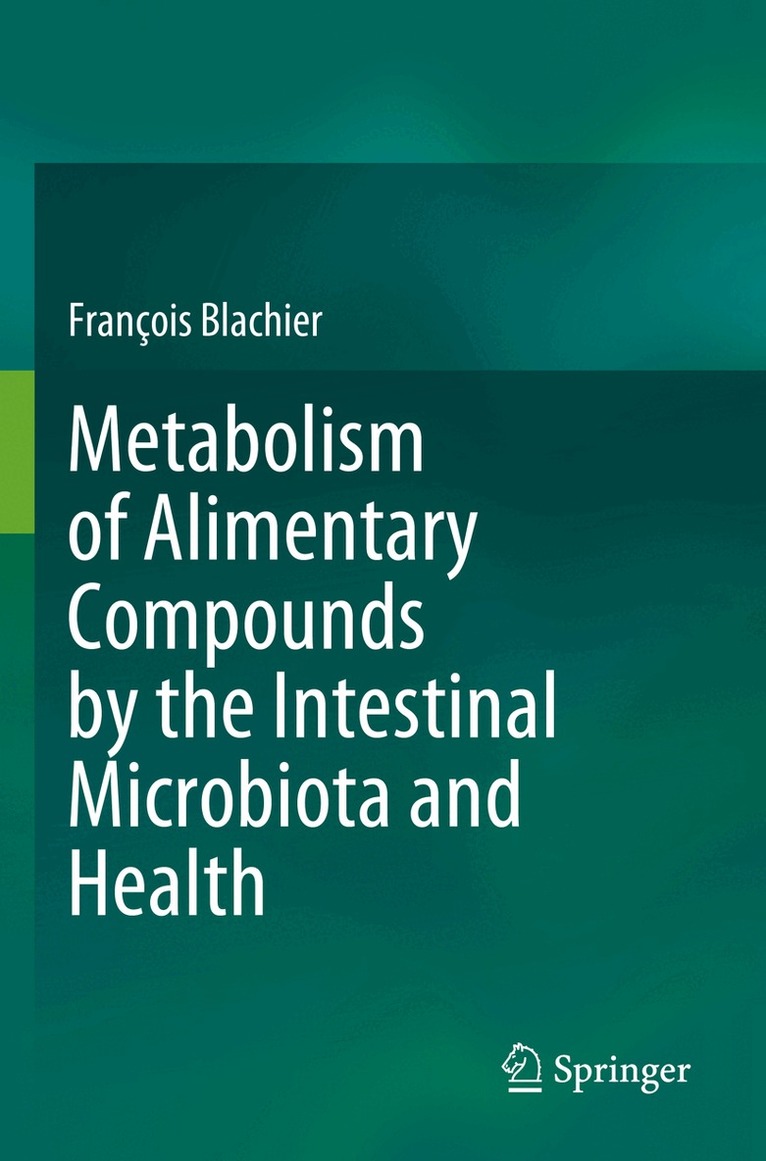
Metabolism of Alimentary Compounds by the Intestinal Microbiota and Health
Inbunden, Engelska, 2023
966 kr
Beställningsvara. Skickas inom 10-15 vardagar. Fri frakt över 249 kr.
Fler format och utgåvor
Beskrivning
This book provides an overview of the metabolism of dietary compounds by the intestinal microbiota, and on the consequences of such metabolic activity on host metabolism and physiological functions; both in intestinal and peripheral tissues.Over the last years, our understanding of the causal links between microbiota metabolic activity towards dietary and endogenous substrates and human health status has evolved extensively. In this context, the book starts with a comprehensive introduction devoted to the physiological and metabolic functions of the intestinal epithelium, followed by a part dedicated to the way intestine offers board and lodging for microbes being on a short- or long-term stay. The next chapters focus on the utilization of the available substrates from diet by the intestinal bacteria to produce numerous bacterial metabolites, and on the impact of such microbial activity, in the first place for communication between microbes, and for communication between microbes and lodging host. As will be detailed, this latter process of interkingdom communication leads to either beneficial or deleterious effects on intestinal physiology and metabolism. Special attention is given to selected pathophysiological processes namely chronic intestinal inflammation, colorectal carcinogenesis, and diarrhea. Then, the effects of modifications of bacterial metabolites and other bioactive compounds by the host after intestinal absorption, and consequences for peripheral tissue functions are presented.Summarizing the state of the art on what is known about the metabolic crosstalk between gut microbiota and human metabolism, as well as perspectives for further experimental and clinical research, this book provides a useful resource for researchers, professionals, and students with a background in biology, and/or nutrition, medicine, pharmacology, and for those which are involved in the agriculture and food production. By explaining technical terms all along the text, this book should be understandable also for interested non-specialists.
Produktinformation
Utforska kategorier
Mer om författaren
Innehållsförteckning
Hoppa över listan
Mer från samma författare
Nutritional and Physiological Functions of Amino Acids in Pigs
Francois Blachier, Guoyao Wu, Yulong Yin
Inbunden, 2013
1 698 kr
Nutritional and Physiological Functions of Amino Acids in Pigs
Yulong Yin, Guoyao Wu, Francois Blachier
E-bok
20132 127 kr
Nutritional and Physiological Functions of Amino Acids in Pigs
Francois Blachier, Guoyao Wu, Yulong Yin
Häftad, 2015
1 698 kr
Hoppa över listan

Du kanske också är intresserad av
- 10% rabatt på allt
Metabolism of Alimentary Compounds by the Intestinal Microbiota and Health
François Blachier
Häftad, 2024
966 kr
Metabolism of Alimentary Compounds by the Intestinal Microbiota and Health
Francois Blachier
E-bok
20231 232 kr
Nutritional and Physiological Functions of Amino Acids in Pigs
Yulong Yin, Guoyao Wu, Francois Blachier
E-bok
20132 127 kr
Nutritional and Physiological Functions of Amino Acids in Pigs
Francois Blachier, Guoyao Wu, Yulong Yin
Häftad, 2015
1 698 kr
Nutritional and Physiological Functions of Amino Acids in Pigs
Francois Blachier, Guoyao Wu, Yulong Yin
Inbunden, 2013
1 698 kr