• Fri frakt över 249 kr
  • •
  • Snabba leveranser
  • •
  • Billiga böcker
Kundservice

Du är på sajten för privatpersoner.

Företag, bibliotek eller offentlig verksamhet?

Du handlar på classic.bokus.com, där alla dina funktioner finns intakta.
Till classic.bokus.com
Bokus logotyp. Gå till startsidan.
  • Erbjudanden
  • Nyheter
  • Student
  • Topplistor
  • Barn & ungdom
  • Bokus Play
  • E-böcker
  • Pocketböcker
  • Spel & pussel

10% rabatt på allt med kod: NYSTART10 →

Sidfot

Mina sidor

    Hjälp

    • Kundservice
    • Vanliga frågor och svar
    • Frakt och leverans
    • Retur vid ångerrätt
    • Reklamera vara
    • Betalning
    • Köpvillkor
    • Allmänna villkor
    • Information om webbplatsens tillgänglighet

    Om Bokus

    • Om oss
    • Pressrum
    • För studenter
    • För företag
    • För bibliotek och offentlig verksamhet
    • För leverantörer
    • Hållbarhet

    Populärt

    • Aktuella erbjudanden
    • Presentkort
    • Studentlitteratur
    • Nya böcker
    • Topplistor
    • Signerade böcker
    • Engelska böcker

    Inspiration

    • Boktips
    • BookTok
    • Populära bokserier
    • Barnbokskaraktärer
    • Populära författare
    Logotyp för Bokus
    Följ oss på Facebook (extern länk)Följ oss på Instagram (extern länk)Följ oss på YouTube (extern länk)Följ oss på TikTok (extern länk)
    bokus @ CookiesAnpassa cookiesIntegritetspolicyKöpvillkor
    Till Citymail hemsida (extern länk)Till Budbee hemsida (extern länk)Till Postnord hemsida (extern länk)Till Schenker hemsida (extern länk)Till Early Bird hemsida (extern länk)Till Walleys hemsida (extern länk)
    1. Samhälle och politik
    2. Politik och statsskick
    3. Offentlig förvaltning

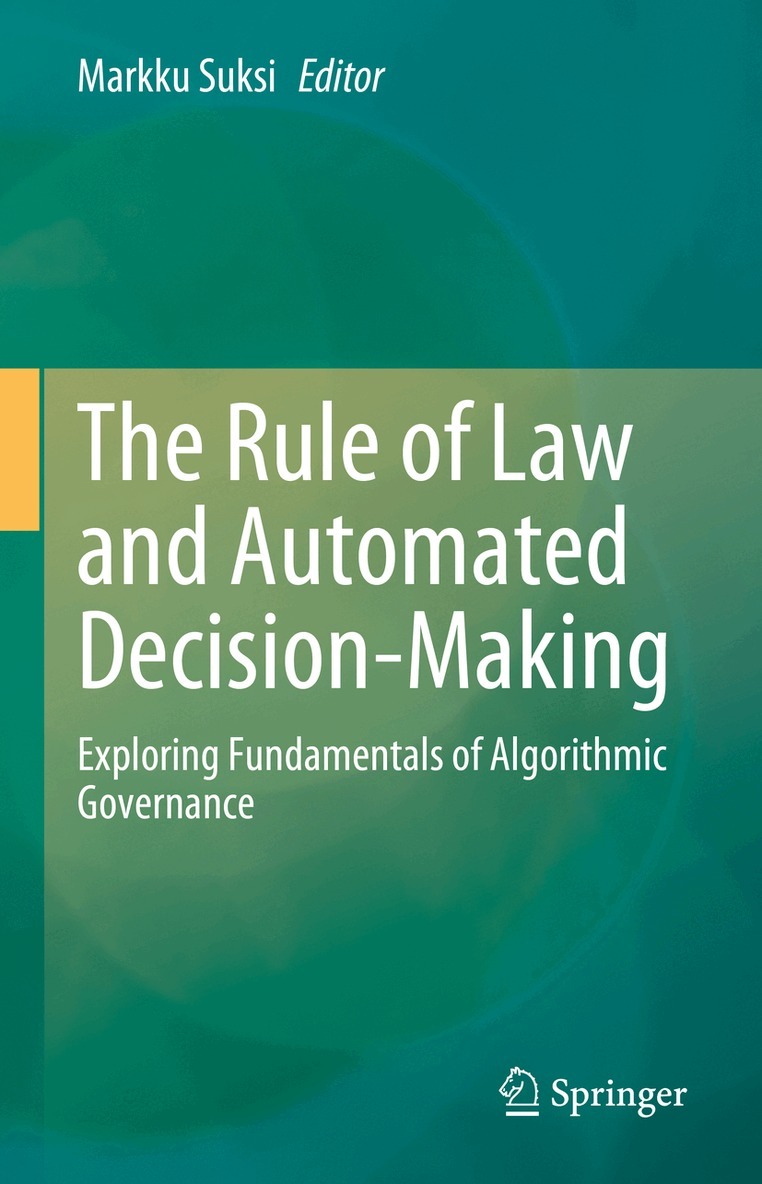
    Rule of Law and Automated Decision-Making

    Exploring Fundamentals of Algorithmic Governance

    AvMarkku Suksi

    Inbunden, Engelska, 2023

    1 694 kr

    Beställningsvara. Skickas inom 10-15 vardagar. Fri frakt över 249 kr.

    Beskrivning

    The book presents observations concerning automated decision-making from a general point of view at the same time as it analyses the manner in which praxis in some jurisdictions has evolved as concerns automated decision-making and how the requirements that are placed by the legal orders on it are formulated.The principle of the rule of law should apply in the context of automated decision-making of public authorities just as much as when the decision-makers are physical persons. In sync with increasing automatization of decision-making in public authorities, problematizing questions about the appropriate legal basis for algorithmic decision-making have started emerge. How should the principle of the rule of law apply within the area of automated decision-making, how should automated decision-making be regulated so that it satisfies the requirements created by the principle of the rule of law, and how should the principle of the rule of law be made concrete in decision-makingthat is based on algorithms? The proposal for an AI Act launched by the European Commission in April 2021, including an identification of high-risk uses of algorithmic techniques, raises further questions concerning practices and interpretations related to automated decision-making.The state based on the rule of law proceeds from the maxim that public powers are exercised within a legal frame that makes the exercise of public powers foreseeable in light of legal norms. Also, a state based on the rule of law requires that the contents of the exercise of public powers is regulated by legal norms, which means that the citizens must be able to know everything that is relevant about how the powers will be exercised, not only who it is that will exercise the powers. Because of rules and principles of this kind, including non-discrimination and proportionality, the exercise of powers will not become arbitrary.

    Produktinformation

    • Utgivningsdatum:2023-07-25
    • Mått:155 x 235 x 19 mm
    • Vikt:518 g
    • Format:Inbunden
    • Språk:Engelska
    • Antal sidor:221
    • Upplaga:2023
    • Förlag:Springer International Publishing AG
    • ISBN:9783031301414

    Utforska kategorier

    • Offentlig förvaltning inom Samhälle och politik
    • Författningsrätt och förvaltningsrätt inom Juridik

    Mer om författaren

    Markku Suksi started up legal research about automated decision-making (ADM) in 2016, and since then, he has published several articles about ADM. The perspective he adopts concerning ADM is a combination of constitutional and administrative law. An article published in 2019 was awarded the bi-annual price of the legal journal Tidskrift utgiven av Juridiska Föreningen i Finland (JFT) in December 2021. He is involved since 2020 as a permanent member of the WASP-HS project’s Scientific Evaluation Committee (The Wallenberg AI, Autonomous Systems and Software Program – Humanities and Society, Sweden, a “private” funding device working in collaboration with Swedish universities in funding research related to algorithmic systems). Suksi has made presentations at several international conferences and events about legal issues related to ADM and has organized two international conferences (2019, 2021) about ADM issues at his own university, Åbo Akademi University, where he is Professor of Public Law.

    Innehållsförteckning

    • Introduction.- 2. Situating the Rule of Law in a Context of Automated Decision-Making.- 3.  Legislating for Legal Certainty, with a Right to a Human Face, in an Automated Public Administration.- 4. Formal, Procedural, and Material Requirements of the Rule of Law in the Context of Automated Decision-Making.- 5.  Automation in Administrative Decision-Making Concerning Social Benefits: A Government Agency Perspective.- 6. Artificial Intelligence, Public Administration, and the Rule of Law: Towards the Uncertainties of a New “Rule of Algorithms”.- 7. Discretion, Automation, and Proportionality.- 8. Legislating AI: A Matter of High-Risk Administration?.- 9. Algorithms in Public Administration: Legal Implications.- 10. Concluding Reflections on the Digitalization of Government Functions through Automated Decision-Making, with Some Wider AI Issues.