• Fri frakt över 249 kr
  • •
  • Snabba leveranser
  • •
  • Billiga böcker
Kundservice

Du är på sajten för privatpersoner.

Företag, bibliotek eller offentlig verksamhet?

Du handlar på classic.bokus.com, där alla dina funktioner finns intakta.
Till classic.bokus.com
Bokus logotyp. Gå till startsidan.
  • Erbjudanden
  • Nyheter
  • Student
  • Topplistor
  • Barn & ungdom
  • Bokus Play
  • E-böcker
  • Pocketböcker
  • Spel & pussel

10% rabatt på allt med kod NYSTART10 →

Sidfot

Mina sidor

    Hjälp

    • Kundservice
    • Vanliga frågor och svar
    • Frakt och leverans
    • Retur vid ångerrätt
    • Reklamera vara
    • Betalning
    • Köpvillkor
    • Allmänna villkor
    • Information om webbplatsens tillgänglighet

    Om Bokus

    • Om oss
    • Pressrum
    • För studenter
    • För företag
    • För bibliotek och offentlig verksamhet
    • För leverantörer
    • Hållbarhet

    Populärt

    • Aktuella erbjudanden
    • Presentkort
    • Studentlitteratur
    • Nya böcker
    • Topplistor
    • Signerade böcker
    • Engelska böcker

    Inspiration

    • Boktips
    • BookTok
    • Populära bokserier
    • Barnbokskaraktärer
    • Populära författare
    Logotyp för Bokus
    Följ oss på Facebook (extern länk)Följ oss på Instagram (extern länk)Följ oss på YouTube (extern länk)Följ oss på TikTok (extern länk)
    bokus @ CookiesAnpassa cookiesIntegritetspolicyKöpvillkor
    Till Citymail hemsida (extern länk)Till Budbee hemsida (extern länk)Till Postnord hemsida (extern länk)Till Schenker hemsida (extern länk)Till Early Bird hemsida (extern länk)Till Walleys hemsida (extern länk)
    1. Naturvetenskap och teknik
    2. Matematik och naturvetenskap
    3. Biologi
    4. Cellbiologi

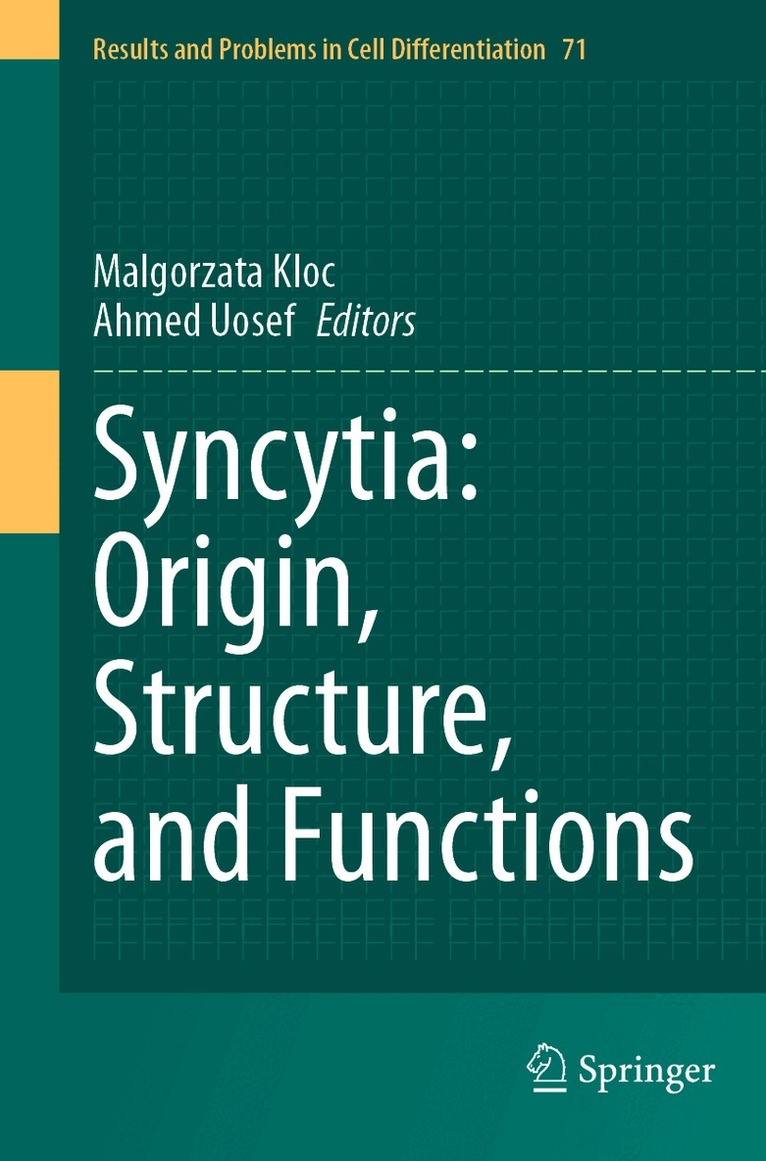
    Syncytia: Origin, Structure, and Functions

    AvMalgorzata Kloc,Ahmed Uosef

    Häftad, Engelska, 2024

    Del 71 i serien Results and Problems in Cell Differentiation

    1 947 kr

    Beställningsvara. Skickas inom 10-15 vardagar. Fri frakt över 249 kr.

    Beskrivning

    This book gives a current overview on the development, origin, structure, and functions of germline and somatic cell syncytia during embryogenesis and organogenesis. It also reviews pathogen-induced syncytia and the role of syncytial cells in cancer development.The book covers the following topics:germline syncytia, evolution, function and structure; syncytia in embryogenesis and development; the role of somatic cell fusion in fungi, specialized somatic tissues, host defense and adaptation; syncytia induced by viruses and parasites;syncytia and circulating hybrid cells in cancer and other pathological conditions; It also discusses how the genomic adaptations of microorganisms to extreme habitats can prompt the evolution of mononuclear and multinucleate/syncytial cells.The book offers a fresh outlook on syncytia's role in various processes: embryogenesis, organogenesis, adaptation, host defense, and development of specialized tissues. It highlights the importance of syncytia under physiological and pathological conditions.

    Produktinformation

    • Utgivningsdatum:2024-11-24
    • Mått:155 x 235 x 27 mm
    • Vikt:744 g
    • Format:Häftad
    • Språk:Engelska
    • Serie:Results and Problems in Cell Differentiation
    • Antal sidor:485
    • Förlag:Springer International Publishing AG
    • ISBN:9783031379383

    Utforska kategorier

    • Cellbiologi inom Naturvetenskap och teknik
    • Biologi inom Naturvetenskap och teknik

    Mer om författaren

    Malgorzata Kloc: Prior to completing her postdoctoral training in Canada, Dr. Kloc was a tenured Associate Professor in the Department of Zoology at the University of Warsaw, Poland. She also served as a Research Associate in the Department of Biology at Carleton University in Ottawa, Canada. While completing her postdoctoral training, Dr. Kloc earned the AHFMR Research Award from the University of Calgary and the MRC Biotechnology Training Award from Dalhousie University. She joined the University of Texas M.D. Anderson Cancer Center as a Research Scientist in the Department of Molecular Genetics in 1987, and became an Associate Professor in the Department of Biochemistry and Molecular Biology there in 2006. Dr. Kloc joined the Houston Methodist Research Institute in 2008. Currently, Dr. Kloc is the Weill Cornell Professor of Cell and Molecular Biology at The Houston Methodist Hospital and the Adjunct Professor at Department of Genetics, University of Texas, MD Anderson Cancer Center. Ahmed Uosef finished his medical degree (MD) at the Ain Shams University Faculty of Medicine in Egypt in 2016. Since 2016 he participated in the clinical rotations at the Houston Methodist Hospital Surgical Liver ICU, gastroenterology at Baylor College of Medicine, St. Luke's Center, Houston, TX, Cardiovascular and Thoracic Surgery at Texas Heart Institute, St. Luke's Medical Center, Houston, TX. Presently he is a postdoctoral fellow at the Houston Methodist Hospital and Houston Methodist Academic Institute, Houston, TX, USA. During his postdoctoral work he has been involved in the basic and translation research on the role of macrophages in the development of chronic rejection of transplanted organs. His interests focus on the molecular and organellar aspects, and the involvement of the actin cytoskeleton and RhoA pathway in shaping macrophage response to the immune challenges.

    Innehållsförteckning

    • Part I. Germline Syncytia, Evolution, Function, and Structure.- Chapter 1. The Ancient Origin and Function of Germline Cysts.- Chapter 2. Female Germline Cysts in Animals: Evolution and Function.- Chapter 3. Germline and Somatic Cell Syncytia in Insects.- Part II. Syncytia in Embryogenesis and Development.- Chapter 4. Reshaping the Syncytial Drosophila Embryo with Cortical Actin Networks: Four Main Steps of Early Development.- Chapter 5. Cell-Mediated Branch Fusion in the Drosophila Trachea.- Chapter 6. Trophoblast Syncytialization: A Metabolic Crossroads.- Chapter 7. Early Syncytialization of the Ovine Placenta Revisited.- Chapter 8. Syncytia in Utricularia: Origin and Structure.- Part III. Fungal and Somatic Cell Syncytia and Genomic View of Extremophiles as the Ancestral Precursors of Eukaryotic Syncytia.- Chapter 9. Syncytial Assembly Lines: Consequences of Multinucleate Cellular Compartments for Fungal Protein Synthesis.- Chapter 10. Ancestors in The Extreme: A Genomics View of Microbial Diversity in Hypersaline Aquatic Environments.- Chapter 11. Somatic Cell Fusion in Host Defense and Adaptation.- Chapter 12. Osteoclasts at Bone Remodeling: Order from Order.- Chapter 13. Muscle Progenitor Cell Fusion in the Maintenance of Skeletal Muscle.- Part IV. Virus- and Parasite- Induced Syncytia.- Chapter 14. Virus-Induced Cell Fusion and Syncytia Formation.- Chapter 15. HIV-1 Induced Cell-to-Cell Fusion or Syncytium Formation.- Chapter 16. Relevance of the Entry by Fusion at the Cytoplasmic Membrane vs. Fusion After Endocytosis in the HIV and SARS-Cov-2 Infections.- Chapter 17. Mathematical Modeling of Virus-Mediated Syncytia Formation: Past Successes and Future Directions.- Chapter 18. Syncytium Induced by Plant-Parasitic Nematodes.- Part V. Cell Fusion and Syncytia in Cancer.- Chapter 19. Mechanisms of Cell Fusion in Cancer.- Chapter 20. Cell Fusion and Syncytia Formation in Cancer.- Chapter 21. The Hallmarks of Circulating Hybrid Cells.