• Fri frakt över 249 kr
  • •
  • Snabba leveranser
  • •
  • Billiga böcker
Kundservice

Du är på sajten för privatpersoner.

Företag, bibliotek eller offentlig verksamhet?

Du handlar på classic.bokus.com, där alla dina funktioner finns intakta.
Till classic.bokus.com
Bokus logotyp. Gå till startsidan.
  • Erbjudanden
  • Nyheter
  • Student
  • Topplistor
  • Barn & ungdom
  • Bokus Play
  • E-böcker
  • Pocketböcker
  • Spel & pussel

10% rabatt på allt med kod: NYSTART10 →

Sidfot

Mina sidor

    Hjälp

    • Kundservice
    • Vanliga frågor och svar
    • Frakt och leverans
    • Retur vid ångerrätt
    • Reklamera vara
    • Betalning
    • Köpvillkor
    • Allmänna villkor
    • Information om webbplatsens tillgänglighet

    Om Bokus

    • Om oss
    • Pressrum
    • För studenter
    • För företag
    • För bibliotek och offentlig verksamhet
    • För leverantörer
    • Hållbarhet

    Populärt

    • Aktuella erbjudanden
    • Presentkort
    • Studentlitteratur
    • Nya böcker
    • Topplistor
    • Signerade böcker
    • Engelska böcker

    Inspiration

    • Boktips
    • BookTok
    • Populära bokserier
    • Barnbokskaraktärer
    • Populära författare
    Logotyp för Bokus
    Följ oss på Facebook (extern länk)Följ oss på Instagram (extern länk)Följ oss på YouTube (extern länk)Följ oss på TikTok (extern länk)
    bokus @ CookiesAnpassa cookiesIntegritetspolicyKöpvillkor
    Till Citymail hemsida (extern länk)Till Budbee hemsida (extern länk)Till Postnord hemsida (extern länk)Till Schenker hemsida (extern länk)Till Early Bird hemsida (extern länk)Till Walleys hemsida (extern länk)
    1. Ekonomi och Ledarskap
    2. Företagsekonomi
    3. Redovisning och finansiering
    4. Finansiering

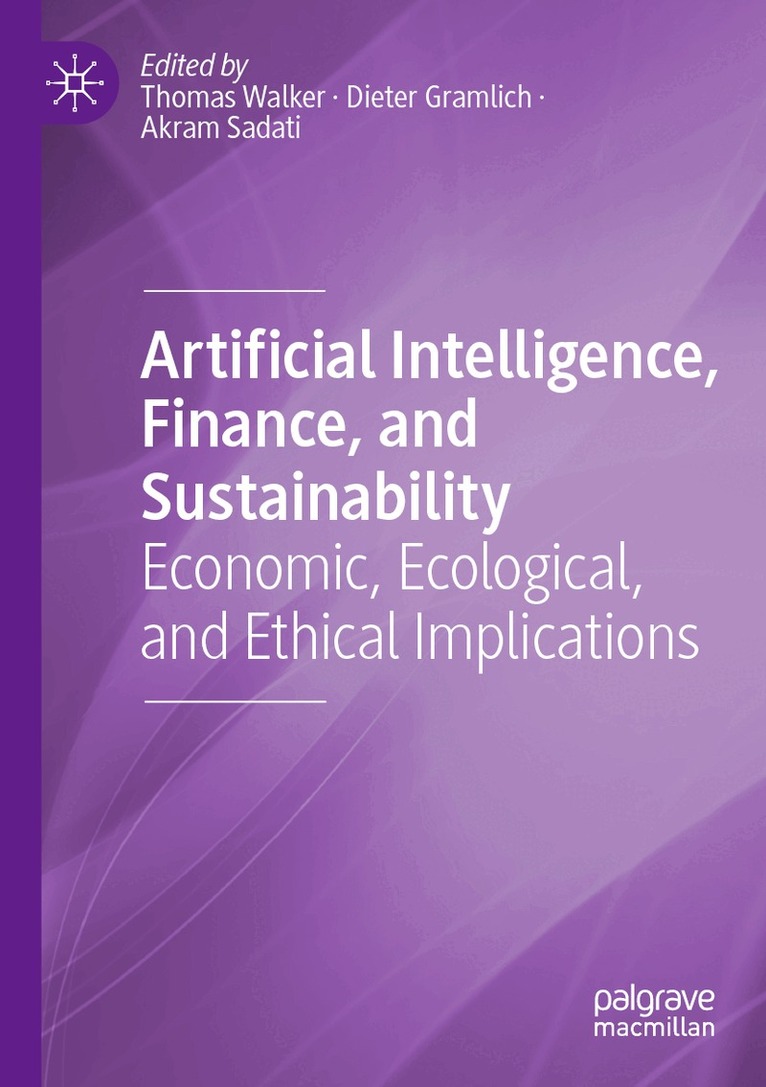
    Artificial Intelligence, Finance, and Sustainability

    Economic, Ecological, and Ethical Implications

    AvThomas Walker,Dieter Gramlich

    Häftad, Engelska, 2025

    2 165 kr

    Beställningsvara. Skickas inom 10-15 vardagar. Fri frakt över 249 kr.

    Beskrivning

    As the world increasingly recognizes the importance of sustainability, businesses and investors are looking for ways to integrate sustainable practices into their operations and investment decisions. At the same time, advancements in artificial intelligence (AI) and technology are transforming the finance industry and are enabling more data-driven decision-making. The intersection of these fields presents a significant opportunity to accelerate progress towards a more sustainable future, while also improving financial performance.This book explores the crucial role of AI in sustainability and finance, examining how financial technologies and machine learning are shaping the approach of finance professionals towards environmental, social, and governance (ESG) issues. It provides a comprehensive and integrated perspective on how these areas are becoming increasingly intertwined and examines the ethical and social implications of AI in finance and its potential to unlock new opportunities for sustainability. By focusing on the practical implications of these intersections and including both case studies and expert analysis, the book provides valuable insights for practitioners, policymakers, academics, and students alike.

    Produktinformation

    • Utgivningsdatum:2025-09-28
    • Mått:148 x 210 x 19 mm
    • Vikt:431 g
    • Format:Häftad
    • Språk:Engelska
    • Antal sidor:309
    • Förlag:Springer International Publishing AG
    • ISBN:9783031662072

    Utforska kategorier

    • Finansiering inom Ekonomi och Ledarskap
    • Miljövetenskap och miljöpolitik inom Naturvetenskap och teknik
    • Artificiell intelligens inom Data och IT

    Mer om författaren

    Thomas Walker is a Professor of Finance and Concordia University Research Chair in Emerging Risk Management at Concordia University, Montreal, Canada. Prior to academia, he worked for several years in the German consulting and industrial sector at Mercedes Benz, Utility Consultants International, Lahmeyer International, Telenet, and KPMG Peat Marwick.Dieter Gramlich is a Professor at DHBW – Baden-Wuerttemberg Cooperative State University in Heidenheim, Germany, where he serves as Head of the Banking Department. He previously studied at the University of Mannheim and was an interim professor and Chair of Banking & Finance at the University of Halle. His research focuses on sustainable finance.Akram Sadati is a Finance MSc candidate at the John Molson School of Business, Concordia University. She serves as a teaching assistant and research associate for the Emerging Risks Information Center. In addition, she has experience as a financial analyst and data analyst in the banking and financial services industry. Akram completed her undergraduate and graduate degrees in Financial Management in Iran. She has been awarded several scholarships and awards for her academic performance.

    Innehållsförteckning

    • INTRODUCTION.- Chapter 1: Artificial Intelligence, Finance, and Sustainability: An Overview.- PART 1: CONCEPTUAL (INTEGRATIVE) FRAMEWORKS.- Chapter 2: A Panoramic Overview of the Opportunities and Challenges Artificial Intelligence Brings to ESG Investing.- Chapter 3: Measuring Sustainability with Artificial Intelligence.- Chapter 4: Enhancing Sustainable Finance Advisory and Literacy through AI-based Personalization.- Chapter 5: Artificial Intelligence to Advance Sustainability: A Review of Progress.- Chapter 6: The Future of Sustainable Finance: AI-Driven Sustainable Pairs Trading in Market-Neutral Investing.- PART II: CLIMATE AND ENERGY.- Chapter 7: Predicting Carbon Emissions with Explainable Machine Learning Models: Applications for Chinese Provinces.- Chapter 8: Assessing Physical Climate Risks: An AI-Powered Tool for Businesses.- Chapter 9: The Role of Artificial Intelligence in Energy Efficiency and Finance.- PART III: REPORTING AND REGULATION.- Chapter 10: Enhancing the Issuance and Monitoring of Sustainable Finance Instruments through Artificial Intelligence.- Chapter 11: The Law of Fintech: How Artificial Intelligence and Innovative Technologies Contribute to a Sustainable Financial Industry and Its Effective Regulation.- Chapter 12: Corporate Digital Responsibility for Artificial Intelligence: Towards a Disclosure Framework.- Chapter 13: The Implications of Adopting Artificial Intelligence in the Auditing Process.