• Fri frakt över 249 kr
  • •
  • Snabba leveranser
  • •
  • Billiga böcker
Kundservice

Du är på sajten för privatpersoner.

Företag, bibliotek eller offentlig verksamhet?

Du handlar på classic.bokus.com, där alla dina funktioner finns intakta.
Till classic.bokus.com
Bokus logotyp. Gå till startsidan.
  • Erbjudanden
  • Nyheter
  • Student
  • Topplistor
  • Barn & ungdom
  • Bokus Play
  • E-böcker
  • Pocketböcker
  • Spel & pussel

10% rabatt på allt med kod: NYSTART10 →

Sidfot

Mina sidor

    Hjälp

    • Kundservice
    • Vanliga frågor och svar
    • Frakt och leverans
    • Retur vid ångerrätt
    • Reklamera vara
    • Betalning
    • Köpvillkor
    • Allmänna villkor
    • Information om webbplatsens tillgänglighet

    Om Bokus

    • Om oss
    • Pressrum
    • För studenter
    • För företag
    • För bibliotek och offentlig verksamhet
    • För leverantörer
    • Hållbarhet

    Populärt

    • Aktuella erbjudanden
    • Presentkort
    • Studentlitteratur
    • Nya böcker
    • Topplistor
    • Signerade böcker
    • Engelska böcker

    Inspiration

    • Boktips
    • BookTok
    • Populära bokserier
    • Barnbokskaraktärer
    • Populära författare
    Logotyp för Bokus
    Följ oss på Facebook (extern länk)Följ oss på Instagram (extern länk)Följ oss på YouTube (extern länk)Följ oss på TikTok (extern länk)
    bokus @ CookiesAnpassa cookiesIntegritetspolicyKöpvillkor
    Till Citymail hemsida (extern länk)Till Budbee hemsida (extern länk)Till Postnord hemsida (extern länk)Till Schenker hemsida (extern länk)Till Early Bird hemsida (extern länk)Till Walleys hemsida (extern länk)
    1. Naturvetenskap och teknik
    2. Geovetenskap
    3. Miljövetenskap och miljöpolitik

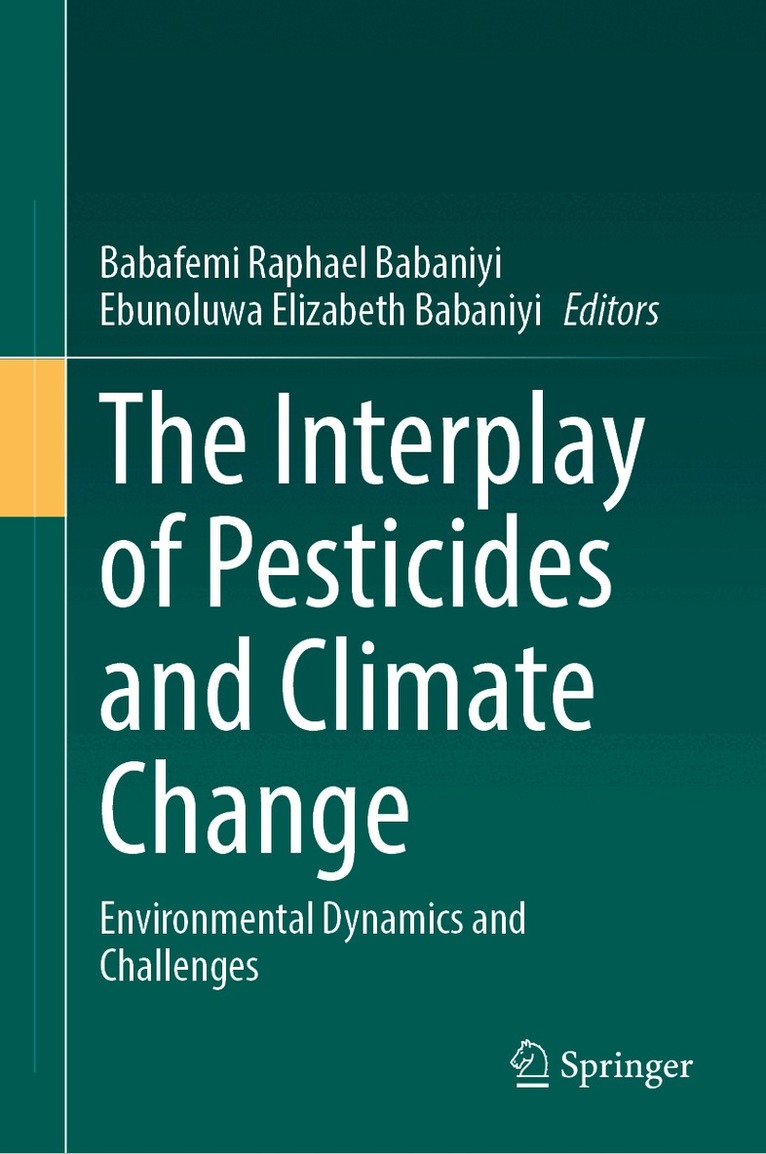
    Interplay of Pesticides and Climate Change

    Environmental Dynamics and Challenges

    AvBabafemi Raphael Babaniyi,Ebunoluwa Elizabeth Babaniyi

    Inbunden, Engelska, 2025

    1 842 kr

    Beställningsvara. Skickas inom 10-15 vardagar. Fri frakt över 249 kr.

    Beskrivning

    This book originates from a recognition of the urgent necessity to unravel the intricate connections between pesticides and the evolving climate. By focusing on environmental dynamics, the book extensively discusses how pesticides and climate change intersect, providing a comprehensive exploration of their combined effects on ecosystems. Each chapter of the book meticulously analyzes various aspects of the interplay. Ranging from the methods of pesticide dispersion to their durability and subsequent ecological consequences, the authors offer a holistic examination of the challenges posed by the convergence of pesticides and climate change. One of the primary aims of this book is to bridge existing knowledge gaps pertaining to the environmental dynamics of pesticides in the context of a changing climate. The comprehensive insights provided within its pages serve as a valuable resource for researchers, policymakers, and practitioners alike. The objective is not only to identify the challenges inherent in this interplay, but also to present practical solutions that contribute to the development of sustainable practices. By addressing critical issues and offering a forward-looking perspective, the book strives to pave the way for informed decision-making and the implementation of effective strategies to mitigate the environmental challenges arising from the interplay of pesticides and climate change.

    Produktinformation

    • Utgivningsdatum:2025-03-06
    • Mått:155 x 235 x 34 mm
    • Vikt:1 104 g
    • Format:Inbunden
    • Språk:Engelska
    • Antal sidor:539
    • Förlag:Springer International Publishing AG
    • ISBN:9783031816680

    Utforska kategorier

    • Miljövetenskap och miljöpolitik inom Naturvetenskap och teknik
    • Agronomi och lantbruk inom Naturvetenskap och teknik
    • Biovetenskap inom Naturvetenskap och teknik

    Mer om författaren

    Babafemi Raphael Babaniyi is an accomplished academic with a strong background in chemistry. He earned his Bachelor of Science degree in Industrial Chemistry from Caritas University, Amorji-Nike, Emene, Enugu State, Nigeria, in 2008. Subsequently, he obtained a Master of Technology degree in Environmental Chemistry from the Federal University of Technology, Akure, Ondo State, Nigeria, in 2021.Currently, he is pursuing a Ph.D. in Environmental Chemistry at the same institution. Babafemi has an impressive portfolio with over 40 publications, including book chapters and articles in internationally recognized journals. He serves as an Assistant Chief Research Officer at the Bioresources Development Centre within the National Biotechnology Research And Development Agency of Nigeria. His research interests encompass various aspects of Environmental Chemistry, focusing on Green Chemistry, Phytoremediation, Chemical Biology, Environmental Science, Bioremediation of contaminated soils, plant protection and animal health, Environmental Impact Assessment, and Biodegradable plastics.Ebunoluwa Elizabeth Babaniyi is an educator with a solid academic foundation in the sciences. She earned her Bachelor of Science in Education (B.Sc. Ed) in Biology from Adeyemi College of Education, Ondo, an affiliate of Obafemi Awolowo University, Ile Ife, Nigeria, in 2014. Prior to this, she obtained a National Certificate in Education (NCE) in Biology and Geography from the College of Education, Ikere-Ekiti, in 2009.Professionally registered with the Teachers Registration Council of Nigeria (TRCN) since 2019, Ebunoluwa has accumulated significant experience in the field of education. Her contributions are further evidenced by her published research manuscripts, which reflect her commitment to advancing knowledge in her area of expertise.

    Innehållsförteckning

    • Chapter 1. An Insight To Pesticides.- Chapter 2. Adjuvants: Types of Adjuvants and Their Effects on Ecosystems in Relation to Climate Change.- Chapter 3. RESILIENCE OF ECOSYSTEMS: NAVIGATING THE CHALLENGES OF PESTICIDE EXPOSURE AND CLIMATE CHANGE.- Chapter 4. Pesticide Runoff and Its Impact on Water Quality.- Chapter 5. Global Trade and Pesticide Use.- Chapter 6. Pesticides And Climate Change Feedback Loop.- Chapter 7. Climate Change and Pesticide Dynamics.- Chapter 8. PESTICIDE CONTRIBUTIONS TO GREENHOUSE GAS EMISSIONS.- Chapter 9. Ecotoxicological Impacts of Pesticide.- Chapter 10. Technological innovations aimed at reducing the environmental impact of pesticides and increasing the resilience of agriculture to climate change.- Chapter 11. Synergies Between Green Chemistry Principles and the Sustainable Development Goals (SDGs) in Developing Eco-Friendly Pesticides.- Chapter 12. The Nexus Between Pesticides, Climate Change, Carbon Sequestration and Soil Health.- Chapter 13. PESTICIDES AND MICROBIOME SHIFTS.- Chapter 14. Emerging pests and disease vectors.- Chapter 15. DYNAMIC SHIFT IN PLANT BIODIVERSITY BY HERBICIDES APPLICATION.- Chapter 16. Immedicable Effects of Organic Pesticides on Aquatic Environment.- Chapter 17. Community Health and Vulnerability.- Chapter 18. Study of Consumers Choices on Pesticides use and Sustainability.- Chapter 19. Economic Implications of Climate Change and Pesticide Use on Agriculture.Chapter 1. An Insight To Pesticides.- Chapter 2. Adjuvants: Types of Adjuvants and Their Effects on Ecosystems in Relation to Climate Change.- Chapter 3. RESILIENCE OF ECOSYSTEMS: NAVIGATING THE CHALLENGES OF PESTICIDE EXPOSURE AND CLIMATE CHANGE.- Chapter 4. Pesticide Runoff and Its Impact on Water Quality.- Chapter 5. Global Trade and Pesticide Use.- Chapter 6. Pesticides And Climate Change Feedback Loop.- Chapter 7. Climate Change and Pesticide Dynamics.- Chapter 8. PESTICIDE CONTRIBUTIONS TO GREENHOUSE GAS EMISSIONS.- Chapter 9. Ecotoxicological Impacts of Pesticide.- Chapter 10. Technological innovations aimed at reducing the environmental impact of pesticides and increasing the resilience of agriculture to climate change.- Chapter 11. Synergies Between Green Chemistry Principles and the Sustainable Development Goals (SDGs) in Developing Eco-Friendly Pesticides.- Chapter 12. The Nexus Between Pesticides, Climate Change, Carbon Sequestration and Soil Health.- Chapter 13. PESTICIDES AND MICROBIOME SHIFTS.- Chapter 14. Emerging pests and disease vectors.- Chapter 15. DYNAMIC SHIFT IN PLANT BIODIVERSITY BY HERBICIDES APPLICATION.- Chapter 16. Immedicable Effects of Organic Pesticides on Aquatic Environment.- Chapter 17. Community Health and Vulnerability.- Chapter 18. Study of Consumers Choices on Pesticides use and Sustainability.- Chapter 19. Economic Implications of Climate Change and Pesticide Use on Agriculture.