• Fri frakt över 249 kr
  • •
  • Snabba leveranser
  • •
  • Billiga böcker
Kundservice

Du är på sajten för privatpersoner.

Företag, bibliotek eller offentlig verksamhet?

Du handlar på classic.bokus.com, där alla dina funktioner finns intakta.
Till classic.bokus.com
Bokus logotyp. Gå till startsidan.
  • Erbjudanden
  • Nyheter
  • Student
  • Topplistor
  • Barn & ungdom
  • Bokus Play
  • E-böcker
  • Pocketböcker
  • Spel & pussel

10% rabatt på allt med kod: NYSTART10 →

Sidfot

Mina sidor

    Hjälp

    • Kundservice
    • Vanliga frågor och svar
    • Frakt och leverans
    • Retur vid ångerrätt
    • Reklamera vara
    • Betalning
    • Köpvillkor
    • Allmänna villkor
    • Information om webbplatsens tillgänglighet

    Om Bokus

    • Om oss
    • Pressrum
    • För studenter
    • För företag
    • För bibliotek och offentlig verksamhet
    • För leverantörer
    • Hållbarhet

    Populärt

    • Aktuella erbjudanden
    • Presentkort
    • Studentlitteratur
    • Nya böcker
    • Topplistor
    • Signerade böcker
    • Engelska böcker

    Inspiration

    • Boktips
    • BookTok
    • Populära bokserier
    • Barnbokskaraktärer
    • Populära författare
    Logotyp för Bokus
    Följ oss på Facebook (extern länk)Följ oss på Instagram (extern länk)Följ oss på YouTube (extern länk)Följ oss på TikTok (extern länk)
    bokus @ CookiesAnpassa cookiesIntegritetspolicyKöpvillkor
    Till Citymail hemsida (extern länk)Till Budbee hemsida (extern länk)Till Postnord hemsida (extern länk)Till Schenker hemsida (extern länk)Till Early Bird hemsida (extern länk)Till Walleys hemsida (extern länk)
    1. Medicin
    2. Andra medicinska specialiteter
    3. Klinisk psykologi

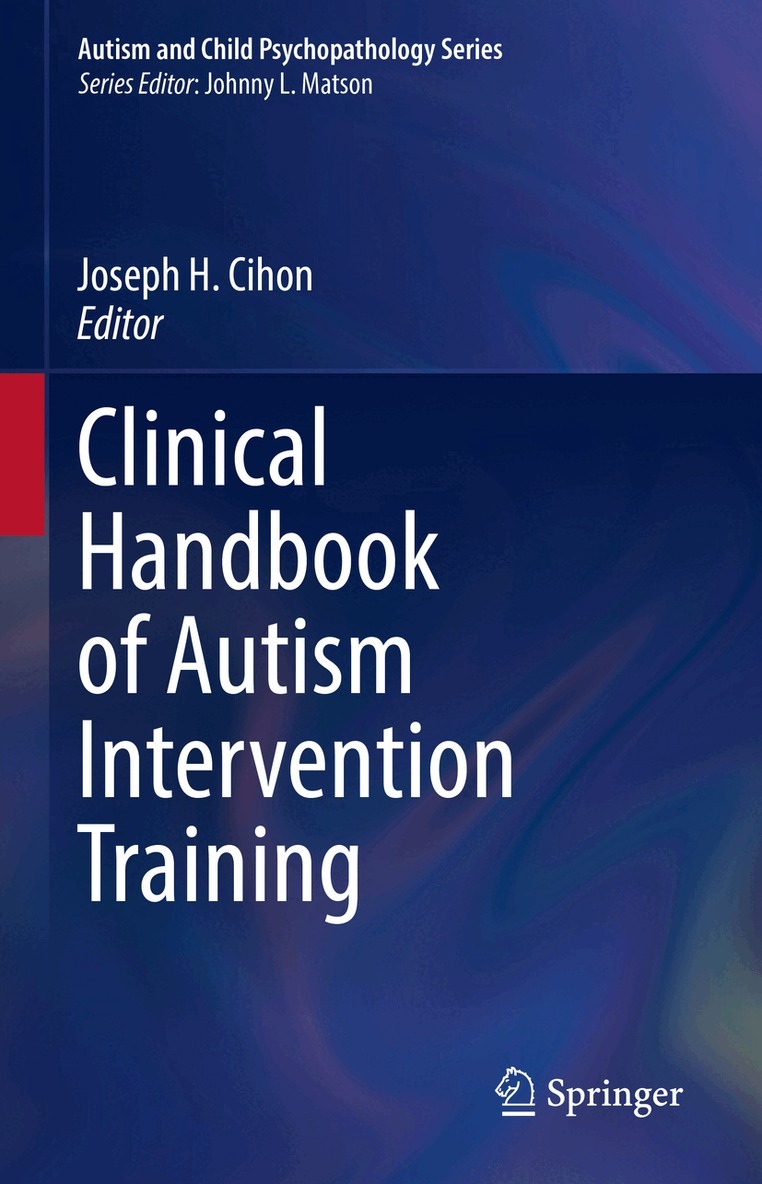
    Clinical Handbook of Autism Intervention Training

    AvJoseph H. Cihon

    Inbunden, Engelska, 2025

    Del i serien Autism and Child Psychopathology Series

    3 341 kr

    Beställningsvara. Skickas inom 10-15 vardagar. Fri frakt över 249 kr.

    Beskrivning

    This handbook addresses evidence-based training practices for individuals providing applied behavior analysis (ABA) interventions for individuals on the autism spectrum. It provides specific examples of interventions across various contexts and skills and addresses the importance of effective and efficient training as it relates to ABA-based interventions for individuals on the autism spectrum. Additional areas of coverage include, but are not limited to, staffing, clinical judgment, shaping, mealtime interventions, qualities of effective trainers and developing effective training systems.Key areas of coverage include:• Training versus mentorship.• Developing systems and contingencies related to training within an organization.• Ensuring a common vocabulary with trainers and trainees.• Development of clinical judgment.• Cultural considerations within training.The Clinical Handbook of Autism Intervention Training is a must-have resource for clinicians, therapists, and other practitioners and professionals as well as researchers, professors, and graduate students across such interrelated disciplines as clinical child, school, and developmental psychology, child and adolescent psychiatry, clinical social work, public health, rehabilitation medicine/physical and occupational therapy, special education, pediatrics, and neurology.

    Produktinformation

    • Utgivningsdatum:2025-06-25
    • Mått:155 x 235 x 37 mm
    • Vikt:1 019 g
    • Format:Inbunden
    • Språk:Engelska
    • Serie:Autism and Child Psychopathology Series
    • Antal sidor:564
    • Förlag:Springer International Publishing AG
    • ISBN:9783031916069

    Utforska kategorier

    • Klinisk psykologi inom Medicin
    • Barnpsykologi och utvecklingspsykologi inom Psykologi och pedagogik
    • Autism och Aspergers syndrom inom Medicin

    Mer om författaren

    Joseph H. Cihon, Ph.D., BCBA-D, CPBA-AP, received his B. S. in special education from Fontbonne University, M.S. in behavior analysis at the University of North Texas, and his Ph.D. in applied behavior analysis at Endicott College. He is currently the Director of Research at Autism Partnership Foundation, Certification Coordinator at the Progressive Behavior Analyst Autism Council, and on the council for the Autism Special Interest Group. Joe has 20 years of experience working with children, adolescents, and adults on the autism spectrum and with other developmental disabilities in home, school, and community settings. His research interests in behavior analysis are broad and include evaluating assumptions within practice, examining historical foundations in behavior analysis, training thoroughgoing behavior analysts, examining the effectiveness and training professionals in shaping techniques, increasing favorable interactions among children, their families, and interventionists, developing contingencies to promote generalization and maintenance, and improving mealtimes for selective eaters. Joe serves on the editorial boards for the International Electronic Journal of Elementary Education and Behavior Analysis in Practice and has published over 90 peer-reviewed articles, books, and book chapters.

    Innehållsförteckning

    • Chapter 1. An Introduction to Autism Intervention Training.- Chapter 2. Training Versus Mentorship: What Is the Difference and Why It Is Important.- Chapter 3. Building Effective Training Systems Within Organizations.- Chapter 4. Quality Trainer Repertoires.- Chapter 5. Assessment to Inform Training Goals.- Chapter 6. The Importance of a Common Vocabulary in Staff Training.- Chapter 7. Evidence-Based Staff Training.- Chapter 8. Pyramidal Staff Training and Evidence-Based Practices.- Chapter 9. Virtual/Remote Staff Training.- Chapter 10. Using Behavioral Skills Training to Train Staff.- Chapter 11. Using the Teaching Interaction Procedure to Train Staff.- Chapter 12. Comprehensive Staff Training Programs.- Chapter 13. Developing Clinical Judgment Skills.- Chapter 14. Training Effective and Efficient Shapers.- Chapter 15. Training Staff to Implement Preventive Interventions.- Chapter 16. Training Staff to Implement Function Based Interventions.- Chapter 17. Training Staff to ImplementSocial Skills Interventions.- Chapter 18. Training Staff to Implement Mealtime Interventions.- Chapter 19. Training for Intervention Across the Lifespan.- Chapter 20. Cultural Considerations Related to Staff Training.- Chapter 21. Considerations for Training School Staff.- Chapter 22. Considerations for Training Parents and Caregivers.- Chapter 23. Common Challenges and Solutions Related to Training.- Chapter 24. Future Directions in Research and Practice.