Inbunden, Engelska, 2027
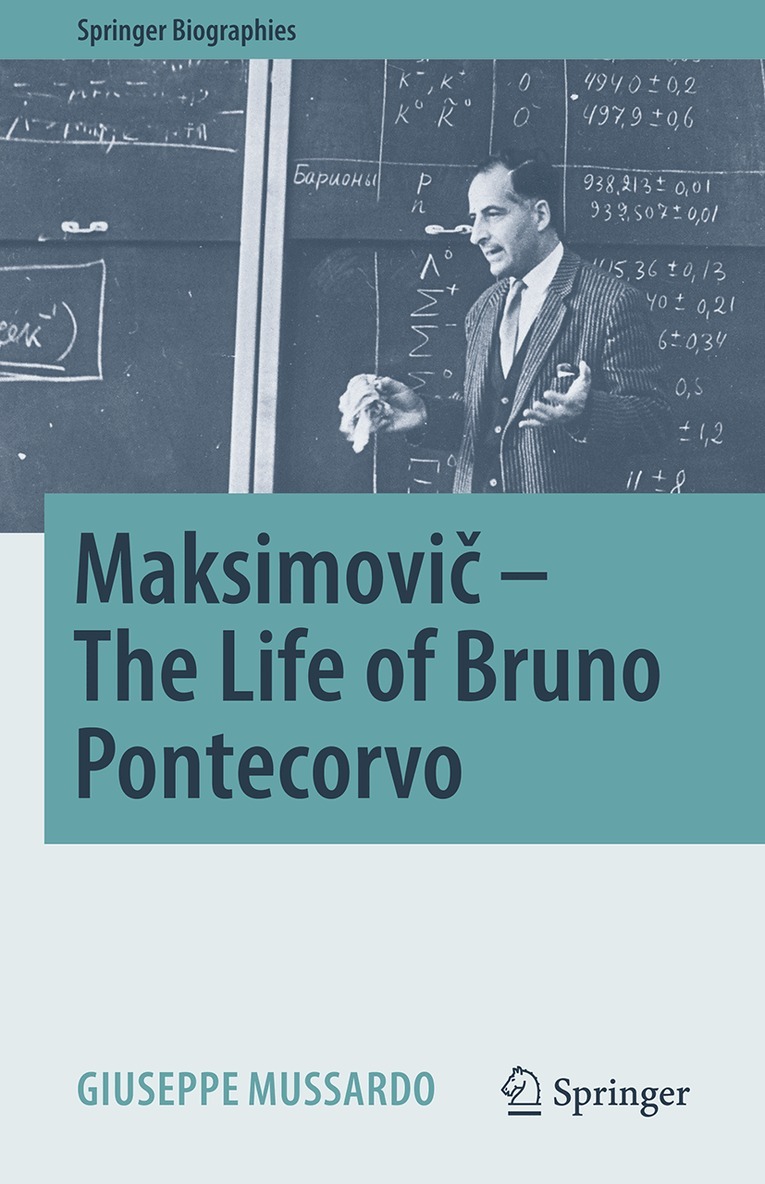
Maksimovič - The Life of Bruno Pontecorvo
652 kr
Kommande
Beskrivning
When Bruno Pontecorvo disappeared without a trace in 1950, he was already recognized as one of the most brilliant physicists of his generation. A key member of Enrico Fermi’s famed “boys from Via Panisperna,” he helped make Rome a world center of nuclear physics in the 1930s. In the 1940s, while working in North America, he made decisive contributions to neutrino physics, devising methods to detect one of nature’s most elusive particles. At the same time, Pontecorvo was a committed communist whose work for Western institutions placed him at the center of Cold War suspicions.His sudden disappearance sparked intense speculation: had he defected to the Soviet Union, was he a spy, and did he contribute to the Soviet atomic bomb? For years, nothing emerged from behind the Iron Curtain, until his reappearance in the Soviet press as Bruno Maksimovič Pontecorvo, publicly declaring his decision to seek political asylum and embrace a new life in Moscow.In this compelling and deeply researched biography, physicist Giuseppe Mussardo reconstructs the scientific achievements and human complexities of a figure who seems drawn from a spy novel yet shaped some of the most important ideas of modern physics. The book explores the unresolved mysteries surrounding Pontecorvo’s choices, beliefs, and knowledge, offering a penetrating portrait of a scientist for whom discovery, ideology, and personal sacrifice were inseparably entwined.
Produktinformation
- Utgivningsdatum: 2027-02-03
- Mått: 155 x 235 x undefined mm
- Format: Inbunden
- Språk: Engelska
- Serie: Springer Biographies
- Antal sidor: 343
- Förlag: Springer Nature Switzerland AG
- ISBN: 9783032279613
Utforska kategorier
Betyg & recensioner
0 recensioner
Inga recensioner tillgängliga.