• Fri frakt över 249 kr
  • •
  • Snabba leveranser
  • •
  • Billiga böcker
Kundservice

Du är på sajten för privatpersoner.

Företag, bibliotek eller offentlig verksamhet?

Du handlar på classic.bokus.com, där alla dina funktioner finns intakta.
Till classic.bokus.com
Bokus logotyp. Gå till startsidan.
  • Erbjudanden
  • Nyheter
  • Student
  • Topplistor
  • Barn & ungdom
  • Bokus Play
  • E-böcker
  • Pocketböcker
  • Spel & pussel

10% rabatt på allt med kod: NYSTART10 →

Sidfot

Mina sidor

    Hjälp

    • Kundservice
    • Vanliga frågor och svar
    • Frakt och leverans
    • Retur vid ångerrätt
    • Reklamera vara
    • Betalning
    • Köpvillkor
    • Allmänna villkor
    • Information om webbplatsens tillgänglighet

    Om Bokus

    • Om oss
    • Pressrum
    • För studenter
    • För företag
    • För bibliotek och offentlig verksamhet
    • För leverantörer
    • Hållbarhet

    Populärt

    • Aktuella erbjudanden
    • Presentkort
    • Studentlitteratur
    • Nya böcker
    • Topplistor
    • Signerade böcker
    • Engelska böcker

    Inspiration

    • Boktips
    • BookTok
    • Populära bokserier
    • Barnbokskaraktärer
    • Populära författare
    Logotyp för Bokus
    Följ oss på Facebook (extern länk)Följ oss på Instagram (extern länk)Följ oss på YouTube (extern länk)Följ oss på TikTok (extern länk)
    bokus @ CookiesAnpassa cookiesIntegritetspolicyKöpvillkor
    Till Citymail hemsida (extern länk)Till Budbee hemsida (extern länk)Till Postnord hemsida (extern länk)Till Schenker hemsida (extern länk)Till Early Bird hemsida (extern länk)Till Walleys hemsida (extern länk)
    1. Samhälle och politik
    2. Samhälle och kultur
    3. Kultur och medier
    4. Referensverk och tvärvetenskap

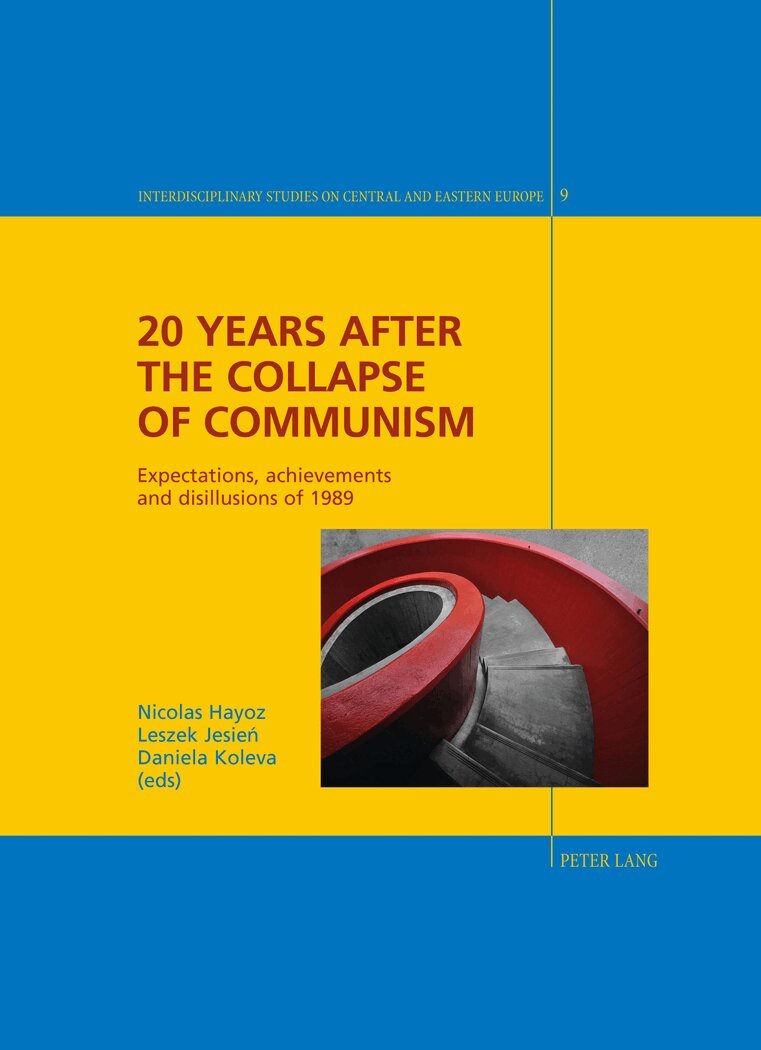
    20 Years after the Collapse of Communism

    Expectations, achievements and disillusions of 1989

    AvNicolas Hayoz,Leszek Jesien

    Inbunden, Engelska, 2011

    Del 9 i serien Interdisciplinary Studies on Central and Eastern Europe

    712 kr

    Tillfälligt slut

    Beskrivning

    The volume is an attempt to assess the meanings of 1989, in particular the multiple transformation processes and their effects in Eastern Europe. Obviously, the realities of the post-communist transformations have not met the expectations. Were the expectations too high? Did democratic institutions prove incompatible with local cultures? Was their implementation too fast to correspond to a genuine development of democratic culture? Whatever the reasons, the road to democracy has turned out to be steeper and the communist legacy heavier than expected.The authors of this volume seek to comprehend the intricacies of various aspects of the post-communist transition; looking at a broad array of countries that have followed different paths. The studies combine methods of different disciplines. ‘Insider’ perspectives are juxtaposed with external assessments. This comparative and problem based approach brings into focus the ambiguities of the unfinished transformations as well as their broader cultural contexts: the politics of history and the battles for new memory, the re-signification of past and present, and the problematic transformation of homo sovieticus into an autonomous and responsive subject.

    Produktinformation

    • Utgivningsdatum:2011-09-29
    • Mått:150 x 220 x 48 mm
    • Vikt:1 220 g
    • Format:Inbunden
    • Språk:Engelska
    • Serie:Interdisciplinary Studies on Central and Eastern Europe
    • Antal sidor:682
    • Förlag:Peter Lang AG, Internationaler Verlag der Wissenschaften
    • ISBN:9783034305389

    Utforska kategorier

    • Referensverk och tvärvetenskap inom Samhälle och politik
    • Konstböcker inom Kultur
    • Statsvetenskap och politisk teori inom Samhälle och politik

    Mer om författaren

    Nicolas Hayoz is associate professor of political science and the director of the Interfaculty Institute for Central and Eastern Europe at the University of Fribourg (Switzerland).Leszek Jesień coordinates the EU research at the Polish Institute of International Affairs, and lectures at the Collegium Civitas and the National School of Public Administration in Warsaw.Daniela Koleva is associate professor at the Department for History and Theory of Culture, St. Kliment Ohridski University of Sofia.

    Recensioner i media

    «[T]he contributions included in this volume offer an unusual and highly valuable insight into the experience of communism and post-communism in Eastern, Central and South-eastern Europe. The comparative approach alongside its interdisciplinary character make this book a must for everyone interested in post-communist studies and the modern history of half of European continent at the turn of the 20th and 21st centuries.» (Rigels Halili, Anthropological Notebooks, XIX 2013/1)

    Innehållsförteckning

    • Contents: Nicolas Hayoz/Daniela Koleva/Leszek Jesień: Introduction: Paths of Ambiguous Transformation after 20 Years – Leszek Jesień: A Sketch on Europeanization with the EU in Focus: Poland 1989-2004-2009 – Zhidas Daskalovski: The Influence of EU Conditionality and Europeanization on the Consolidation of Macedonia – Blagovesta Cholova/Daniel Bochsler: From Big Political Change to Permanent Change of Governments. The Logic of 20 Years of Political Party Competition in Central and Eastern Europe – Nicole Gallina/Nicolas Hayoz: Beyond Democracy: The Relevance of Informal Power in Eastern Europe – Valentina Dimitrova-Grajzl: Trust, Path Dependence and Historical Legacy: The Second Decade after Transition – Arben Hajrullahu: The Missing ‘Functional Elite’ and the Challenge of Democratization – Mentor Agani/Remzije Istrefi: The Promise of 1989 - Kosovo’s Lost Treasure – Benedikt Harzl: Nationalism, Democracy and Independence Revisited: The Cases of Kosovo and Abkhazia – Ghia Nodia: External (F)actors in Democratization: Lessons From the Georgian Experience – Giga Zedania: Societal Values in Georgia: Twenty Years Later – Christian Giordano: Mythologies of Postsocialism: The Legends of Revolution and Transition Twenty Years after the Fall of the Berlin Wall – Irina Novikova: Baltic Lieux de mémoire of the 1990s to Early 2000s: Nostalgia, Trauma, Change – Tomas Kavaliauskas: Different Meanings of May 9th, Victory Day over Nazi Germany for Russia and the Baltic States – Stefan Dietrich: (Re)writing History in the 1990s: Croatia and World War II Politics of Remembrance in Croatia - from the 1990s to the Present Day – Andriy Portnov: Post-Soviet Ukraine and Belarus Dealing with «The Great Patriotic War» – Christophe von Werdt: «Cossacks into State-Builders» - Constructing Historical «Cossack-Statehood»in Ukraine: A Case Study – Krzysztof Brzechczyn: The Forgotten Legacy of Solidarność and Lost Opportunities to Build a Democratic Capitalist System Following the Fall of Communism in Poland – Daniela Koleva: Hope for the Past? Postsocialist Nostalgia 20 Years Later – Martin Pogačar: Traces of Yugoslavia: Yuniverse Beyond Nostalgia – Jan Čulík: Current Czech Opinion of the pre-1989 and post-1989 Regimes: Disillusionment with Politics, Regardless of Party Political Allegiances – Jasmina Husanović: Recasting Transitions after The Fall: Global Governance of Trauma and the Politics of Life in Bosnia and Herzegovina – François Ruegg: High Heels and Blue Jeans. What Are the Visible Signs of Democracy? – Nenad Miscevic: Nation, Border and Territory - Reflecting on Croatian Experiences – Jan Woleński: From Controlled Liberalism to Real Pluralism. The Development of Philosophy in Poland at the End of the Communist Era – Maciej Urbanowski: Between a Valley of Joy and a Valley of Nothingness. The Year 1989 and Polish Literature – Ioana Both: How to Tell the Truth with Words: Romanian Post-Communist Literature Negotiating Memories: Romanian Literature Reloaded – Michael Müller: Essay and Travelogue. Two Literary Genres that Have Been Rediscovered during the Debate on the Yugoslavian Collapse – Judit Friedrich: Blaming versus Healing: Facing Communist Informers of the Past, and a Literary Example in Péter Esterházy’s Revised Edition – Alexander Kiossev: Crimes Against Everyday Life, or On the Patho-Anthropology of Socialism.