• Fri frakt över 249 kr
  • •
  • Snabba leveranser
  • •
  • Billiga böcker
Kundservice

Du är på sajten för privatpersoner.

Företag, bibliotek eller offentlig verksamhet?

Du handlar på classic.bokus.com, där alla dina funktioner finns intakta.
Till classic.bokus.com
Bokus logotyp. Gå till startsidan.
  • Erbjudanden
  • Nyheter
  • Student
  • Topplistor
  • Barn & ungdom
  • Bokus Play
  • E-böcker
  • Pocketböcker
  • Spel & pussel

10% rabatt på allt med kod: NYSTART10 →

Sidfot

Mina sidor

    Hjälp

    • Kundservice
    • Vanliga frågor och svar
    • Frakt och leverans
    • Retur vid ångerrätt
    • Reklamera vara
    • Betalning
    • Köpvillkor
    • Allmänna villkor
    • Information om webbplatsens tillgänglighet

    Om Bokus

    • Om oss
    • Pressrum
    • För studenter
    • För företag
    • För bibliotek och offentlig verksamhet
    • För leverantörer
    • Hållbarhet

    Populärt

    • Aktuella erbjudanden
    • Presentkort
    • Studentlitteratur
    • Nya böcker
    • Topplistor
    • Signerade böcker
    • Engelska böcker

    Inspiration

    • Boktips
    • BookTok
    • Populära bokserier
    • Barnbokskaraktärer
    • Populära författare
    Logotyp för Bokus
    Följ oss på Facebook (extern länk)Följ oss på Instagram (extern länk)Följ oss på YouTube (extern länk)Följ oss på TikTok (extern länk)
    bokus @ CookiesAnpassa cookiesIntegritetspolicyKöpvillkor
    Till Citymail hemsida (extern länk)Till Budbee hemsida (extern länk)Till Postnord hemsida (extern länk)Till Schenker hemsida (extern länk)Till Early Bird hemsida (extern länk)Till Walleys hemsida (extern länk)
    1. Psykologi och pedagogik
    2. Pedagogik
    3. Pedagogisk teori och filosofi

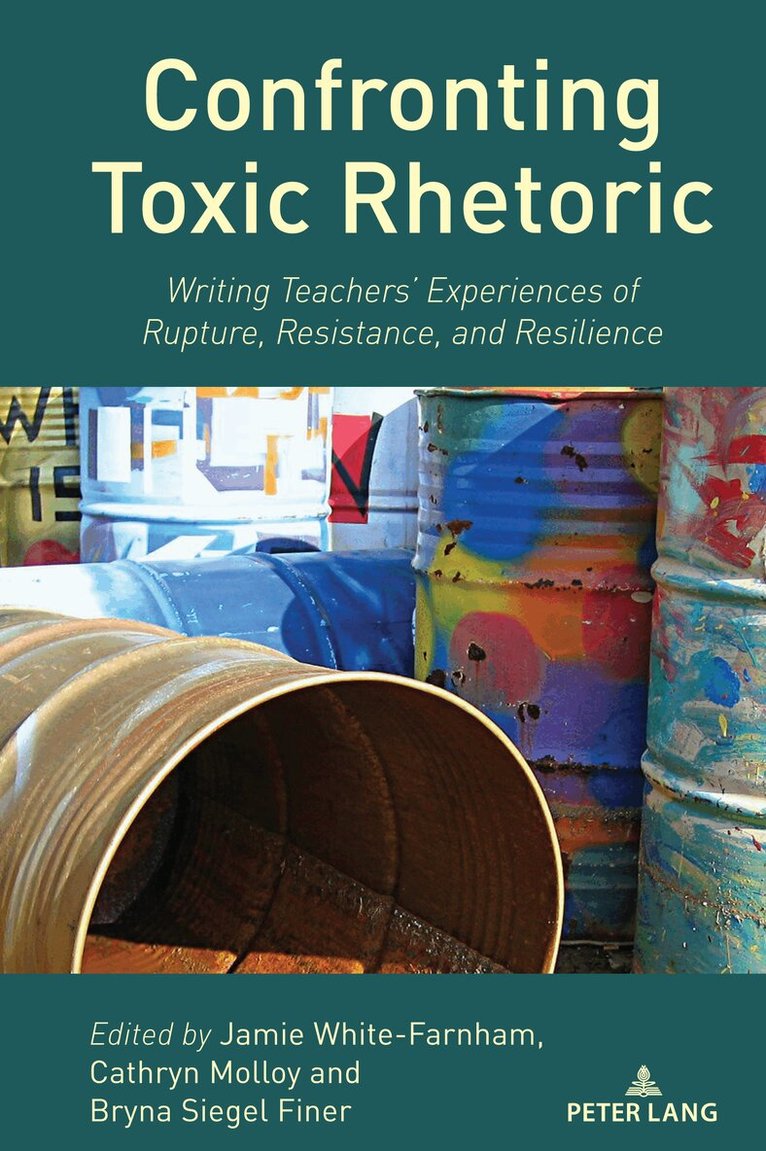
    Confronting Toxic Rhetoric

    Writing Teachers’ Experiences of Rupture, Resistance, and Resilience

    AvJamie White-Farnham,Cathryn Molloy

    Häftad, Engelska, 2024

    Del 25 i serien Studies in Composition and Rhetoric

    497 kr

    Beställningsvara. Skickas inom 5-8 vardagar. Fri frakt över 249 kr.

    Beskrivning

    Confronting Toxic Rhetoric contributes to the extant scholarship on toxic rhetoric, specifically the negative and extreme political discourse surrounding the Trump years of campaigning, rallying, tweeting, holding office, and the ongoing culture war in the US (Duffy, 2020). Toxic rhetoric challenged the foundational purposes of teaching writing and rhetoric, such as ethical argumentation and critical thinking. Teachers’ narratives, case studies, and reflections bring to light the ruptures, resistance, and resilience of teaching amid the extreme polarization of partisan politics, distrust of science, and increased hate speech, among other issues associated with toxic rhetoric. Readers will learn from teachers who were challenged to cope with toxic rhetoric, using both rhetorical and extra-disciplinary lenses. Their experiences present a vulnerable yet resolved expression of coping, activism, and belief in the future of rhetoric and democracy."Toxic rhetoric is the proverbial fly in the soup of our political and public discourse, poisoning our politics, and by extension, our classrooms. Confronting Toxic Rhetoric takes up the arduous task of treating the contamination in our classrooms while encouraging us to advance the work of decontamination in our broader rhetorical ecosystems."—Ryan Skinnell, Editor of Faking the News: What Rhetoric Can Teach Us About Donald J. Trump

    Produktinformation

    • Utgivningsdatum:2024-12-24
    • Mått:152 x 229 x 0 mm
    • Vikt:369 g
    • Format:Häftad
    • Språk:Engelska
    • Serie:Studies in Composition and Rhetoric
    • Antal sidor:232
    • Förlag:Peter Lang AG, Internationaler Verlag der Wissenschaften
    • ISBN:9783034353038

    Utforska kategorier

    • Pedagogisk teori och filosofi inom Psykologi och pedagogik
    • Politiskt förtryck inom Samhälle och politik

    Mer om författaren

    Jamie White-Farnham is Professor in the Writing Program and Director of Teaching, Learning and Technology at the University of Wisconsin-Superior. Her research on feminist and material rhetorics, women’s health rhetorics, and antiracist rhetorics can be found in College English, Rhetoric Review, Computers & Compositions, among others. She is the co-editor of Writing Program Architecture and Women’s Health Advocacy: Rhetorical Ingenuity for the 21st Century and co-author of Patients Making Meaning: Theorizing Sources of Information and Forms of Support in Women’s Health (2023).Cathryn Molloy is Professor of Writing Studies in the University of Delaware’s Department of English. She is co-editor of the Rhetoric of Health and Medicine journal as well as co-editor of the books Strategic Interventions in Mental Health Rhetoric, and Women’s Health Advocacy: Rhetorical Ingenuity for the 21st Century. She is the author of Rhetorical Ethos in Health and Medicine: Patient Credibility, Stigma, and Misdiagnosis (2020) and co-author of Patients Making Meaning: Theorizing Sources of Information and Forms of Support in Women’s Health (2023).Bryna Siegel Finer is Professor of English and Director of Undergraduate Writing Programs at Indiana University of Pennsylvania. She is associate editor of the Rhetoric of Health & Medicine journal as well as co-editor of the Writing Spaces book series. Her research focuses primarily on women’s health rhetorics and writing program administration and has been published in Rhetoric of Health & Medicine, Rhetoric Review, Teaching English in the Two Year College, Journal of Writing Assessment, and elsewhere. She is the co-editor of Writing Program Architecture and Women’s Health Advocacy: Rhetorical Ingenuity for the 21st Century, and co-author of Patients Making Meaning: Theorizing Sources of Information and Forms of Support in Women’s Health.

    Innehållsförteckning

    • Acknowledgments – Jamie White-Farnham: Confronting Toxic Rhetoric Prelude: Origin Stories of Toxic Rhetoric – Jamie White-Farnham/Cathryn Molloy/BrynaSiegel Finer: Introduction – Whitney Jordan Adams: Site of Contention: Rhetorics of/and Stone Mountain, Georgia – Craig A. Meyer: When Two Sides Are Too Many: Using Fairness in Unfair Ways – MatthewBoedy: Taking on Toxic Rhetoric in the Classroom – Liping Yang: From "Kung Flu" to #StopAAPIHate: Confronting Toxic Anti-AAPI Rhetoric through Contemporary Activism and Digital Literacy – Sarah Lonelodge: Responding in Real Time: A Course in Rhetoric, Propaganda, Demagoguery, and Misinformation – MirandaL. Egger: Social, Digital Annotation as a Tool for the Future of Democratic Discourse – Bruce Bowles Jr.: "The Action is on You!": Examining When and Why to Engage—or not Engage—Rhetorically – Charles McMartin: Teaching Toward Coalitions: Combating the Toxic Rhetoric Around Critical Race Theory and Diversity, Equity, and Inclusion – Sarah M. Shea: The Elephant in the Room: On Responding to Potential Toxic Rhetoric in Tutoring Sessions – Daniel Cole: Detoxifying Debate: Confluences of Composition and Conflict Resolution – Postscript: (Re)Calling the Character of a Career: A Letter of Thanks to John Duffy by Rachel Ketai – Notes on Contributors – Index.