E-bok, Engelska, 2013
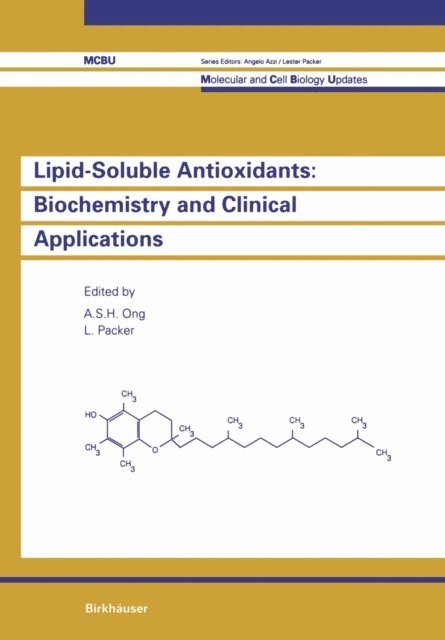
Lipid-Soluble Antioxidants: Biochemistry and Clinical Applications
700 kr
Läs direkt i Bokus Reader – eller ladda ned till din enhet (PDF kräver ofta zoom och scroll på små skärmar).
Beskrivning
Antioxidants inhibit the formation and spread of free radicals which can be damaging in biological systems. Free radicals form in biological systems through metabolism, but it is also realized that exogenous environmental sources, such as radiation, food, and drugs, contribute significantly to the generation of free radicals in biological systems. Being reactive species, free radicals are short-lived and do not travel far from cellular targets. Their concentration in biological systems is very low and is difficult to detect directly by electron spin resonance spectroscopy (ESR). Indirect methods of reactions of radicals with specific biomolecules are also sufficiently sensitive to detect quantitatively their presence. Thus the response of antioxidant defenses which react with radical species, can serve as an indirect measure that free radicals have been formed. Redox-based antioxidants change their oxidation state and antioxidants become free radicals themselves. Often, however, the antioxidants give rise to more persistent free radicals, sometimes owing to delocalization of the lone electron around ring structures (in vitamin E, ubiquinones, and certain carotenes). Persistent free radicals react only rarely and the precursors often can be regenerated in biological systems. In recent years, it is becoming clearer from biochemical studies on how the major lipophilic antioxidants work. Particular attention has been given to vitamin E and quinones found in animal and plant membranes and in carotenoids, for the protection of membranes in lipoprotein systems. Flavonoids form another rich and varied source of natural antioxidants.
Produktinformation
- Utgivningsdatum: 2013-03-09
- Språk: Engelska
- Filformat: PDF
- Kopieringsskydd: LCP
- ISBN: 9783034874328
- Förlag: Birkhauser Basel
Utforska kategorier
Betyg & recensioner
0 recensioner
Inga recensioner tillgängliga.