• Fri frakt över 249 kr
  • •
  • Snabba leveranser
  • •
  • Billiga böcker
Kundservice

Du är på sajten för privatpersoner.

Företag, bibliotek eller offentlig verksamhet?

Du handlar på classic.bokus.com, där alla dina funktioner finns intakta.
Till classic.bokus.com
Bokus logotyp. Gå till startsidan.
  • Erbjudanden
  • Nyheter
  • Student
  • Topplistor
  • Barn & ungdom
  • Bokus Play
  • E-böcker
  • Pocketböcker
  • Spel & pussel

10% rabatt på allt med kod NYSTART10 →

Sidfot

Mina sidor

    Hjälp

    • Kundservice
    • Vanliga frågor och svar
    • Frakt och leverans
    • Retur vid ångerrätt
    • Reklamera vara
    • Betalning
    • Köpvillkor
    • Allmänna villkor
    • Information om webbplatsens tillgänglighet

    Om Bokus

    • Om oss
    • Pressrum
    • För studenter
    • För företag
    • För bibliotek och offentlig verksamhet
    • För leverantörer
    • Hållbarhet

    Populärt

    • Aktuella erbjudanden
    • Presentkort
    • Studentlitteratur
    • Nya böcker
    • Topplistor
    • Signerade böcker
    • Engelska böcker

    Inspiration

    • Boktips
    • BookTok
    • Populära bokserier
    • Barnbokskaraktärer
    • Populära författare
    Logotyp för Bokus
    Följ oss på Facebook (extern länk)Följ oss på Instagram (extern länk)Följ oss på YouTube (extern länk)Följ oss på TikTok (extern länk)
    bokus @ CookiesAnpassa cookiesIntegritetspolicyKöpvillkor
    Till Citymail hemsida (extern länk)Till Budbee hemsida (extern länk)Till Postnord hemsida (extern länk)Till Schenker hemsida (extern länk)Till Early Bird hemsida (extern länk)Till Walleys hemsida (extern länk)
    1. Djur och Natur
    2. Naturböcker
    3. Växtböcker

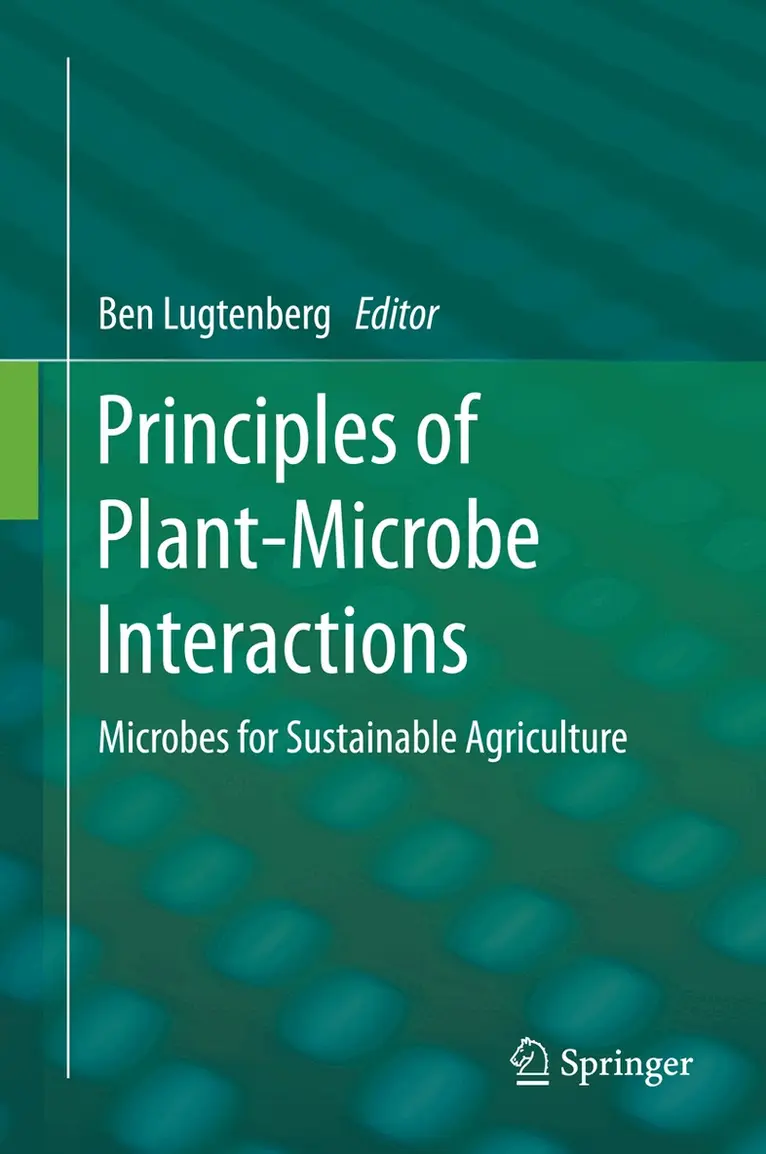
    Principles of Plant-Microbe Interactions

    Microbes for Sustainable Agriculture

    AvBen Lugtenberg

    Inbunden, Engelska, 2014

    1 625 kr

    Beställningsvara. Skickas inom 10-15 vardagar. Fri frakt över 249 kr.

    Beskrivning

    The use of microbial plant protection products is growing and their importance will strongly increase due to political and public pressure. World population is growing and the amount of food needed by 2050 will be double of what is produced now whereas the area of agricultural land is decreasing. We must increase crop yield in a sustainable way. Chemical plant growth promoters must be replaced by microbiological products. Also here, the use of microbial products is growing and their importance will strongly increase. A growing area of agricultural land is salinated. Global warming will increase this process. Plants growth is inhibited by salt or even made impossible and farmers tend to disuse the most salinated lands. Microbes have been very successfully used to alleviate salt stress of plants. Chemical pollution of land can make plant growth difficult and crops grown are often polluted and not suitable for consumption. Microbes have been used to degrade these chemical pollutants.

    Produktinformation

    • Utgivningsdatum:2014-12-16
    • Mått:155 x 235 x 31 mm
    • Vikt:869 g
    • Format:Inbunden
    • Språk:Engelska
    • Antal sidor:448
    • Upplaga:2015
    • Förlag:Springer International Publishing AG
    • ISBN:9783319085746

    Utforska kategorier

    • Växtböcker inom Djur och Natur
    • Botanik inom Naturvetenskap och teknik
    • Agronomi och lantbruk inom Naturvetenskap och teknik

    Mer om författaren

    Prof. Lugtenberg is well-known expert in his field (beneficial bacteria which kill plant-pathogenic fungi or promote plant growth), appreciated for publication record and editing job, with a significant network. Used to play several important roles within the community, e.g. President of the International Society of Molecular Plant-Microbe Interactions.

    Recensioner i media

    "The book helps in exploring the diverse microbial partners, its importance's and mechanisms of the actions for proper understanding of the topic. ... we enjoyed reading this book as the editor tried to cover almost all fundamental and applied aspects of the plant-microbe interactions. As a final word, the book can be described as a book for all." (Rama K. Dubey, Vishal Tripathi and P. C. Abhilash, Frontiers in Plant Science, Vol. 6, 2015)

    Innehållsförteckning

    • 1. Introduction to Plant-Microbe Interactions.- Part I. Introductory Chapters.- 2. The Importance of Microbiology in Sustainable Agriculture.- 3. Life of Microbes in the Rhizosphere.- 4. Life of Microbes on Aerial Plant Parts.- 5. Life of Microbes Inside the Plant.- 6. Microbial Cell Surfaces and Secretion Systems.- 7. Microbial Biofilms and Quorum Sensing.- 8. Bacterial Volatiles as Airborne Signals for Plants and Bacteria.- Part II. Phytopathogens and Pest Insects.- 9. Phytopathogenic Bacteria.- 10. Plant Pathogenic Fungi and Oomycetes.- 11. Phytopathogenic Nematodes.- 12. Herbivorous Insects - a Threat for Crop Production.- 13. Phytopathogenic Viruses.- 14. Induced Disease Resistance.- 15. Apologies to the Planet – Can we Restore the Damage?.- 16. Will the Public ever Accept Genetically Engineered Plants?.- Part III. Control of Plant Diseases and Pests using Beneficial Microbes.- 17. Microbial Control of Phytopathogenic Nematodes.- 18. Microbial Control of Root-Pathogenic Fungi and Oomycetes.- 19. Control of Insect Pests by Entomopathogenic Nematodes.- 20. Bacillus thuringiensis-based Products for Insect Pest Control.- 21. Post Harvest Control.- Part IV. Plant Growth Promotion by Microbes.- 22. The Nitrogen Cycle.- 23. Biological Nitrogen Fixation.- 24. Phosphate Mobilisation by Soil Microorganisms.- 25. Arbuscular Mycorrhizas: the Lives of Beneficial Fungi and their Plant Host.- 26. Plant Hormones Produced by Microbes.- 27. Stress Control and ACC Deaminase.- 28. Plant-Microbe Interactions and Water Management in Arid and Saline Soils.- 29. Rhizoremediation.- Part V. Important Technologies.- 30. Microbial Communities in the Rhizosphere Analyzed by Cultivation-independent; DNA-based Methods.- 31. Visualization of Plant-Microbe Interactions.- Part VI. Products for Plant Growth-promotion and Disease Suppression.- 32. Commercialisation of Microbes: Present Situation and Future Prospects.- 33. Commercialization of Microbes: Manufacturing, Inoculation, Best Practice for Objective Field Testing, and Registration.- 34. Towards a New Generation of Commercial Microbial Disease Control and Plant -Growth Promotion Products.- 35. Important Organizations and Companies.- Part VII. Paradigms in Plant-Microbe Interactions.- 36. Trichoderma: a Multi-Purpose Tool for Integrated Pest Management.- 37. Agrobacterium, the Genetic Engineer.- 38. Take-All Decline and Beneficial Pseudomonads.- 39. The Oomycete Phytophthora infestans, the Irish Potato Famine Pathogen.- 40. Bacillus, a Plant-Beneficial Bacterium; Rainer Borriss.- 41. Soybean Production in the Americas.- Part VIII. Future Prospects and Dreams.- 42. Exploring the Feasibility of Transferring Nitrogen Fixation to Cereal Crops.- 43. The Minimal Rhizosphere Microbiome.- 44. The Edible Plant Microbiome: Importance and Health Issues.- 45. From Nodulation to Antibiotics.