Häftad, Engelska, 2016
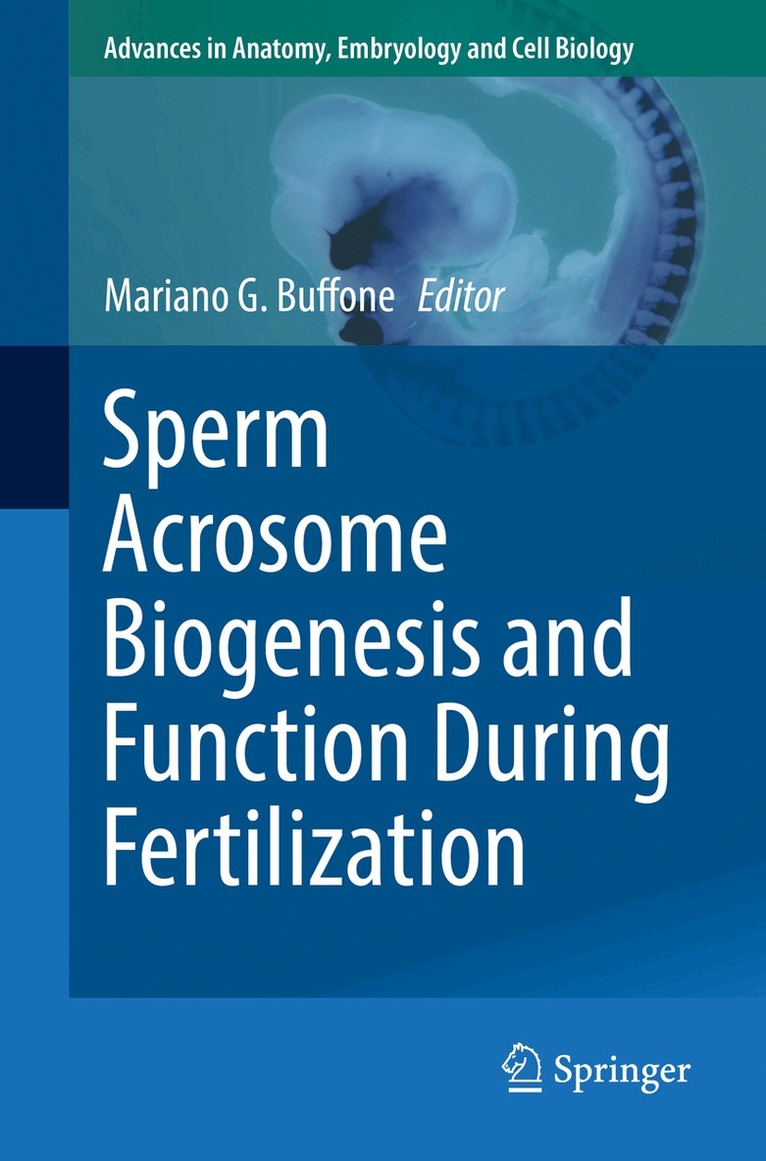
Sperm Acrosome Biogenesis and Function During Fertilization
1126 kr
Beställningsvara. Skickas inom 10-15 vardagar. Fri frakt över 249 kr.
Beskrivning
Over the last decades, acrosomal exocytosis (also called the “acrosome reaction”) has been recognized as playing an essential role in fertilization. Secretion of this granule is an absolute requirement for physiological fertilization. In recent years, the study of mammalian acrosomal exocytosis has yielded some major advances that challenge the long-held, general paradigms in the field. Principally, the idea that sperm must be acrosome-intact to bind to the zona pellucida of unfertilized eggs, based largely on in vitro fertilization studies of mouse oocytes denuded of the cumulus oophorus, has been overturned by experiments using state-of-the-art imaging of cumulus-intact oocytes and fertilization experiments where eggs were reinseminated by acrosome-reacted sperm recovered from the perivitelline space of zygotes. From a molecular point of view, acrosome exocytosis is a synchronized and tightly regulated process mediated by molecular mechanisms that are homologous to those reportedin neuroendocrinal cell secretions. The authors provide a broader perspective, focusing on a limited number of important topics that are essential for understanding the molecular mechanisms governing this step in the fertilization process. They also discuss molecular aspects such as the signaling pathways leading to exocytosis, including the participation of ion channels, lipids, the fusion machinery proteins and the actin cytoskeleton as well as cellular aspects such as the site of acrosomal exocytosis and the use of gene-manipulated animals to study this process.
Produktinformation
- Utgivningsdatum: 2016-05-27
- Mått: 155 x 235 x 10 mm
- Vikt: 316 g
- Format: Häftad
- Språk: Engelska
- Serie: Advances in Anatomy, Embryology and Cell Biology
- Antal sidor: 172
- Förlag: Springer International Publishing AG
- ISBN: 9783319305653
Utforska kategorier
Betyg & recensioner
0 recensioner
Inga recensioner tillgängliga.