Häftad, Engelska, 2016
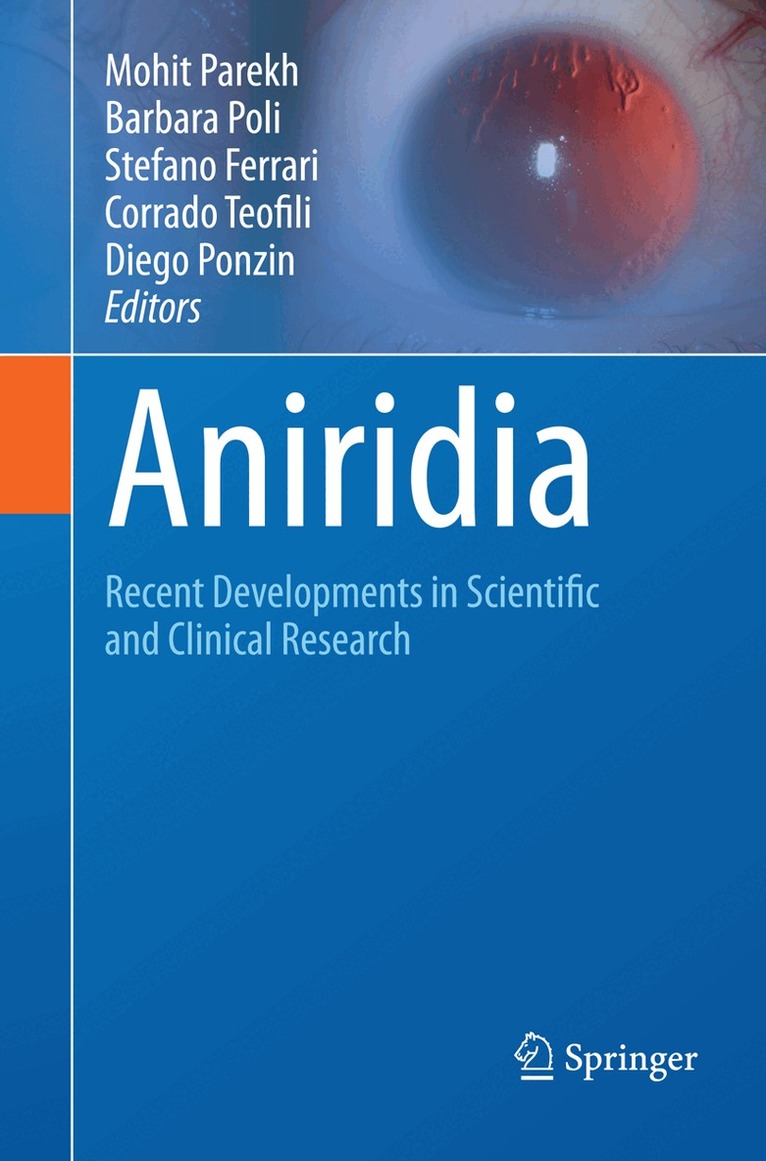
Aniridia
Av Mohit Parekh, Barbara Poli, Stefano Ferrari, Corrado Teofili, Diego Ponzin
1131 kr
Beställningsvara. Skickas inom 10-15 vardagar. Fri frakt över 249 kr.
Beskrivning
The aim of this book is to highlight the latest findings in Aniridia research. Aniridia, meaning “without iris”, is a rare genetic disorder affecting vision, characterized by the incomplete formation of the iris (the coloured part of the eye that surrounds the black pupil). It may also cause other segments of the eye to be under-developed such as the optic nerve and the macula (the central part of the retina). Aniridia and associated conditions affect individuals differently. So while some affected people are partially sighted or blind, others may have near normal sight. Aniridia is congenital (present at birth) and is caused by a dysfunction of the PAX6 gene, situated on the 11th chromosome that causes the premature cessation of eye development. Aniridia affects between 1:40,000 to 1:100,000 people, and affects males and females equally. People with Aniridia may also experience secondary conditions such as Photophobia, Nystagmus, Glaucoma, Cataracts and Keratopathy.
Produktinformation
- Utgivningsdatum: 2016-10-22
- Mått: 155 x 235 x 11 mm
- Vikt: 348 g
- Format: Häftad
- Språk: Engelska
- Antal sidor: 192
- Förlag: Springer International Publishing AG
- ISBN: 9783319363943
Utforska kategorier
Betyg & recensioner
0 recensioner
Inga recensioner tillgängliga.