• Fri frakt över 249 kr
  • •
  • Snabba leveranser
  • •
  • Billiga böcker
Kundservice

Du är på sajten för privatpersoner.

Företag, bibliotek eller offentlig verksamhet?

Du handlar på classic.bokus.com, där alla dina funktioner finns intakta.
Till classic.bokus.com
Bokus logotyp. Gå till startsidan.
  • Erbjudanden
  • Nyheter
  • Student
  • Topplistor
  • Barn & ungdom
  • Bokus Play
  • E-böcker
  • Pocketböcker
  • Spel & pussel

10% rabatt på allt med kod: NYSTART10 →

Sidfot

Mina sidor

    Hjälp

    • Kundservice
    • Vanliga frågor och svar
    • Frakt och leverans
    • Retur vid ångerrätt
    • Reklamera vara
    • Betalning
    • Köpvillkor
    • Allmänna villkor
    • Information om webbplatsens tillgänglighet

    Om Bokus

    • Om oss
    • Pressrum
    • För studenter
    • För företag
    • För bibliotek och offentlig verksamhet
    • För leverantörer
    • Hållbarhet

    Populärt

    • Aktuella erbjudanden
    • Presentkort
    • Studentlitteratur
    • Nya böcker
    • Topplistor
    • Signerade böcker
    • Engelska böcker

    Inspiration

    • Boktips
    • BookTok
    • Populära bokserier
    • Barnbokskaraktärer
    • Populära författare
    Logotyp för Bokus
    Följ oss på Facebook (extern länk)Följ oss på Instagram (extern länk)Följ oss på YouTube (extern länk)Följ oss på TikTok (extern länk)
    bokus @ CookiesAnpassa cookiesIntegritetspolicyKöpvillkor
    Till Citymail hemsida (extern länk)Till Budbee hemsida (extern länk)Till Postnord hemsida (extern länk)Till Schenker hemsida (extern länk)Till Early Bird hemsida (extern länk)Till Walleys hemsida (extern länk)
    1. Medicin
    2. Medicin: allmänt
    3. Medicinhistoria

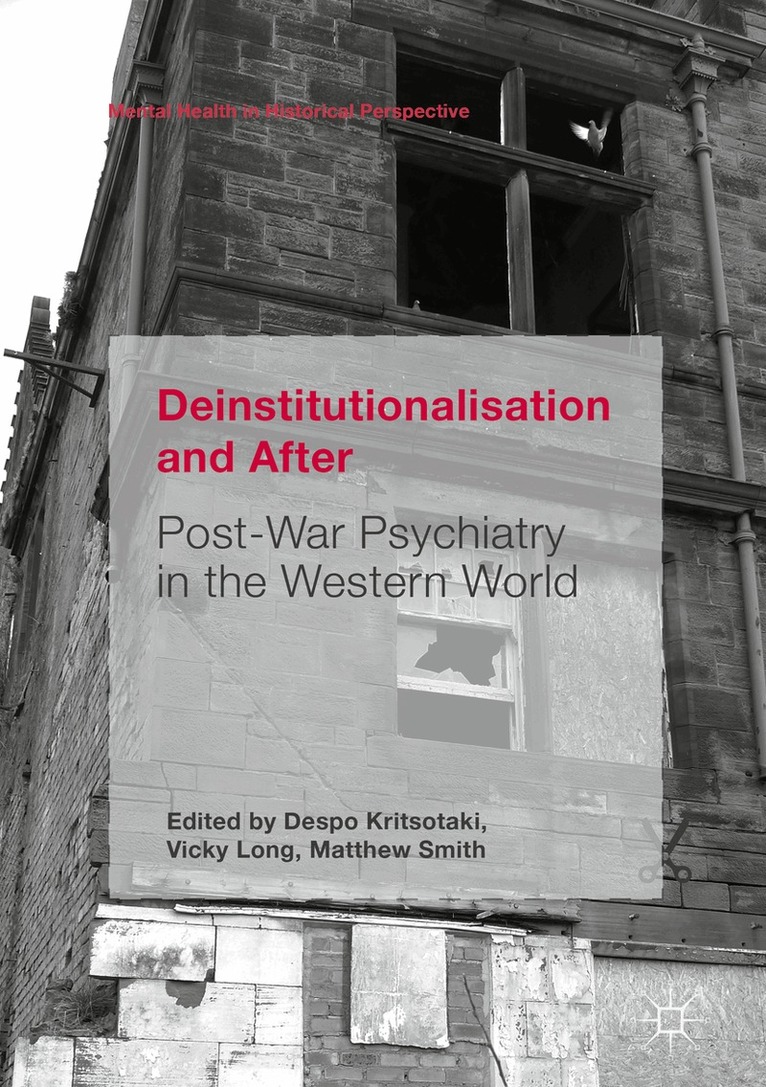
    Deinstitutionalisation and After

    Post-War Psychiatry in the Western World

    AvDespo Kritsotaki,Vicky Long

    Inbunden, Engelska, 2016

    Del i serien Mental Health in Historical Perspective

    1 229 kr

    Beställningsvara. Skickas inom 10-15 vardagar. Fri frakt över 249 kr.

    Beskrivning

    The book relates the history of post-war psychiatry, focusing on deinstitutionalisation, namely the shift from asylum to community in the second part of the twentieth century.After the Second World War, psychiatry and mental health care were reshaped by deinstitutionalisation. But what exactly was involved in this process? What were the origins of deinstitutionalisation and what did it mean to those who experienced it? What were the ramifications, both positive and negative, of such a fundamental shift in psychiatric care? Post-War Psychiatry in the Western World: Deinstitutionalisation and After seeks to answer these questions by exploring this momentous change in mental health care from 1945 to the present in a wide range of geographical settings. The book articulates a nuanced account of the history of deinstitutionalisation, highlighting the constraints and inconsistencies inherent in treating the mentally ill outside of the asylum, while seeking to inform current debates about how to help the most vulnerable members of society.

    Produktinformation

    • Utgivningsdatum:2016-12-16
    • Mått:148 x 210 x 22 mm
    • Vikt:523 g
    • Format:Inbunden
    • Språk:Engelska
    • Serie:Mental Health in Historical Perspective
    • Antal sidor:297
    • Upplaga:16001
    • Förlag:Springer International Publishing AG
    • ISBN:9783319453590

    Utforska kategorier

    • Medicinhistoria inom Medicin
    • Europas historia inom Historia och arkeologi
    • Psykiatri inom Medicin

    Mer om författaren

    Despo Kritsotaki is a historian of mental health and healthcare in twentieth-century Greece.Vicky Long is Senior Lecturer in History at Glasgow Caledonian University, UK.Matthew Smith is Professor of Health History at the University of Strathclyde, UK.

    Innehållsförteckning

    • Introduction. Despo Kritsotaki, Vicky Long and Matthew Smith, Deinstitutionalisation and the Pathways of Post-War Psychiatry in the Western World.- Part I. Understanding deinstitutionalisation: culture, ideology and historiography.- Chapter 1. John Burnham, Deinstitutionalisation and the great sociocultural shift to consumer culture.- Chapter 2. Alexander Dunst, ‘All the Fits That’s News to Print’: Deinstitutionalisation and Anti-Psychiatric Movement Magazines in the United States, 1970-1986.- Chapter 3. Megan Davies and Erika Dyck with Leslie Baker, Lanny Beckman, Geertje Boschma, Chris Dooley, Kathleen Kendall, Eugene LeBlanc, Robert Menzies, Marina Morrow, Diane Purvey, Nérée St-Amand, Marie-Claude Thifault, Jayne Whyte, Victor Willis, After the Asylum in Canada: Surviving Deinstitutionalisation and Revising History.- Part II. Designing and implementing psychiatric reform: experiments, opportunities and oppositions.- Chapter 4. Christof Beyer, ‘Islands of reform’. Early transformation of the mental health service in Lower Saxony, Germany in the 1960s.- Chapter 5. Nicolas Henckes, French deinstitutionalisation or the irony of success. Psychiatrists, the State and the transformation of the French psychiatric system, 1945-2010.- Chapter 6. Valerie Harrington, Integration in a divided world: Salford Community Mental Health Services 1948-1974.- Chapter 7. Despo Kritsotaki, Initiating deinstitutionalisation: Early attempts of mental health care reform in Greece, 1950s-1970s.- Part III. New conceptualisations of therapy and space.- Chapter 8. John Stewart, Child Guidance and Deinstitutionalisation in Post-War Britain.- Chapter 9. Cheryl McGeachan “Do you have a frog to guide you?”: Exploring the ‘asylum’ spaces of R.D. Laing.- Part IV. After Deinstitutionalisation: experiences, challenges and legacies.- Chapter 10. Elena Trivelli, The Basaglian Legacy in Italian Psychiatry: Remembering, Myth-making, and Crystallising.- Chapter 11. Howard Padwa, Marcia Meldrum, Jack R. Friedman and Joel T. Braslow, A mental health system in recovery. The era of deinstitutionalisation in California.- Chapter 12. Roslyn Burge, Callan Park in transition.